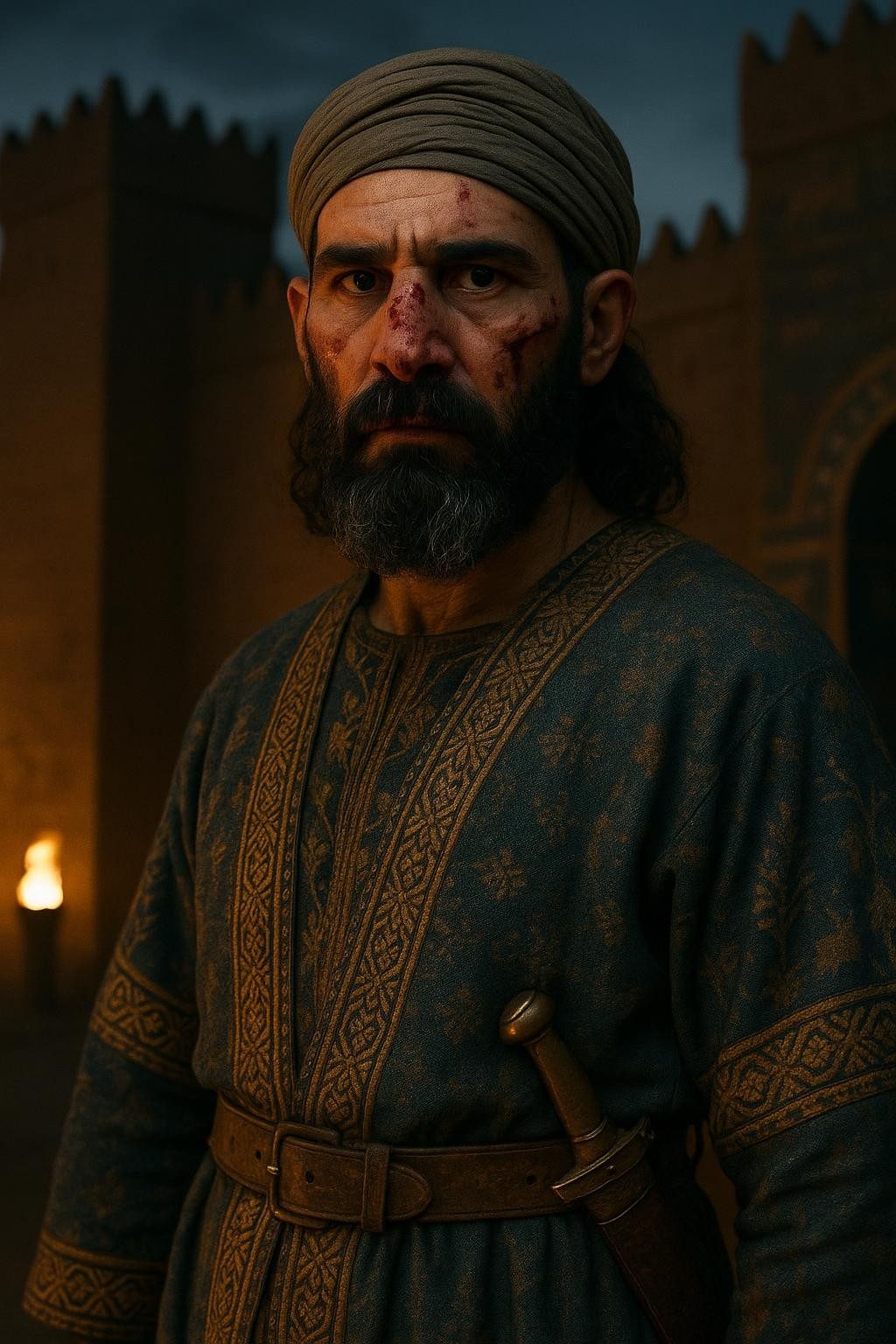
Blood dripped down his face as he stumbled through the dust, the jagged stumps where his ears used to be stinging against the hot breeze. Zopyrus, a noble of the Persian Empire, put one shuffling foot in front of the other with singular, determined purpose. Around him, the mighty walls of Babylon rose up, towering and intimidating, seemingly impenetrable. Yet he knew this city, with its grandiose defenses, had a vulnerability, and he was the key to exploiting it.
Rebellion Behind Impenetrable Walls
The rebellion in Babylon had pushed the mighty Persian Empire to its limits. For two grinding years, this city—a vital part of King Darius's kingdom—defied all attempts to bring it back under Persian control. Babylon was not just a city; it was a symbol, a jewel in the imperial crown, and as long as its gates remained shut, it taunted the authority of the Great King from behind walls that even the strongest army couldn't breach.
Despite siege after siege, Darius's efforts seemed futile. The Babylonians, having prepared for a protracted resistance, watched from their battlements as Persian troops circled like wolves unable to reach their prey. With every passing month, the frustration among the Persian ranks grew. The situation called for drastic measures, and Zopyrus had an audacious plan.
A Sacrifice for Victory
The whispers in the Persian camp hinted at desperation, clever spies, and hidden machinations, but what Zopyrus did would eclipse all tales of cunning. He mutilated himself, severing his own nose and ears, and branding himself with lashes as though he were a slave. He transformed his form into a living testament of betrayal, a self-inflicted mockery designed to elicit sympathy and deceit in equal measure.
When he appeared before Darius, rumors say the entire camp gasped. Yet the king understood the gambit. Zopyrus’s plan relied on Babylon’s willingness to believe in betrayal and the possibility of vengeance. Disfigured and marked as a turncoat, he slipped out of the Persian camp, shuffling his way across the battle-worn land toward Babylon, a living lie wrapped in flesh.
Inside Enemy Walls
Once inside Babylon, the reaction was as Zopyrus had predicted. The Babylonians, seeing his condition, believed his story of brutal punishment at the hands of Darius. They welcomed him as a deserter, as one who had suffered under their mutual enemy and now sought revenge. Zopyrus quickly found his place among them, gaining their trust, his uncanny knowledge of Persian tactics lending him immense credibility.
Week by week, Zopyrus’s influence grew. He advised on defenses, pointed out the weaknesses in Persian assaults—weak points which he himself helped orchestrate. His rise among Babylon's ranks was swift and seemingly unstoppable. This was a man who had shed blood for them, who knew the heart of their enemy, who, in their eyes, had every reason to hate Darius more than they themselves did.
The Day the Gates Opened
One auspicious night, under the cover of darkness, Zopyrus's plan came to its climactic fruition. With careful, practiced coordination, the gates of Babylon—those impregnable bastions of defiance—were opened from within. Persian forces silently surged forward, flooding into the heart of the city, their victory all but assured by the time Babylon awoke to the full horror of its betrayal.
Zopyrus walked among the chaos with a stoic expression. His face, forever marred by his sacrifice, was now a mask of fulfillment. Through his action, the tide of rebellion was crushed, and Darius's empire restored its shining jewel. The moral calculus of his deed weighed heavily, but in his scars lay the story of a man's ultimate sacrifice for his empire.
This daring act of Zopyrus is more than a tale of strategic brilliance; it is a stark reminder of the fragility of trust and the lengths to which the ambition of power can drive individuals. In a world where history often celebrates the conquerors, the scarred visage of Zopyrus serves as a haunting symbol of sacrifice, deception, and the cruel calculus of political machinations. As Babylon welcomed one man into its fold, it unwittingly opened its heart to ruin—a lesson as old as time, relevant as ever.