The early morning light filtered through the mist hanging over London, casting a grey shroud over the city while a quiet chill nipped at the air. Down cobblestone streets, horse-drawn carts began their daily routine, the clopping hooves mingling with the distant hum of city life awakening once more. The sun struggling to break through the overcast skies seemed to echo the struggles of those living within the city's heart, particularly Mary Ann Bevan, a woman who, despite the crushing weight of a superficial world, became the unlikely heroine in her own tragic tale.
From Nurse's Uniform to Widow’s Weeds
Mary Ann Bevan was no stranger to hardship. Born during the latter part of the Victorian era, she belonged to a hardworking family that instilled in her a sense of resilience. By the early 1900s, she had carved out a life as a nurse, tending to the sick with compassion and earning the warmth and respect of her community. Those who knew her then would have remembered a woman of quiet strength, deeply dedicated to her profession.
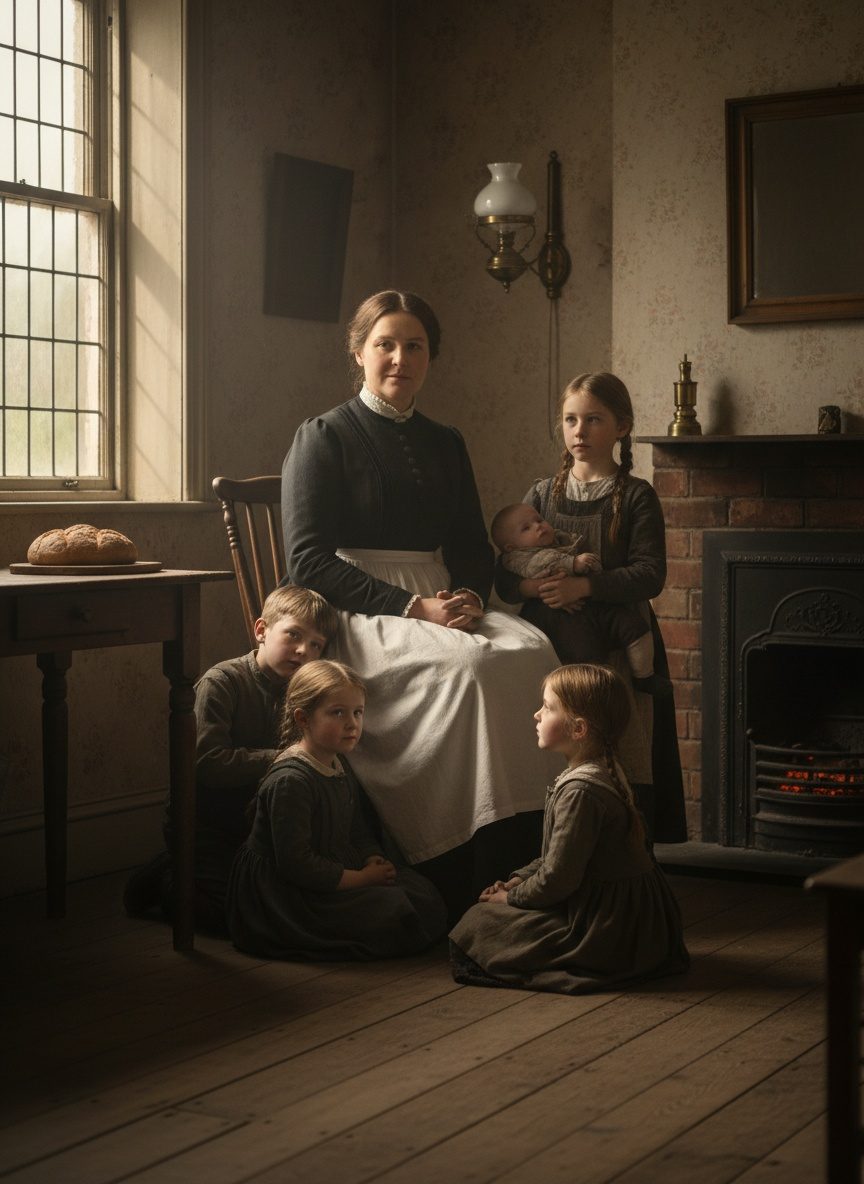
Tragedy struck when Mary Ann's beloved husband passed away suddenly, leaving her with four children to raise alone. The loss was profound and the shift from partner and caregiver to single-handed provider was daunting. Yet, Mary Ann, with her indomitable spirit, stepped into this new role with the same dedication she had shown in her nursing career. The weight of her responsibilities demanded much of her, yet barely had she begun to adjust before fate dealt her another unexpected hand.
The Unforgiving Turn of Illness
Life’s curveballs often come unannounced, and for Mary Ann Bevan, a change appeared slowly and insidiously with a diagnosis that explained so much: acromegaly. This rare hormonal disorder, affecting roughly three out of every one million people annually, causes bones to grow excessively, leading to enlarged features and sometimes debilitating health issues. For Mary Ann, it meant transforming from a woman respected in her community to one stigmatized by her appearance. Familiar faces would now avert their eyes; where once there was warmth, she was met with whispers and furtive glances.
Yet, unlike many who might have hidden away in despair, Mary Ann faced her altered reflection head-on, recognizing the stark reality of her situation. Her children still needed food, education, and a stable home life. Ill-equipped to earn a living in her previous capacity, she was pragmatic about her options, though society offered few for a woman in her position.
A Courageous and Controversial Contest
In an industry driven as much by mystery as by spectacle, circuses and sideshows of the early 20th century were popular entertainment venues, but often at the cost of those they exploited. It was in this world of spectacles that Mary Ann found an opportunity that promised both financial reward and personal humiliation: a contest titled, harshly, the "Ugliest Woman in the World."
According to those who chronicled her story, Mary Ann saw in this demeaning contest a chance to turn her apparent misfortune into a means of survival. Her entry was not an act of self-pity but a sacrifice; a deliberate step into the spotlight that required immense courage. She won the contest, and with it, a lifeline for those she held dear. The winnings were a temporary balm on the persistent issues at home—food on the table, books for study, warmth in winter.
The Harsh Reality of Circus Life
Winning the contest opened further doors into a continuous cycle of showmanship, as Mary Ann joined a traveling sideshow. The circus grounds were a cacophony of laughter and music, echoes of delight mingling with the scents of sawdust and sweets, all masking the exploitation taking place under the big top. For years, she toured and performed, becoming a spectacle in an industry that preyed on the extraordinary and exploited the vulnerable.
Behind closed curtains, Mary Ann was resolute that this was a temporary measure for her family's sake. She meticulously managed her earnings, ensuring that all four of her children could remain in school, her indomitable will driving her efforts to secure a better future for them away from the ridicule she endured daily. Her decision, while misunderstood by some, was a profound act of love.
The Legacy of a Resilient Spirit
Mary Ann Bevan's story is not just a recount of personal misfortune met with bravery, but an exploration of societal values and the extent to which a mother might go when driven by love and necessity. Her willingness to step forward into the cruel joke of a contest was not just an act of defiance, but a strategy devised under dire circumstances. Yet the heart of her story is not found in the caricatures painted by those who watched her, but in the quiet success of her children who carried forward the opportunities she sacrificed for.
In examining the tale of Mary Ann Bevan, we glimpse a world that demanded conformity yet also depended on those who were different for entertainment. Her story challenges us to consider how we treat others in their vulnerability and how strength can manifest in unexpected forms, guided not by public acclaim but by love and sacrifice. Though history remembers her for her appearance, it is her resilience and compassion that truly shaped her children's lives—proving that even in a world replete with judgment, selflessness can carve a path toward hope and future promise.