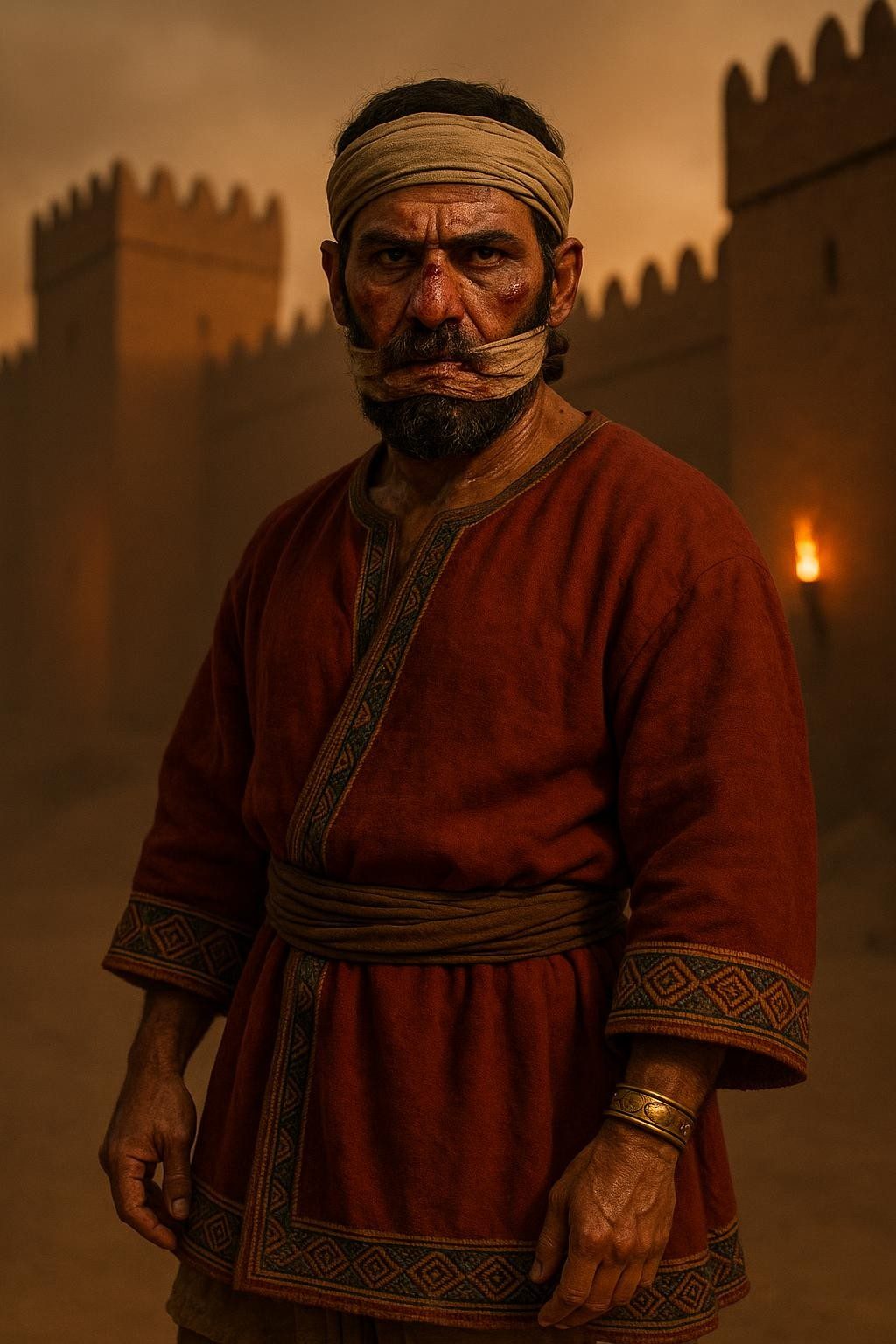
The sharp blade flicked through the air with a precision that belied the madness of the act. Blood oozed from the fresh wounds on Zopyrus's face as he stood before his king, the muffled snickers of disbelief mingling with the coppery scent of iron in the tent. This audacious act wasn't born of madness, but rather, of the desperate determination fueling one of the boldest strategies the Persian Empire would ever employ against the defiant city of Babylon. For two years, Babylon had stood resilient against the siege imposed by Darius, and the proud city seemed impenetrable. Yet, here was Zopyrus, ready to sacrifice not only his appearance but his very dignity to turn the tide in favor of the Persian king.
In those long years of siege, Babylon had become a symbol of defiance. Its massive walls, standing nearly 40 meters high, were the pride of their inhabitants, and their enduring resistance was a thorn in the side of Darius's expanding empire. Despite his best military efforts, the city seemed to laugh in the face of his might. Supplies from the countryside funneled steadily inside, and the Babylonians fortified their position with an enviable air of self-reliance. Darius’s intentions of reclaiming the rebellious city were met with every conceivable means of stone-walling, quite literally. He needed a plan that was as unconventional as it was brilliant—something his council struggled to present.
Enter Zopyrus, a nobleman whose loyalty and ingenuity were known throughout the palace. With his brutal self-mutilation—a deliberate removal of his own nose and ears, along with slicing his body in assorted places—he sought to enact a plan that teetered on the razor-thin edge between genius and madness. He would present himself to the Babylonians as a disfigured Persian defector, someone so mistreated and full of rage against Darius's rule that his desperation could only be authentic. The stakes were terrifyingly high; Zopyrus was placing his trust not only in his king's understanding and support but in the calculating guesswork of human nature itself.
The moment Zopyrus limped into Babylon's protective embrace, the air buzzed with a mixture of suspicion and curiosity. The city's sentries, bewildered by his gruesome appearance, listened to his tales of discontent. His betrayal was an elaborate tapestry of carefully woven deceit. The sensations of pain and the trauma lurked beneath his facade, but this was secondary to the weight of his mission. Zopyrus had transformed himself, and now he was tasked with convincing an entire city of his defection.
Slowly, Zopyrus ingratiated himself with the Babylonians. He offered strategies for their defense, insights into Persian tactics, and a convincing display of loyalty to his newfound captors. Each act of counsel was a brick in the edifice of trust he was constructing. In due time, Zopyrus ascended to a position of great influence, even assuming control over a significant portion of Babylonian defenses. His advice proved fortuitous, and his apparent hatred for Darius seemed palpable, growing clearer when he led successful sorties against Persian forces near the city walls. With each triumph, his credibility solidified further, blinding the Babylonians to the impending trap.
Time slipped by as he bided his moments, awaiting the perfect opportunity to strike from within. Zopyrus was not a man plagued by doubt. He was moved by an unwavering belief in his cause, a testament to his loyalty to Darius, as well as the conviction that the Persian Empire's greatness depended on such risks. A proverb circulated among Persian ranks, "A mighty river is born of a thousand small streams." Zopyrus was the tiny brook that intended to flood Babylon from the inside.
That fateful night emerged at last, draped in the shadowed cloak of opportunity. The Babylonians trusted Zopyrus so deeply that when he requested permission to lead forces outside the gates for a preemptive strike against the Persian beseiges, they obliged without hesitation. As he orchestrated this maneuver with his impeccable military acumen, the stage was set for his grand betrayal. Under his command, the gates opened to release the attackers, a move he had promised would cripple Darius's forces once and for all. Yet, hidden within the tangle of shadows, the Persian soldiers lay in wait, ready to rush through the gates left ajar in trustful ignorance.
The ensuing siege was swift and decisive. With Babylonians occupied with Zopyrus's troops outside, the Persian forces poured into the city, the prophecy of its walls breached by betrayal fulfilled. In the aftermath, the streets echoed with the clang of swords, punctuating the night as Babylon capitulated under the weight of its misplaced trust. Zopyrus had delivered on a promise laid with blood and deception.
As Babylon reeled from its loss, Darius heaped accolades upon Zopyrus. His unparalleled success in subverting Babylon's defenses elevated him to an almost mythic status in Persian lore. The self-mutilated Persian noble stood as a living paradox—marked by grotesque sacrifice for the sake of strategy and empire. In an age where empires rose and fell on the prowess and fortitude of their leaders, Zopyrus emerged as an individual whose singularly audacious act reshaped the course of history.
The story of Zopyrus serves as a reminder of the extents to which individuals might go to serve the greater cause and the enduring complexities of human deceit and strategy. It is a tale of loyalty and of the shadows cast by ambition and resolve. Who, if not Zopyrus, could illustrate the paradox of personal loss for monumental gain? As we reflect on this story, we are left contemplating the nature of sacrifice—both the price paid and the potential it unlocks—and how amidst the annals of history, it is often the most unconventional actions that leave indelible marks upon the world.