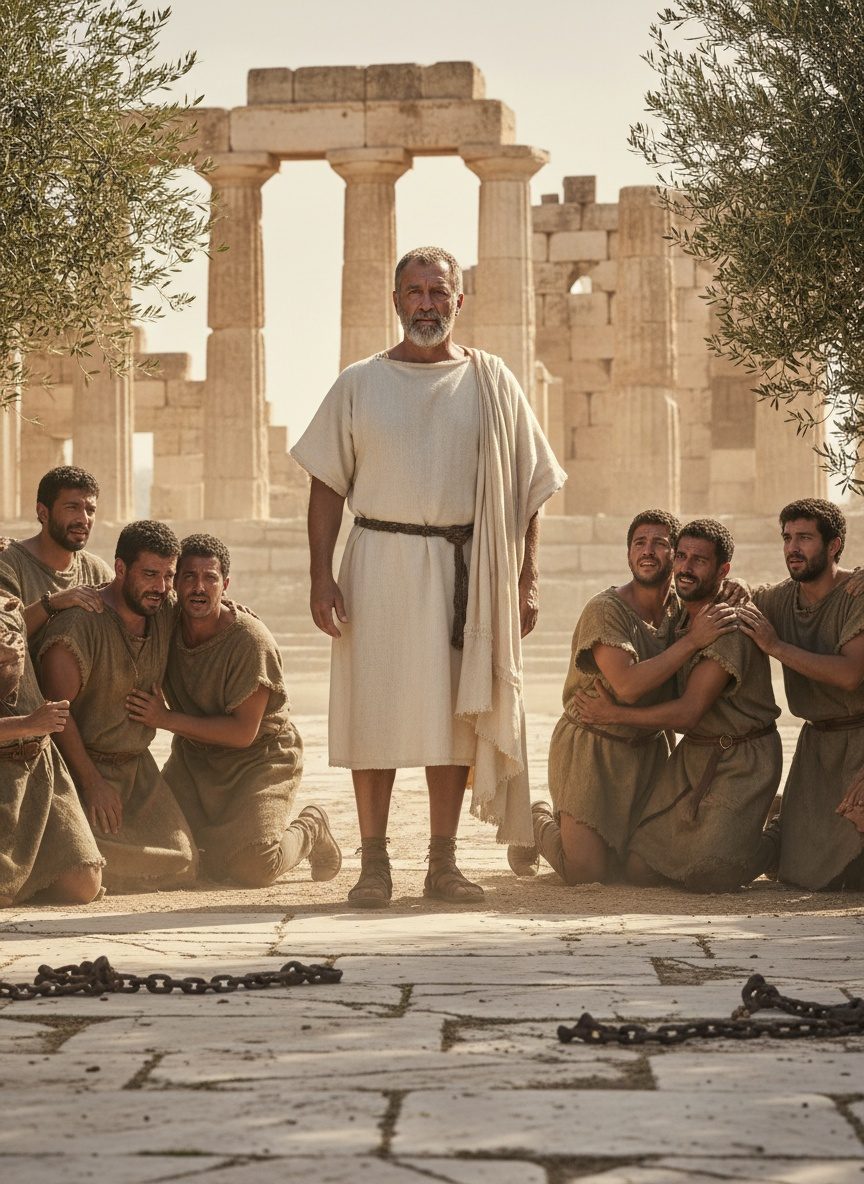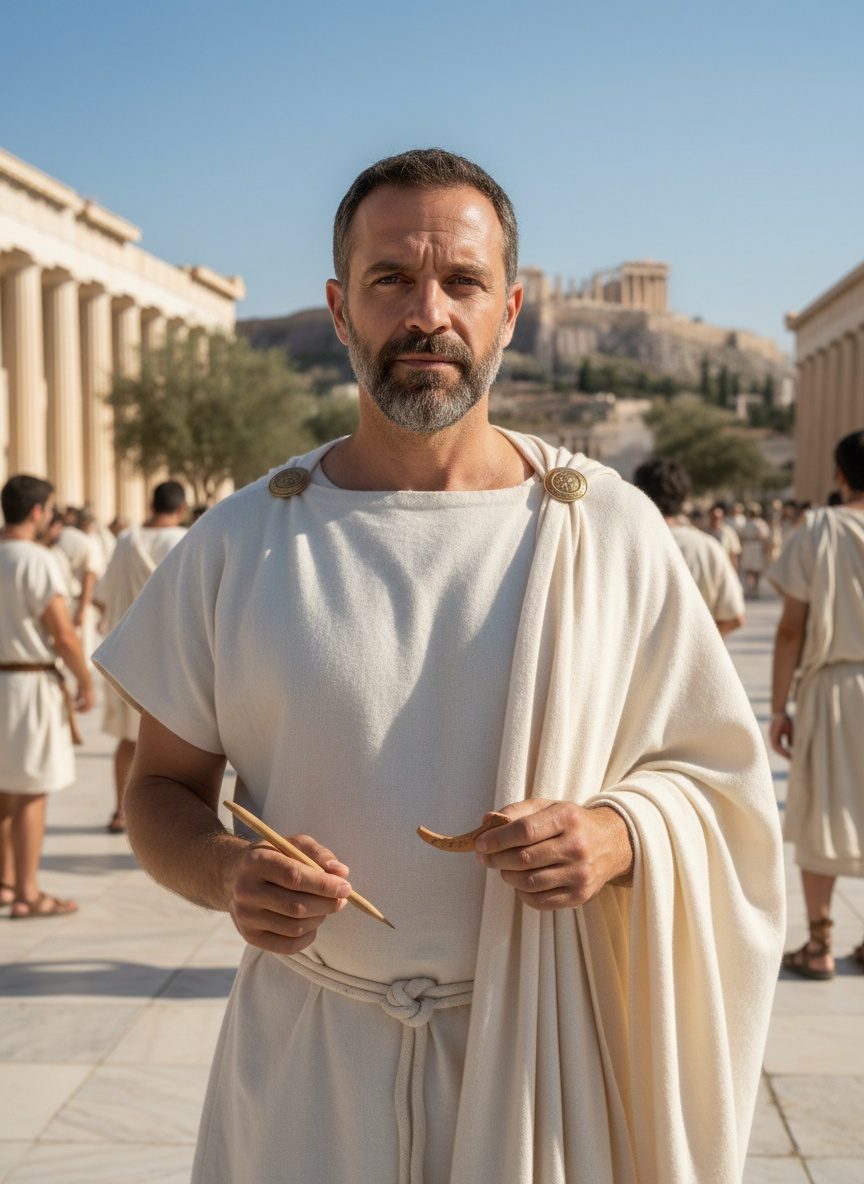
He was the man they called the Just. Aristides of Athens, revered for his integrity and unwavering commitment to fairness, was the unlikely holder of a potent instrument of democracy—the ostracon. Yet it wasn't to seek justice that he wielded it, but to inscribe his own fate.
In the vibrant heart of Athens in 482 BC, a city known for its relentless pursuit of democracy, the citizens faced a crucial decision. The rising power of Persia urged them toward unity and leadership, yet the city's halls echoed with whispers of distrust—a distrust that would soon target their most esteemed citizen. Within this tumultuous period, ostracism stood as one of democracy's tools—a safeguard against tyranny—by which citizens could exile a potentially dangerous individual for ten years. Each citizen would inscribe the name of the person they deemed most threatening to the city on a shard of pottery, known as an ostracon. Fate chose this ancient practice to weave one of history's most poignant ironies.
As voters gathered in the bustling Agora, the atmosphere buzzed with the tension of anticipation. Amongst the crowd, an illiterate man approached Aristides, unaware of his identity. This stranger, perhaps a farmer more attuned to the rhythm of the seasons than the political tides, sought help to cast his vote. He asked Aristides to write the name of the man deserving exile upon his pottery shard. The irony was sharp—but Aristides wasn't one to shirk from duty. With steadiness, he etched his own name onto the ostracon. Handing it back, he inquired whether Aristides had wronged the man in any way. The stranger expressed weariness, claiming he simply tired of hearing the constant praise of Aristides’ justice.
Historians often paint Aristides as embodying the virtues of the ideal Athenian citizen—principled, measured, and deeply committed to the democratic process. This vignette, of writing his own name on the shard, captures perfectly his dedication to a greater good beyond personal pride or grudge. He demonstrated the kind of selfless service to the polis that was revered yet increasingly rare in political machinations. The outcome of the process seemed as indifferent to justice as the shifting winds, a stark example of democracy's vulnerability.
This event occurred within a backdrop of significant turbulence. The Athenians faced external pressures with the looming threat of the Persian Empire, while internally, the factions and personalities sought power and influence. Themistocles, a contemporary of Aristides, was a formidable politician and strategist whose vision of a powerful Athenian navy required compromises and alliances. In a world where military prowess often trumped pure governance, Themistocles saw Aristides' rigid justice as an obstacle. The state of affairs in Athens was transforming rapidly, and Aristides, despite his virtues, represented a stability that many saw as stagnation.
The period leading to Aristides' ostracism was one of strategic necessity. Themistocles had convinced the city to utilize wealth from silver discoveries at Laurium for naval advancements. His politics and vision for Athenian supremacy at sea required decisive, sometimes ruthless, measures. Themistocles understood that the future of Athens was on the waves against the navy of Persia, yet Aristides’ presence as a moral arbiter could constrain necessary action. Influenced by Themistocles’ arguments, the people of Athens perhaps unconsciously decided that excellence was less critical than survival.
When the ballots were tallied, the result was exile for Aristides. Such a resolution reflects the complexities inherent in democratic ideals, where the majority's perception, true or not, could condem a man who exemplified what they should most honor. Aristides accepted the results without resentment. His departure from Athens was marked by solemn dignity as he walked away—a slight but poignant testament to the somber duty before the individual when the masses lay collectively misguided.
During the years Aristides spent in exile, Persia's threat loomed ever closer. Indeed, war would soon enough grip the Hellenic world with the raging ferocity of Xerxes' armies pressing against the ancient democracies. In those defining moments, as cities stood on the brink, voices like Aristides' might have warned of justice amid ensuing chaos. But Athens pursued a different course, one shepherded under Themistocles’ shadow, a demonstration of democracy’s double edge: innovation unmarred by restraint, sometimes at the price of its very ethos.
Yet history, filled with surprises, had not closed its chapters on the Just. When the tides of war surged and withdrew, weary of exile, Aristides was called back. Themistocles’ bold tactics at battles like Salamis indeed had preserved Athens but at a cost that left the city yearning for a just touch. Aristides returned to his city without bitterness or palpable retribution, a quiet nod to his understanding of democracy's imperfect nature. In his return, he again served Athens, allowing not personal history but future integrity to guide him.
Here lies a story that echoes through time—a story not merely of personal sacrifice but of society's struggle with the values it professes versus those it practices. Athens exiled Aristides the Just, a man representing the moral ideals they cherished. Yet, this exile becomes a timeless reflection on society's challenging balance between stability, justice, and progress. Democracy's bedrock is trust within the populace—in their governance, decisions, and, ultimately, each other. But as Aristides’ poignant decision to etch his own name reveals, that trust can falter, caught in the currents of ambition and the myopia of popular whims.