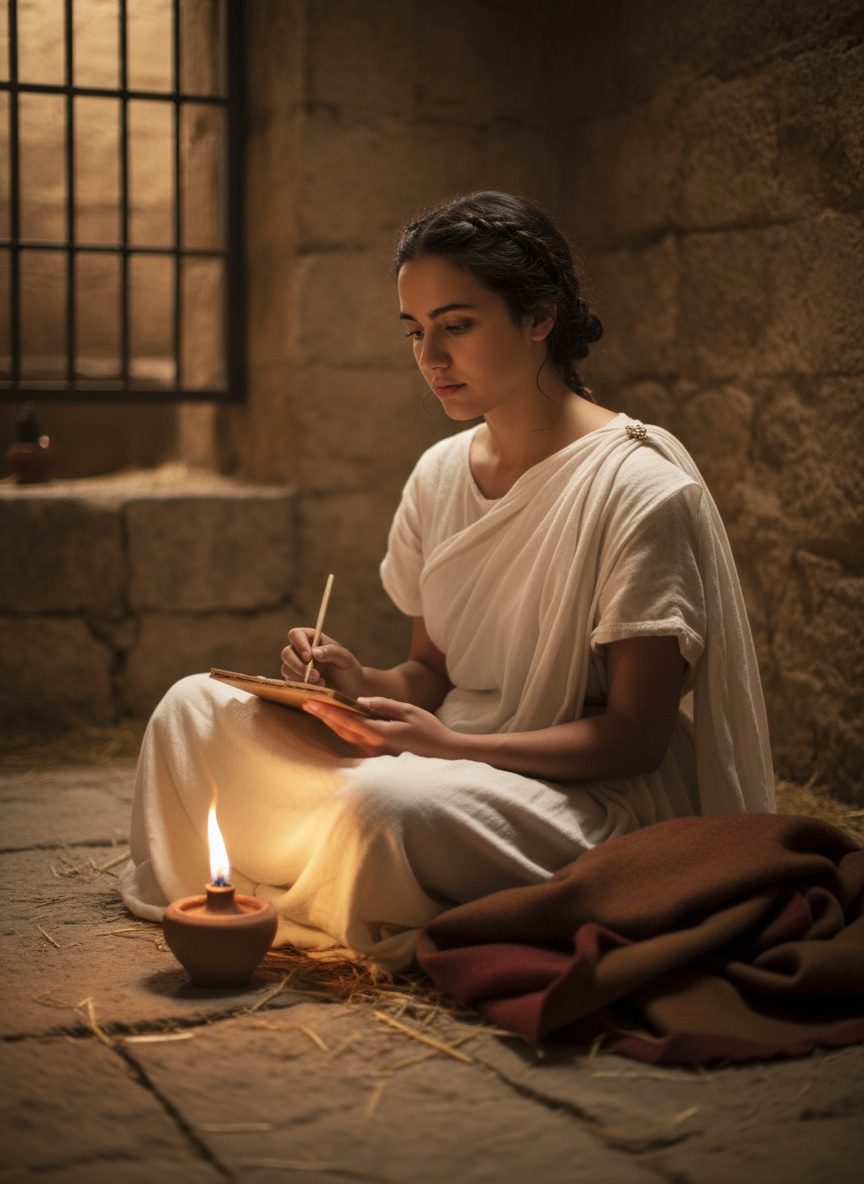
203 CE. Light filtered dimly through the iron bars of a cell.
A Noblewoman's Choice
In the bustling Roman province of Africa, in the grand city of Carthage, a young noblewoman found herself behind cold prison walls. Vibia Perpetua was twenty-two years old, a new mother, and a Christian convert — a dangerous identity under the watchful eyes of an empire intent on quelling dissent. Rome was a behemoth, an empire known for its tolerance shrouded by the swords of its legions and the dictates of its emperors. Perpetua's world was one where the safety of tradition clashed with the peril of new beliefs.
Her crime? A resolute faith in Christianity, which had placed her in opposition to the state's edict of loyalty towards its pantheon of gods. Her father, a Roman citizen, pleaded with her to renounce her faith, to make the one small concession that would save her life and reunite her with her infant son. Yet, Perpetua refused to yield. Her resolve was not merely an act of rebellion, but a profound expression of inner conviction that defied the very foundations of Roman authority.
Within these confining walls, every moment held the weight of eternity for Perpetua. Yet, against this backdrop of despair, she held in her hand an instrument of enduring power: a pen. With this, Perpetua did something extraordinary. She began to write her own narrative, chronicling her thoughts and experiences as she awaited execution. Her writings were an act of resistance against the transience of life and the inevitability of her fate. Her words whispered through time, transforming a prison cell into a starting point for historical resonance.
The Voice in the Darkness
Perpetua's diary reveals the textures of her daily existence, the ebb and flow of her emotions as she grappled with the harsh realities of her impending martyrdom. Her words were poignant and raw, capturing both her human vulnerability and spiritual resilience. She wrote of dreams that sustained her spirit, where she climbed a bronze ladder towards an infinite light flanked by serpents — a symbolic representation, perhaps, of her ascent towards divine judgment. Her accounts provide rare glimpses into the personal struggles and triumphs of early Christian martyrs, whose stories often went untold in the grand narrative of history.
As news of her unwavering conviction spread, Perpetua's narrative did what the swords of a thousand soldiers could not; it pierced the facade of Roman invincibility. The diary, a testament to faith and fortitude, was not just a chronicle of one woman’s last days, but a document that illuminated the inner life of early Christians, revealing their determination against overwhelming odds. Her words became a rallying cry for a burgeoning movement, stepping out of the shadows to challenge the omnipotence of the Roman gods.
This literary accomplishment was unprecedented. While the empire prided itself on epic tales of heroes and conquests, it rarely paused to document the introspective murmurings of individuals, and least of all, women. Yet, here was Perpetua, wresting a voice with powerful determination, insisting that her truth be known, her struggle understood. This singular act of storytelling became a beacon, illuminating the path for those who followed.
In Memoriam
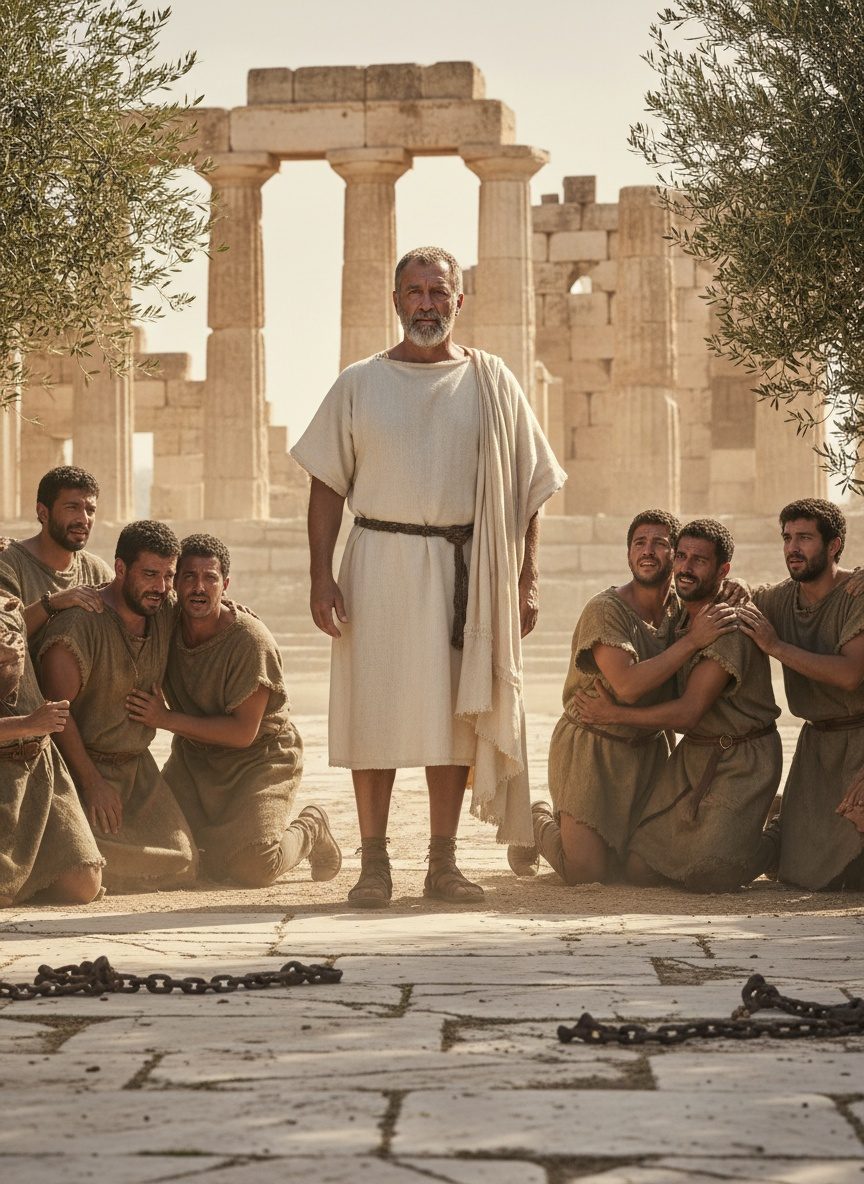
On the day of execution, the coliseum in Carthage thrummed with a fervor of expectation. It was a spectacle to Romans — the ultimate display of triumph over the disorder, misbelief, and fear that the unknown can inspire. But beneath the veneer of theatricality lay the stark truth captured in Perpetua's words. She entered the arena holding the intangible, invincible power of her convictions, accompanied by other faithful companions, fellow believers in a new path of spiritual awakening.
The fierce animals released into the arena, and the sharpened swords of gladiators, were nothing compared to the enduring legacy that Perpetua’s pen had crafted. Her execution, intended to be a deterrent, instead became a profound source of empowerment. Her courage and the narrative she left behind fanned the flames of faith, resonating deeply among early Christian communities and beyond.
In a time when women’s voices were hidden, muffled beneath layers of societal norms, Perpetua’s words stood remarkable and distinct. They survive even in the tattered manuscripts and echo through centuries, a testament to the transformative power of individual voice and relentless belief.
Perpetua’s story teaches us that history is not just written in stone by the powerful. Sometimes, it is breathed into existence by those brave enough to hold a pen against the grain of destiny, knowing that the strength of their truth can outshine the darkest of dungeons. The walls of her cell have long crumbled, but her spirit and story linger, asking generations to reconsider the defiant and enduring power of faith against the constraints of an empire. Thus, Vibia Perpetua, in her resolute act of writing, becomes not merely a figure of antiquity but a timeless symbol of courage and conviction.