Timoleon's name rarely echoes in the halls of fame. Yet, his actions should never be forgotten.
The Rift Between Dreams and Reality
In 338 BC, the city of Syracuse was a shadow of its former self. Once a jewel of Sicily, it had become a war-torn landscape marred by tyranny and desolation. Up against this backdrop of despair, Timoleon of Corinth embarked on what seemed an impossible journey. With only a handful of ships and no substantial army, he crossed the treacherous sea, drawn by the vision of reclaiming a fallen city from the grip of its oppressors.
Timoleon’s mission was fraught with uncertainty. His venture had all the makings of a suicidal errand, but those who followed him knew of his indomitable spirit. Conviction was his shield; strategy, his sword. The tyrant who had seized Syracuse had fortified his reign with fear, turning the city into a bastion of oppression. The foreign shadow of Carthage loomed over the land, eyes set on domination. Yet, Timoleon was undeterred. His mind, sharp and clear, knew that to restore hope, he had to first tear down the symbols of despair.
The Tyrant’s Fall
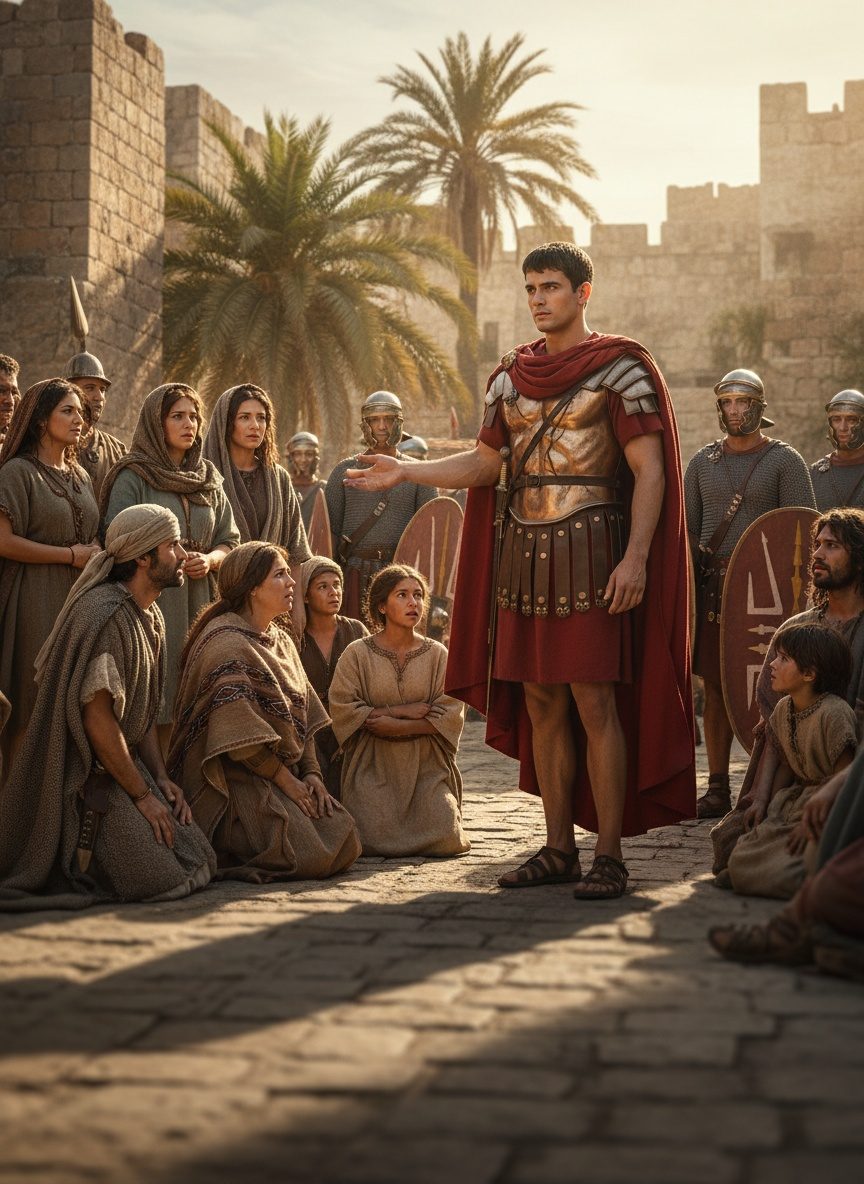
Facing impossible odds, Timoleon demonstrated a mastery of both warfare and diplomacy, ushering in an era of innovation on the battlefield. He was not simply about overpowering his enemies with sheer force; he was about outmaneuvering them, both physically and psychologically. His campaigns were methodical and meticulously planned, and it was this precision that eventually led to the fall of the tyrant in Syracuse. The oppressive regime, which had seemed so insurmountable, gradually crumbled under the weight of strategic brilliance and unexpected alliances that Timoleon forged across the landscape.
His was a fight not just against a tyrant but against the chains that bound the spirit of an entire city. When the day finally came and the walls of tyranny lay shattered, it was a victory not just of might, but of will. For Timoleon, it was a turning point, but the echoes of war still lingered in the shadows that stretched across Syracuse as ashes fell like rain upon the ancient stones.
The Chains That Set Him Free
Victory could have been Timoleon's stepping stone to further conquests or consolidating his rule. Yet, standing amidst the ruins of what Syracuse had become, he saw not opportunity for personal gain, but a responsibility. As he surveyed the devastation, he turned his eyes to the rows of prisoners shackled in chains, their eyes empty and resigned to despair.
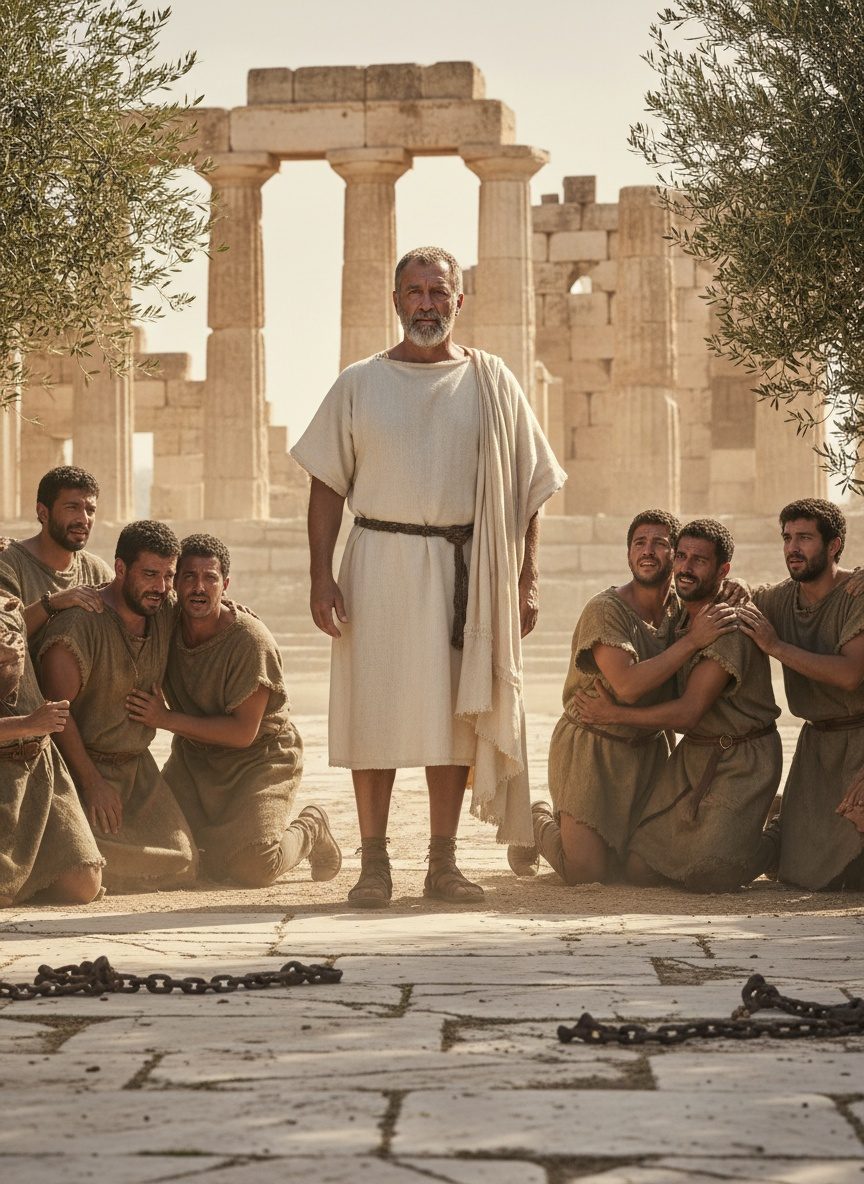
It was here, on the cusp of power, that Timoleon made his most profound decision. With a voice that cut through the silence of the battlefield, he gave the order: every slave was to be freed. The clinking sound of falling chains resonated throughout the city. It was a gesture that marked not just the liberation of a city from tyranny but the release of a leader's own soul from the sins of war.
Then, as those freed began to walk toward the dawn of a new era, Timoleon, the conqueror, sat and wept. His tears were not of defeat, nor solely of joy. They were the tears of a man who had walked through ruin, who had seen the suffering that power could wield, and who chose compassion over conquest.
Rebuilding from the Ruins
Freed from oppression, the city of Syracuse stood at the precipice of rebirth, and Timoleon, though weary, took on the mantle of reconstructing the city. He implemented not only the reparation of the ruins but the foundation for a civic rebirth. His vision was to rebuild Syracuse as a city that stood as a beacon of democracy and freedom, casting aside the shackles of its oppressive past.
Timoleon introduced reforms that would reshape the government, promoting justice and fairness. He encouraged new settlers to come, breathing life into the once-languishing city. His leadership was not about expanding an empire but nurturing a community, fostering a place where the specter of tyranny could not easily grasp hold again.
This new era of prosperity and community did not erase the scars of previous reigns, but it infused the city with a resilience built from hope restored—a legacy of Timoleon’s vision and tearful compassion.
A Legacy of Compassion and Command
Timoleon's journey from conqueror to liberator and reformer presents a narrative rarely seen in the annals of history, where triumph is so often measured by what is taken rather than what is given. In liberating Syracuse and its people, he did more than topple a city’s walls; he laid bare the essence of humanity within a leader, colored by the sobering realization of what power truly meant.
His tears, poignant and real, remind us that behind every grand historical moment are the complexities of human emotion, the struggle between harsh decisions and merciful choices. Timoleon's legacy is not just one of military achievement but of moral fortitude—a beacon of the world he tried to create and a narrative of humanity's ever-present potential for both destruction and redemption.