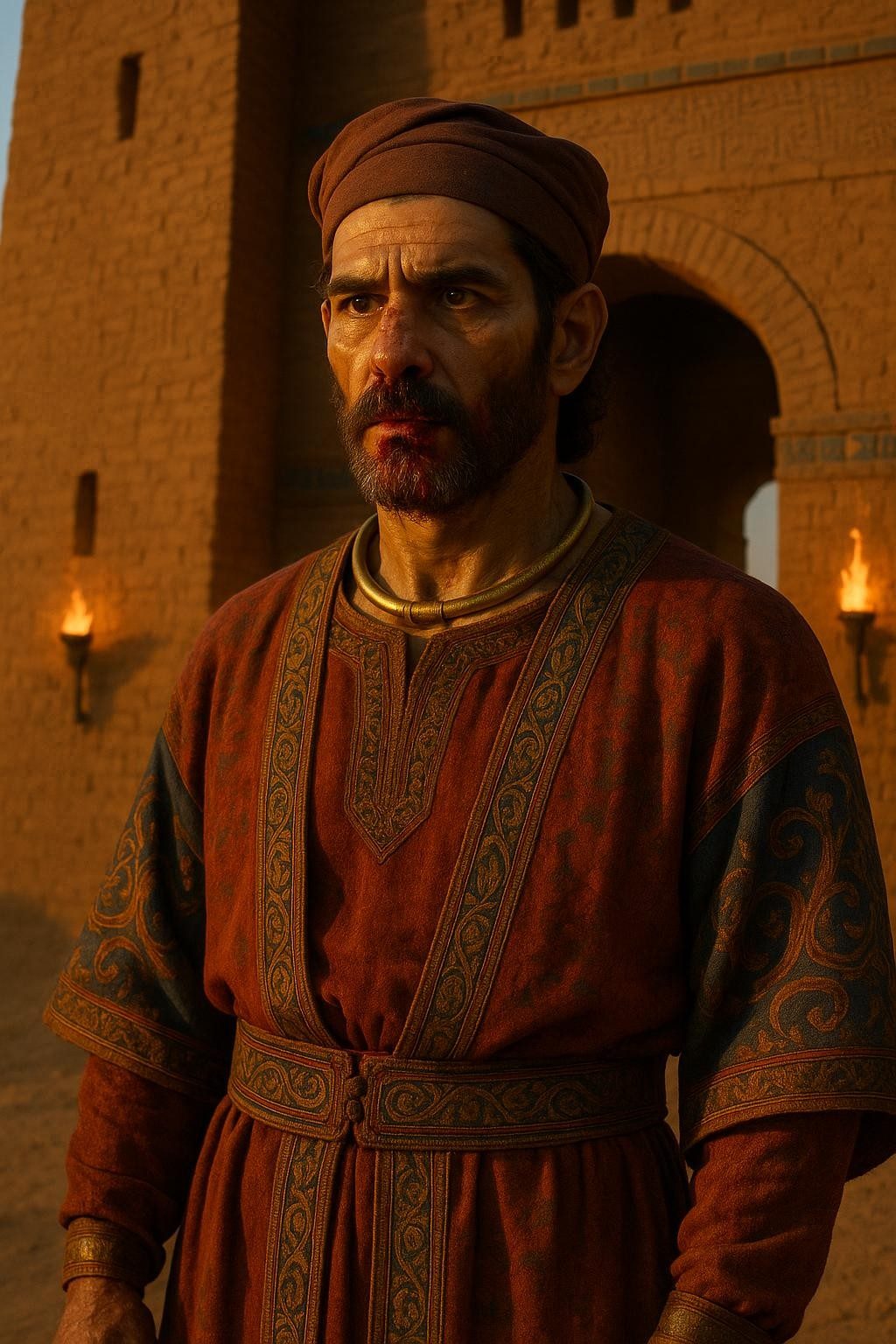
The tent was dimly lit, shadows flickering over the somber faces of the Persian soldiers. All eyes turned to the figure who had just entered. Blood trickled down his face, pooling beneath his chin. The gasps were audible. Where his nose had once been, a grotesque void now marred his visage. Zopyrus, the mutilated apparition before them, stood defiantly, his voice unwavering. As the warmed aroma of spiced wine wafted through the tent, Zopyrus announced his audacious plan to end Babylon's rebellion.
The Impenetrable Walls of Babylon
Babylon's walls were legendary, towering fortifications that seemed to mock any military force foolish enough to attempt a siege. For nearly two years, Darius, King of the Achaemenid Empire, had thrown everything in his formidable arsenal against them, to no avail. The Babylonians, confident behind their defenses, weathered each attempt with a resolution that grew more defiant by the day. As time dragged on, their audacity only fueled the fires of Babylon's rebellion, a tinderbox of resistance and pride.
The city wasn’t just a fortress; it was a symbol. Babylon, with its lush hanging gardens and opulent temples, held a magnetism for conquest, yet its stouthearted inhabitants weren’t ready to yield to Persian dominion. With every failed attempt to breach the walls, Darius' frustration escalated. He needed an internal fissure, a chink in Babylon's seemingly impenetrable armor. Little did he know the answer lay not in the muscles of his army, but in the resolve of one man willing to sacrifice almost everything.
A Nobleman’s Unthinkable Sacrifice
Within the Persian court, Zopyrus was a respected nobleman, known as much for his lineage as for his determined loyalty to Darius. But his idea—a plan tinged with madness—seemed to defy all logic and reason. The sound of shears echoed in his ears as he methodically disfigured himself. He cut off his own nose and ears, ensuring that none would question the authenticity of the betrayal he was about to sell to Babylon.
When Zopyrus presented himself before Darius, the room recoiled in horror. But as he began to explain his ruse, the grim purpose of his self-mutilation became clear. This act of supreme loyalty was designed to convince the Babylonians of his genuine animosity towards Darius, securing their trust and giving him the access he needed to orchestrate their downfall from within.
Deception Within the City Walls
Accepted by the Babylonians as a fellow enemy of Persia, Zopyrus was welcomed with open arms into the city he was destined to betray. Inside, his 'betrayal' was celebrated, and he quickly ascended in their ranks. The babble of Babylonian streets, the scent of spiced meats, the vibrant bazaars—these became the theater for his act, the backdrop of his treachery.
Zopyrus orchestrated minor victories for the Babylonians during his time, slowly building their confidence in him. As trust grew, so did his influence over Babylon’s military decisions. Patiently, methodically, he laid the groundwork for the ultimate deception. At the opportune moment, he signaled to Darius when and where to strike. The gates that once stood as an immovable testament to Babylon's defiance were compromised from within, flung open as attackers swarmed in during the dark.
The Fall of Babylon and Its Reverberating Echoes
The city of Babylon, which had once spat in the face of Persian campaigns, lay open to the arms of Darius' forces, not through siege warfare, but through the cunning and sacrifice of one man. As morning light mingled with the dust of a broken city, Zopyrus’ betrayal shone as a beacon of strategic ingenuity and brutal loyalty to some, and ultimate treachery to others. Darius appointed Zopyrus as the governor of Babylon, bestowing upon him the rewards for a dangerous gambit fulfilled.
The fall of Babylon under such circumstances imparted far-reaching lessons on the art of warfare. Beyond the obvious demonstration of loyalty and the price of empire-building was a harsh reminder of the power hidden within psychological warfare. The story of Zopyrus resonates through the annals not just as an episode of loyalty, but as an example of how victory can be shaped not just by the battalions that march into battle, but by those willing to carve history with their own flesh and blood.