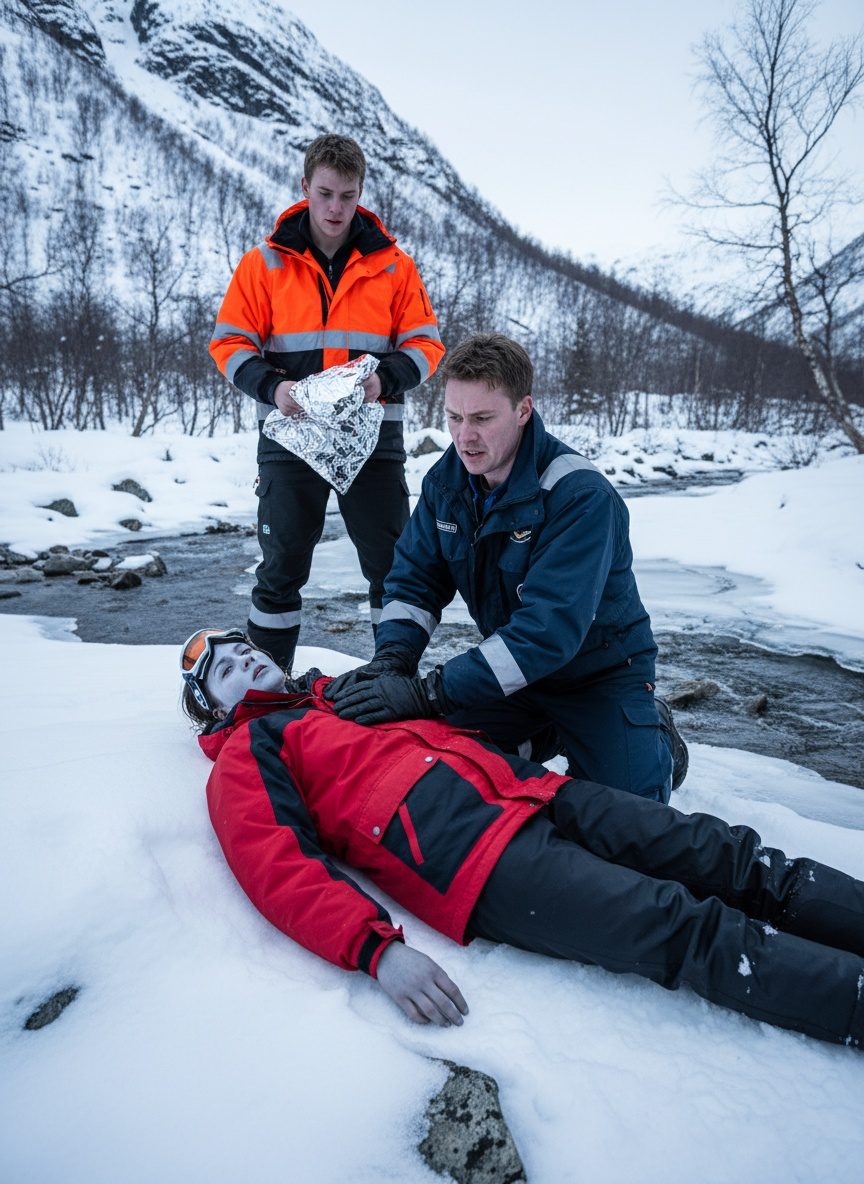
The icy grip of the water clawed at her as she plunged headfirst into the frozen stream. Anna Bagenholm was trapped — caught beneath a thick layer of ice that had turned a gentle river into a deadly trap. The frigid water seeped through her ski clothes, numbing her limbs as she fought to find air in the tiny pocket beneath the surface. In the stark, isolated beauty of Narvik, Norway, a skiing adventure had instantly turned perilous. Her struggle was silent, covered by the solid sheet above, while her friends desperately tried to free her.
Minutes felt like hours as Anna's companions clawed at the ice, using bare hands and whatever tools they could find. But the unforgiving ice refused to yield. With Anna trapped beneath, awareness of time began to dim. Her heartbeats slowed — then stopped, imperceptibly letting go of life's persistent rhythm. It was here, in this frozen moment, that Anna Bagenholm's journey into the threshold of life and death began.
May 20, 1999, will forever be etched into the annals of medical history. Not just for the tragedy that loomed that day in Norway, but for the extraordinary convergence of human will, unwavering hope, and the miracles wrought by science and medicine. Anna's fall into the frozen waters could have been a straightforward ending; instead, it marked the start of an arduous rally against nature's lethality.
As the rescue team arrived, hope flickered in coordinated chaos. With ropes, picks, and a shared determination, they finally pulled Anna free. Her inert form was stark against the snow, lifelessly pale, with skin cold to the touch. By all conventional measures, she was dead. Her core temperature had plummeted to 13.7 degrees Celsius, shattering previous records — a human body frozen beyond survival.
Yet, to declare Anna Bagenholm lost was to underestimate the resilience of the human body and spirit, and the resolve of those who refused to let go. Transported swiftly to Tromsø University Hospital, a massive ensemble of over 100 medical staff awaited her, their faces etched with the grave purpose of saving a life that by all logic should not have been saved.
The hospital, known for its expertise in hypothermia, became a theatre of urgent innovation. The team employed techniques hitherto tested but never on such an extreme case. A heart-lung bypass machine was hooked up to Anna, methodically circulating her blood while warming it, inching her temperature upwards, one grueling degree at a time. As hours passed, minute by minute, the fight was on against biology and time.
A curious paradox flowed through the operating room; Anna's pronounced cold was simultaneously a threat and a salvation. Her lowered metabolism, while chilling, had shielded her brain from further irreversible damage by preserving precious oxygen reserves. It was a race against time, to revive her, without losing another sliver of what little life clung to her under the ice.
Time transformed from an enemy to a thread of suspense as 80 long minutes passed since Anna's heart last beat. Yet, within that edge of a moment, a flicker — her heart, robust in defiance, found its pulse again. Breaths, once thought gone, resumed their labor beneath layers of tubing and machinery. A whispered cry of triumph echoed through the medical staff, tempered by the tenuous nature of her survival.
Recovery was neither rapid nor guaranteed. Anna remained ensconced in a cocoon of care, wrapped in wires and machines, her future suspended in uncertainty. Every increment of progress was monitored meticulously, each movement or flicker of consciousness a victory over the icy void from which she was retrieved. Days stretched into weeks, the thawing warmth of late spring contrasting with the long slog of rehabilitation that awaited Anna.
As the hospital days waned, Anna's story, already exceptional, became one of profound resilience. She not only emerged from her coma, but, astonishingly, showed signs of significant brain function restoration, defying every grim prognosis assigned to patients of severe hypothermia trauma. Her voice, once silent beneath the ice, returned, hesitant, before gathering strength like a river breaking through spring thaw.
On that day when Anna walked out of the hospital, feet guided from the pale stoicism of clinical care to the warmth of daylight tinged with the promise of recovery, her steps resonated with the echoes of a remarkable tale. Her journey, defined not only by survival but also by the human capacity to rally against perceived impossibilities, transcended individual triumph. It became a beacon of hope rooted in science and an indomitable spirit.
Anna Bagenholm’s story is a reminder of the delicate boundary between life and death, and the sheer unpredictability of the human experience. It affirmed that even in the coldest depths of isolation, surrounded by nature’s relentless force, human ingenuity can kindle life’s reignition. It stands as a testament to the collaborative efforts of medicine, the undying hope of a capable team, and the mysterious reserves of spirit within a person unready to fade into the legacy of cold statistics.