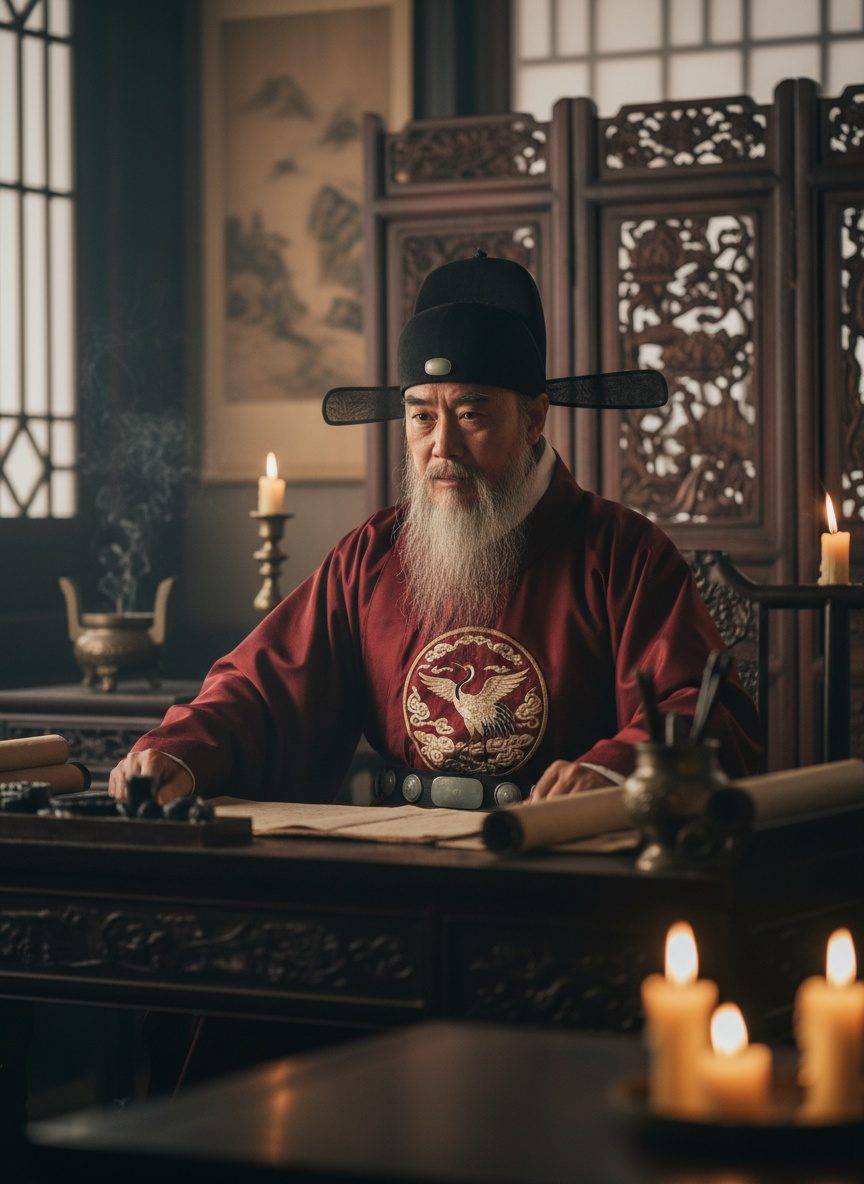
The humid air of the late afternoon clung to the walls of the Forbidden City, wrapping the ancient stones in a heavy silence that seemed to seep through the ornate cloisters. It was within these gilded halls, beneath the watchful gaze of ancestral spirits and the whispers of courtly intrigue, that Zhang Juzheng had once orchestrated the grand reformations that sought to save a faltering empire. But the echoes of his footsteps had barely faded from the corridors when the boy emperor, both pupil and betrayer, unleashed the tidal wave that sought to obliterate Zhang’s legacy from the annals of history.
Zhang Juzheng, a towering figure of the Ming Dynasty from 1572 to 1582, was a statesman whose prowess had carved a path of reform and discipline that revived the empire during its time of dire need. He wasn't merely a bureaucrat; he was a visionary sculpting through policy and decree the very fate of a nation edged toward chaos. With a mind as sharp as the winter winds that howled across the northern plains of China, he restructured the tax system with a deft hand, consolidating hundreds of local taxes into a single, more efficient levy. This profound simplification curtailed corruption, and replenished the imperial coffers at a pace unseen by the dynasty in decades.
The reforms were arduous, marked by a dogged determination that resonated through the policies he enacted. Under Zhang Juzheng's stewardship, the Ming military, weakened by years of neglect, found new strength. He demanded discipline, not just in the battlefield ranks, but also within the ranks of bureaucrats whose negligence had been complicit in weakening imperial defenses. The army found new vigor, its ranks swelled with trained fighters, as Zhang pursued his vision of a fortified empire. But with great transformation came great resentment, as many within the imperial court looked upon his reforms with disdain, their grievances simmering beneath their submission.
Within the silken constraints of courtly life, Zhang wielded more than mere influence over the emperor; he held sway over the regency, guiding the young leader toward maturity with both a firm and a nurturing hand. The emperor, a mere boy at the outset of Zhang’s tutelage, saw him as a fatherly figure, a source of wisdom in a labyrinthine world of power. Yet power, as it often does, corrupted perspectives, twisting loyalty into suspicion. Zhang's death in 1582 marked a seismic shift, not just in the political landscape of the Ming Dynasty, but in the personal realm of the emperor who found himself ensnared by sycophants whispering betrayal in the shadows.
The aftermath of Zhang Juzheng's passing was as swift as it was brutal. The emperor, once cradled in the warmth of Zhang’s influence, initiated a campaign of posthumous retribution driven by vendetta more than reason. Under cover of the enveloping Beijing dusk, imperial censors poured over records, stripping Zhang's family of titles, wealth—everything—and scattered them as though they were an errant breeze stained by crime. Accusations of corruption and avarice echoed through the marble halls, amplified by the emperor’s decree that sought to erase Zhang's name from history's exalted lists.
Yet, as emperors come and go, the bedrock of reform does not crumble so easily. The edifice of Zhang Juzheng's work endured, its foundations too deeply embedded within the fabric of the country to be unearthed by the fickle winds of imperial decree. The Ming Dynasty, armored by policies forged in a crucible of foresight and resilience, trudged onward, clinging to life by the tenacity of Zhang's unseen hand. His tax reforms continued to fill the treasury, and the army, equipped and drilled according to his blueprints, stood as a bulwark against internal and external threats.
This was perhaps the greatest irony of Zhang Juzheng’s life and legacy—a stark testament to the paradox that can exist between memory and influence. To strip a name from the ledger is one thing; to erase the ripples sent through the fabric of a society is quite another. The ideas Zhang championed lived on, shaping generations in a manner his detractors could neither comprehend nor control. For as long as the empire enjoyed the fruits of his labors, his presence was inextricable from the life of the nation, a spectral advisor long after death.
In the soft glow of historiography, where the shadows of memory meet the pinpricks of forgotten light, we find Zhang Juzheng—a man buried by the empire but resurrected by history. His story speaks to the complexities of legacy, the paradox of power, and the eternal dance between memory and forgetfulness. It is a reminder that the deeds of those who dare to reform may indeed outlast their renown, echoing through the ghostly architecture of their influence. Indeed, in Zhang's story, there's a whisper of caution as much as inspiration—a testimony to the truth that power, ever ephemeral, finds permanence only in the marks it leaves upon the world. In remembering Zhang Juzheng, we remember not merely a man, but the indomitable will of reform that lingers long after the final chapter of an imperial tale.