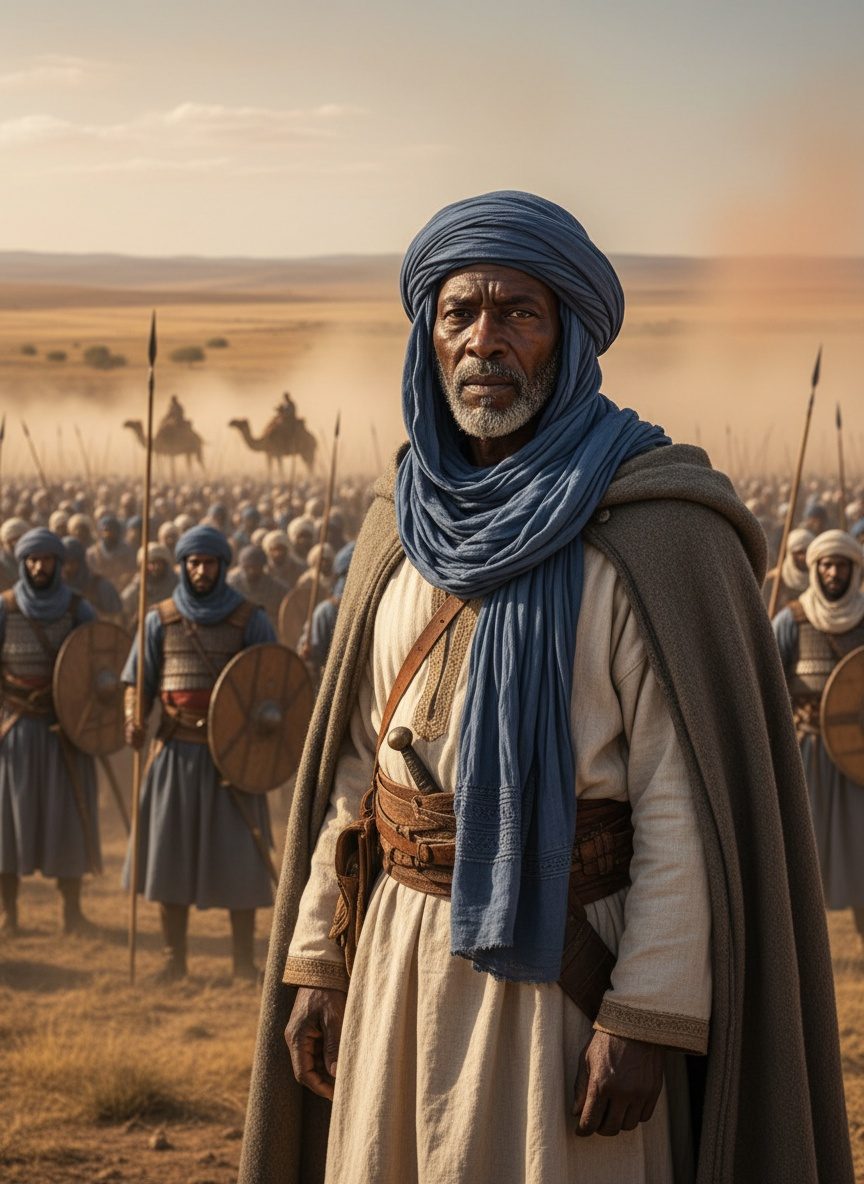
The sea breeze whipped sharply across the Strait of Gibraltar, carrying with it the scent of salt and adventure. The restless waters mirrored the turbulent skies above — gray and tumultuous, eager to spill their rain upon both familiar and foreign lands. On that narrow stretch of sea, destiny converged with the will of a single man, Yusuf ibn Tashfin. His crossing in 1086 would not just save Muslim Spain from its imminent collapse; it would alter the course of history.
The Desperate Plea Across the Water
By the mid-11th century, the once-mighty Al-Andalus, the heart of Muslim Spain, was fracturing under the weight of internal strife. The powerful caliphate had splintered into multiple taifas, small kingdoms often more focused on rivalries among themselves than on the encroaching threat. In stark contrast, the Reconquista, driven by fervent Christian kingdoms in the north, was gaining strength and purpose, capturing Muslim territories with relentless ambition.
Amid the growing pressure, leaders of these divided taifas faced a grim decision. They were outmatched and outnumbered. Desperation led them to mount a bold appeal to Yusuf ibn Tashfin, the ambitious leader of the Almoravid Empire in Africa. Yusuf was not just a military leader; he was a devout Muslim with deeply held beliefs about unity and the defense of Islamic lands. The plight of his brothers across the sea resonated with him, and the call to action beckoned.
The Gathering Storm in Africa
Yusuf ibn Tashfin was no ordinary savior. Born around 1009 in the Sahara, he rose through the ranks to establish a vast empire that extended across North Africa. It was an empire not only of might but also of impeccable organization and unwavering piety. Under his leadership, the Almoravid forces were disciplined, fueled both by their martial prowess and their religious zeal.
The decision to heed the taifas' plea was not made lightly. Yusuf understood that crossing the sea meant committing his forces to a perilous expedition. He gathered his most trusted commanders and marshaled his troops, preparing them with the skills they would need for the battles ahead. The conviction to defend their faith united this diverse force, and their resolve shimmered as brightly as the steel of their scimitars.
The Fateful Crossing and Its Challenges
The journey across the Strait of Gibraltar was fraught with peril; it was a daunting enterprise not only due to the physical crossing but also due to its political implications. Yet Yusuf was undeterred. In 1086, his army embarked from the Moroccan coast, a determined tide poised to reach the shores of Al-Andalus. As their ships cut through the waves, the significance of the mission bore down with the weight of countless lives.
Yusuf's landing in Al-Andalus was nothing short of monumental. It signalled a turning point in a conflict that seemed, until then, one-sided. As his troops disembarked, their arrival was greeted with cautious relief by the Muslim rulers, who now had a formidable ally to aid in staving off their Christian adversaries. Refugees and locals alike flocked to the newfound hope the Almoravid intervention represented.
The Battle That Turned the Tide: Sagrajas
The plains of Sagrajas bore witness to a momentous clash that echoed through the annals of history. The Christian forces, led by King Alfonso VI of Castile, faced the resolute Almoravids and their Andalusian allies. It was a confrontation that would dictate the fate of Muslim Al-Andalus.
Under the bold leadership of Yusuf ibn Tashfin, the battle unfolded with shrewd tactics. The Almoravids, renowned for their cavalry, shattered the Christian advance with a devastating ambush. This was not just a military engagement but an intricately choreographed dance of war. The sounds of battle filled the air — the clashing of swords, the thunderous hooves, and the cries of men, all underscoring the high stakes on this field of destiny.
The triumph at Sagrajas was not merely a battlefield victory; it was a rejuvenation of Muslim morale and control in the Iberian Peninsula. The synergy between Yusuf's African forces and the Andalusians was a testament to the power of unity against the odds. For the taifas, the shadow of annihilation receded, and a clearer future began to emerge.
The Enduring Impact of Yusuf's Intervention
Yusuf ibn Tashfin's intervention did not permanently halt the Reconquista, but it bought crucial time — four centuries, to be exact, for Muslim Spain. The legacy of this formidable endeavor is profound. It demonstrated the ability of African leadership and military might to affect change beyond its borders, reshaping the demographic and cultural landscape of medieval Europe.
Yet, despite its significance, the tale of Yusuf is often overshadowed, his name largely absent from Westernised narratives. This oversight raises crucial questions about how history is remembered and whose stories are deemed worthy to tell.
The crossing of Yusuf ibn Tashfin not only saved Muslim Spain temporarily but also serves as a testament to the interconnectedness of continents and cultures, where African agency and influence reached their zenith. As the waves of the Strait of Gibraltar continue to slosh upon both African and Spanish shores, they whisper echoes of a past where one man's resolve changed the trajectory of an empire. In understanding Yusuf's journey, we glean insights into a shared history that shaped nations and altered the world. His legacy, bathed in the sands of time, reminds us that history is not merely lines drawn on maps, but chapters written in the hearts of those who dared to dream beyond their shores.