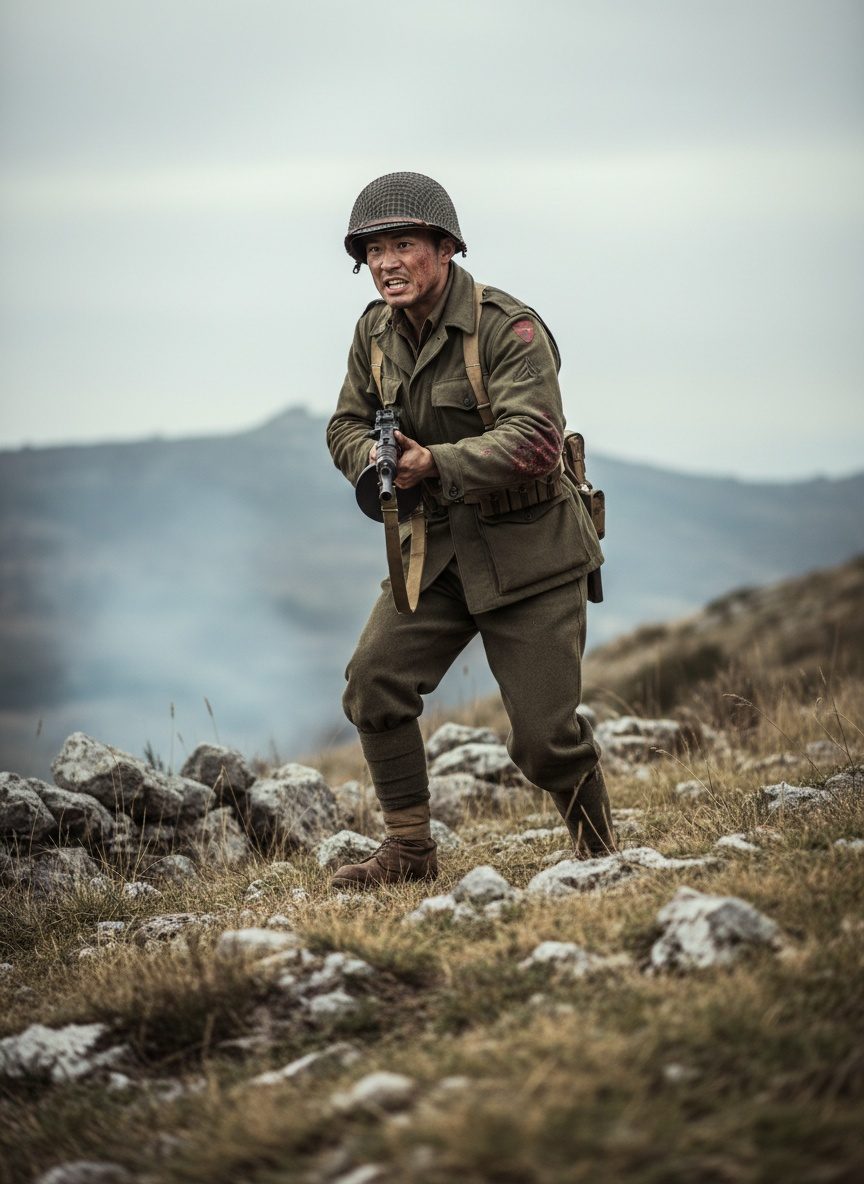
The dawn was cold and biting on the Italian ridge, the air thick with the echoing reports of gunfire. The muted greens and browns of the landscape were interrupted by the stark silhouettes of soldiers, their movements framed by tendrils of morning mist. Here, amid the cacophony and chaos of war, history was about to pivot on a single act of valor. For Daniel Inouye, the stakes were not just survival but a chance to fight for a country that had once turned its back on him.
From Honolulu to the Front Lines
Born in Honolulu, Hawaii, Daniel Inouye grew up in a rapidly changing world. The son of Japanese immigrants, he learned early on about straddling two cultures. In December 1941, life shifted dramatically with the attack on Pearl Harbor. The United States suddenly saw people like Inouye as potential enemies, branding thousands of Japanese Americans as "enemy aliens." It was a label that denied them the right to serve a nation they considered their own.
But in 1943, the U.S. realigned its stance, allowing Japanese Americans to enlist. Driven by a fierce love for his country and a deep sense of duty, Inouye ran two miles to the enlistment office. Here was a young man, wearing the face of an enemy in the eyes of many, yet choosing to bear arms on behalf of a nation that questioned his loyalty. His determination led him to the war-torn landscapes of Europe, eventually arriving in Italy with the legendary 442nd Regimental Combat Team, a unit composed almost entirely of Japanese Americans.
The Battle on the Ridge
April 1945 found Inouye and his men facing fierce resistance on a heavily fortified Italian ridge. The aim was seemingly simple—to dislodge entrenched German forces—but the reality was a harsh barrage of fire from three machine gun nests that pinned his company down. The air was thick with tension and the acrid smell of gunpowder, the ground slick with morning dew and lethal intent.
As he advanced, a grenade exploded nearby, the blast tearing through his right arm and leaving it barely attached to his body. Inouye's left hand became his lifeline—wounded yet unyielding, he gripped his weapon, leading his men with a singular focus. Despite his grievous injury, Inouye pressed forward, eventually neutralizing the enemy positions. His actions that day not only demonstrated extraordinary bravery but also challenged the prejudiced labels imposed upon him and his heritage.
A Statesman Rises
Back in the United States, recuperation did not dull the flame of Inouye's ambition. He entered politics, his severed right arm and prosthetic hand serving as stark reminders of the personal sacrifice he had made. Inouye's political career began in 1959 when Hawaii achieved statehood, and he was elected to the U.S. House of Representatives. Three years later, he ascended to the U.S. Senate, becoming its first Japanese American member.
Through decades of service, Inouye became a powerful voice in American politics. His tenure saw him involved in significant legislative actions and complex international dialogues. Yet, despite his newfound influence, Inouye's roots remained firmly planted in his wartime experiences. He utilized his platform to advocate for veterans and minority rights, ensuring that the stories of those who were once marginalized were not only heard but codified into law.
Beyond the Ridge: A Legacy Forged
Daniel Inouye's story is more than the tale of a soldier's heroism on an Italian ridge. It's a narrative of perseverance, loyalty, and transformation. He forged a path from a war-torn battleground to the halls of American government, changing the nation's history with each step. As Senate President pro tempore, Inouye symbolized possibility and progress, his lifetime of service underscoring a commitment to principles greater than personal or political gain.
Today, as we reflect on Inouye's impact, we are reminded of the power of individual resolve in shaping collective destiny. At a time when faces were scrutinized as emblems of loyalty or betrayal, Inouye's life reveals a deeper truth—identity is not a mere reflection of appearance, but an accumulation of actions, convictions, and sacrifices. His story is a testament to the human spirit's resilience and an enduring reminder that those who may once be deemed outsiders can become architects of a better, more inclusive future.