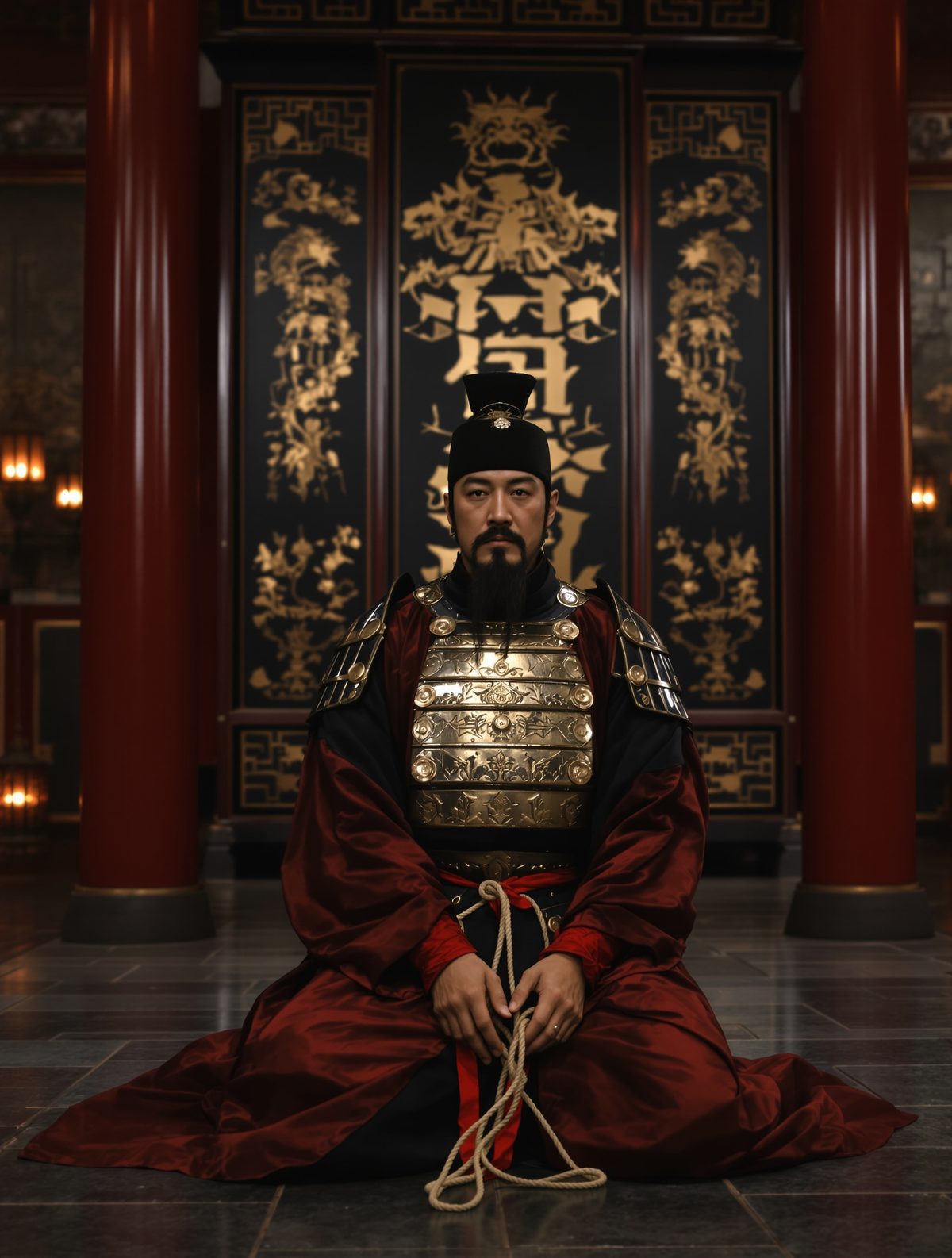
In the deafening chaos of war, the banners of the Song Dynasty flapped defiantly in the cold northern winds. Yue Fei, a name destined for legends, fought with unparalleled vigor. His eyes fixed on a future where the northern territories, long lost to the ferocious Jin invaders, would once again bear the proud emblems of the Song. Victory was not just in sight; it was almost in hand. Yet, like a cruel twist from the fabled tricks of fortune, destiny pivoted sharply. It wasn't the ferocity of his foes that would halt him—it was the voice of his own emperor, calling him home to answer for his loyalty, not to the realm, but to peace.
The Unyielding General
Yue Fei was not merely a general; he was a symbol of perseverance and virtuous strength. Born in 1103 AD in Tangyin County, Henan, his rise to prominence during the tumultuous years of the Northern Song Dynasty reflects a saga of strategic brilliance. The realm was undulating in turmoil as the Jin Dynasty from the north encroached, slashing through Song defenses with ruthless efficiency. Into this chaos stepped Yue Fei. His prowess was undeniable and, by 1134 AD, he had become the most celebrated general of the Southern Song, feared by adversaries and revered by his troops.
It is said that Yue Fei had the words "尽忠报国" (serve the country with ultimate loyalty) tattooed on his back by his mother—an indelible reminder of his devotion. His campaigns were masterclasses in military strategy, his army moving with the precision and discipline of a poet's pen. In 1137, Yue Fei seized a significant victory at the battle of Jiushengling, securing southern defenses and pushing the Jin back. In a time when legends faded, Yue Fei's was still being forged in the fires of tenacity.
The Brink of Triumph
By the spring of 1140, Yue Fei had reversed many of the Jin advances, assembling an impressive force of approximately 100,000 soldiers. As he approached the Yellow River, optimism electrified the air; the era's whispers spoke of reclaiming the cradle of Han civilization. The Jin, who at one time seemed invincible, were now on their back foot, scrambling against Yue Fei's relentless advances. Everything was in place for a complete northern reconquest.
But victory, like a fleeting dream, began to unravel. On January 22, 1142, at the zenith of his power and on the cusp of historic accomplishment, twelve startling imperial orders for Yue Fei's recall descended nearly simultaneously like ominous thunderclouds over his encampment. For a soldier whose tattooed skin testified to his loyalty, the orders were both baffling and heartbreaking. His instincts and honor compelled him to tread the path laid out by his emperor, even though it was rife with shadows.
Betrayed by Peace
As detailed in ancient Chinese sources, Yue Fei returned to the capital Hangzhou, only to be shackled by betrayal. Without recourse to justice or explanation, he was imprisoned, accused disparagingly of insubordination and treasonous intent—charges so false they echoed absurdity and cowardice. The whispers in court told of secret negotiations with the Jin, whispers plotted by Chancellor Qin Hui. The emperor, Zhao Gou, weary of incessant conflict, had sought peace over victory.
On February 28, 1142, Yue Fei met his untimely demise, believed to have been quietly poisoned while imprisoned. His death was not the hero's farewell anticipated on bloody battlegrounds but rather the slow quieting of a voice too potent for political comfort. Yue Fei's end, at just 39 years of age, was a tragic testament to the complexities of loyalty and the often-cruel calculus of power.
The Ghosts of Heroism
In the wake of Yue Fei's execution, the Jin-Song peace was sealed, granting temporary respite but leaving lingering doubts about the costs paid with virtue and valor. The memory of Yue Fei lingered as a specter, a reminder of the tumultuous balance between warfare and politics. In later decades, Yue Fei's story gathered the colors of myth, becoming a canvas of moral fortitude and gallant rebellion inscribed deeply into the fabric of Chinese cultural consciousness.
Great monuments would eventually adorn his memorials; his name was cleansed through historical revisionist efforts by the imperial court. Names such as Yue Fei rarely fade; they grow in fervent admiration with time: a nonpareil, an immortal whose literal ink, intertwined with duty, became part of China's cultural soul.
A Lesson in Loyalty and Power
In the theater of human history, where loyalty and power perform an ever-revolving dance, Yue Fei's story remains a striking exemplar of the tension between duty and politics. Today, his legacy transcends the stone walls of ancient crypts, offering a poignant reflection on the timeless themes of betrayal and justice. In the corridors of governance across the world, his story prompts us to question how often the path to genuine peace is obscured by the shadows of ambition and the imperatives of political expediency.
As we look back upon this historical unfolding, we find within it a call to remember the oft-forgotten heroes and the price they pay in service of their nations. Though seldom taught in classrooms, the tales of Yue Fei whisper through history, inviting us to honor the true allegiance owed not just to rulers but to righteousness itself.