In the hazy twilight of a Mediterranean morning in 1225 AD, Frederick II, Holy Roman Emperor, stood on the brink of an audacious maneuver that would bewilder both allies and adversaries alike. A flaxen-haired enigma, he was equally at home reciting poetry in Arabic as he was drafting laws in Latin. Cast out by the Church and excommunicated by the Pope, Frederick had a bold vision to reclaim Jerusalem, not with swords drawn, but with words spoken. His journey to the Holy City, laden with diplomacy, served as an indelible mark on a tapestry of medieval history.
The Papal Anathema
The path to Frederick’s historic accomplishment began with a papal decree that exiled him from the grace of the Church. In September 1227, Pope Gregory IX, with thunderous authority, excommunicated Frederick II for failing to promptly embark on the Fifth Crusade. The accusation lanced deep; in a time when papal power held more sway than crowns, excommunication was akin to spiritual and political death. Frederick, however, was no ordinary monarch.
A master of statecraft, Frederick regarded the Pope not as a divine figurehead, but as a rival figure. Born of Norman, German, and Sicilian bloodlines, Frederick’s background endowed him with a rare cosmopolitan outlook for his time. Fluent in multiple languages and a patron of the arts, he earned the nickname Stupor Mundi—the Wonder of the World. Rather than bowing to Rome's decree, Frederick decided to stake his elusive claim on Jerusalem through strategy that would require every ounce of his ingenuity.
A Crusade Without a Cross
Defying the papal ban in 1228, Frederick set sail from the port of Brindisi with a small contingent. Unlike previous crusaders who heralded their quests with armies, Frederick’s ambition seemed quixotically trivial. Yet, his modest entourage belied the emperor’s deeper, diplomatic intent. Amid the arid landscapes of the Near East, surrounded by armies eager for battle, Frederick saw instead an opportunity for negotiation.
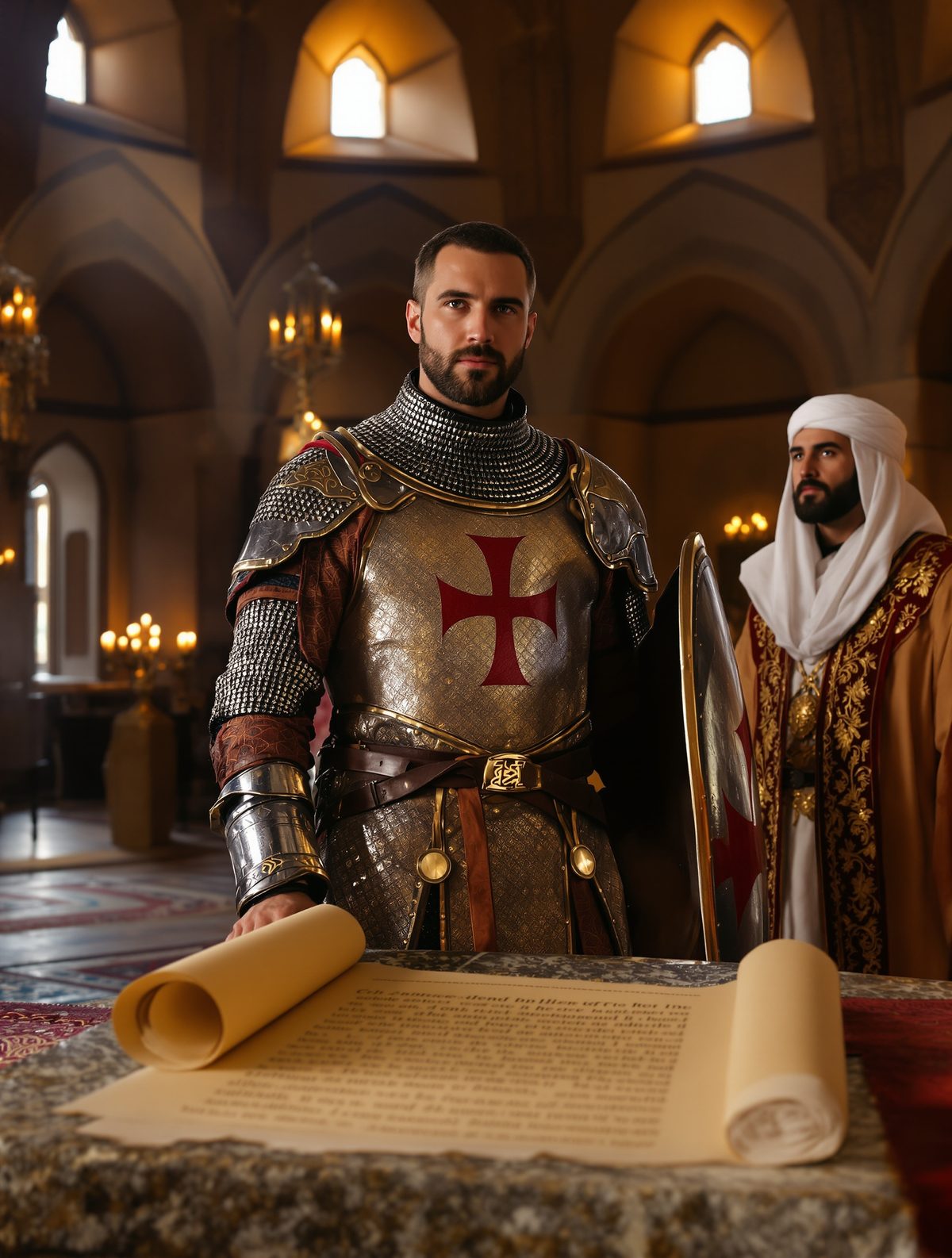
Upon arrival, his army remained largely at bay—an unusual tactic for a crusader. This peace-bent emperor embarked on dialogues with the Ayyubid Sultan Al-Kamil, nephew of the legendary Saladin. Al-Kamil, embroiled in his own conflicts in Egypt, entertained Frederick’s propositions. Significantly, the negotiations were conducted in a language that Frederick had meticulously studied—Arabic. The fact that the enemy could converse in the tongue of his own courtly scholars helped weave what came next—a miracle, to some; a diplomatic masterpiece, to others.
The Key to a Kingdom
On February 18, 1229, a ten-year truce known as the Treaty of Jaffa was crystallized between Frederick and Al-Kamil, granting the Christians dominion over Jerusalem, Bethlehem, and Nazareth while allowing Muslims to maintain control over their sacred mosques. Although Frederick’s entrance into Jerusalem on March 17 was accomplished without a drop of blood spilled, the reception in Christendom was lukewarm. Instead of the joyous pealing of bells, Frederick found his Crown of Jerusalem received in a shadowed and solemn ceremony—after all, hostilities with the Church meant no cleric was willing to coronate him.
The journey showed a remarkable pivot in how holy wars were conceived—a peaceful reclamation of territory owed to reticence and tact over martial might. Jerusalem might have been held with less fervor than in years past, but it was undeniably back under Christian hands, if only for a short while longer.
The Avian Affection
Yet Frederick's victories in diplomacy and statecraft veiled lesser-known personal peculiarities. In his Sicilian court, Frederick maintained an aviary filled with exotic birds—a fitting symbol for a ruler who preferred the art of conversation over the clang of steel. His passion for ornithology was not simply a pastime but a testament to a mind that sought understanding across disciplines and cultures.
One anecdotal tale relates that seated upon a sarcophagus in Jerusalem, wrapped in the thoughtfulness of his own grandeur, Frederick had the company of falcons perched as tacit witnesses to his triumph. Birds, unlike men, had no papal allegiances, no kingdom disputes—in them, Frederick found creatures that flew as high as his ambitions.
A Legacy Reconsidered
Why does Frederick II's singular crusade matter today? In an age facing manifold clashes of ideology and religious fervor, his mission echoes a resonating truth—that words wielded with wisdom can open gates often shut to swords. His unyielding determination to elucidate accord where others foresaw ruin stands as an enduring reminder of the power of diplomacy.
Though Frederick II may not have embarked with the traditional zealotry of a crusader upon his journey, his approach transcended the era’s limitations. The wonder lies perhaps in not how he captured a city once lost, but in how, through sheer intellect and courage, he painted upon the canvas of history a narrative of intrigue and compromise, one they did not teach us in school. Frederick did not rewrite the rules of war; he simply showed that sometimes those rules could be left by the wayside, allowing reason to take flight, much like the gentle creatures he so cherished.