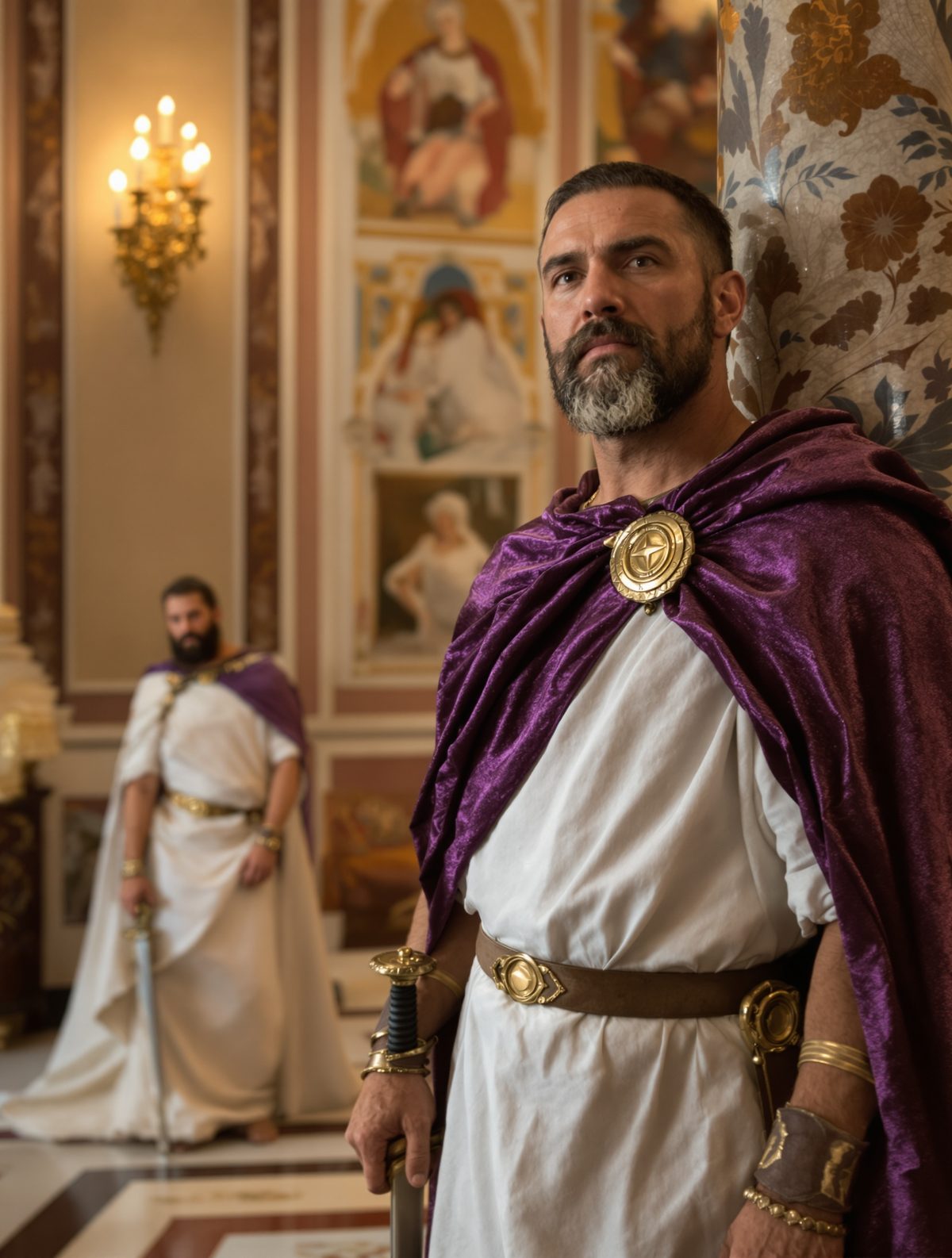
As dawn broke over the sprawling kingdom of the Franks, a peculiar yet endearing ritual unfolded within the walls of Charlemagne's grand palatial complex. The powerful ruler, who commanded legions and molded the contours of Europe with decisive gestures, opted for a humble start to his day. Ignoring the opulence of his own throne room, he traversed the corridors to a simpler destination—the heart of any household: the kitchen. Here, amidst the aroma of freshly baked bread and the sizzle of meats, Charlemagne embraced an ethos that belied his imperial stature, sharing meals with his servants in an intimate and unpretentious setting.
The Morning Ritual of an Emperor
Amidst the cold, stone corridors of his kingdom, Charlemagne's morning walks to his kitchen carried more significance than meets the eye. Born in 742 AD and crowned King of the Franks in 768, Charlemagne was a man of immense power. By 800 AD, he had been crowned Emperor of the Romans by Pope Leo III, effectively reviving the Western Roman Empire. Yet, sources like Einhard, his loyal biographer, note that despite the grandeur of his titles, Charlemagne preferred to break his fast without ceremony, seated among those who served him rather than those who served under him.
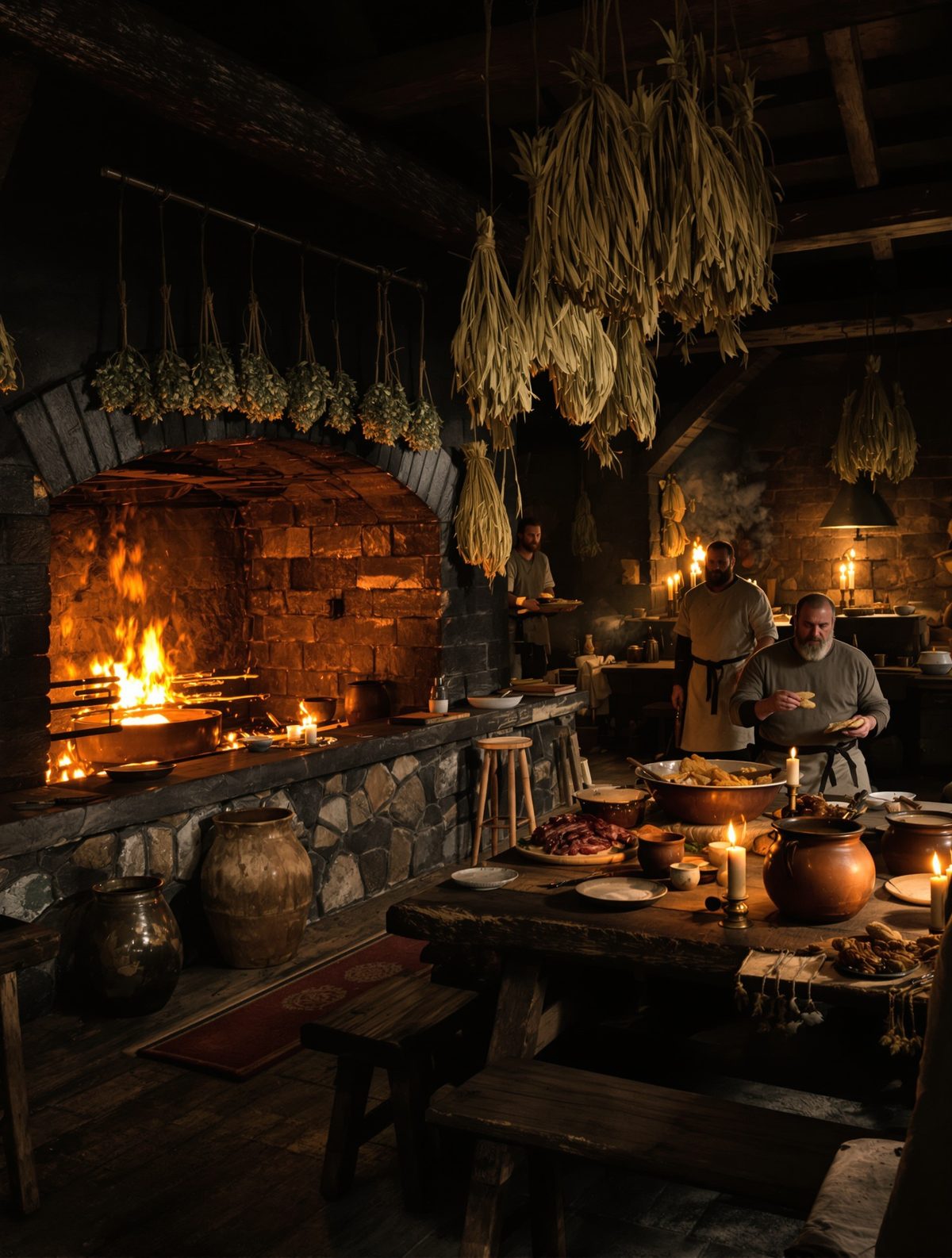
This was no ordinary kitchen. It pulsated with the energy of a hundred hands at work, the syncing rhythms of chopping, mixing, and roasting punctuating the air. It was a hive of activity that set the tone for feeding an empire, handling provisions that reflected the emperor’s territories, from the fertile vineyards of Gaul to the lush fields of Saxony.
A Feast for an Emperor in Modest Surroundings
While the fare might lack the meticulous pomp of ceremonial banquets, Charlemagne’s breakfast was nonetheless ample and hearty. Laden with rustic breads, dense and aromatic, they were paired expertly with plates of roasted venison and fowl hunted from his expansive forests. Sometimes, cheeses aged to creamy perfection punctuated the simple repast, accompanied by robust wines or spiced meads to start the day on a buoyant note.
Charlemagne’s culinary choices were as strategic as his battlefield maneuvers. Conscious of setting an example, he extended his hospitality to guests of all ranks, ensuring these meals served as a microcosm of his broader governance philosophy—unifying a diverse empire under common customs and shared experiences.
The Man Behind the Meals: A Hidden Hero
Presiding over this culinary domain, Charlemagne’s chief cook (name regrettably lost to time) played a pivotal but silent role. Equipped with ample inventiveness and a remarkable understanding of his emperor’s palate, this unsung figure orchestrated daily miracles that kept the emperor pleased and the imperial machine running smoothly. Ensuring the kitchen functioned seamlessly required intricate planning and coordination. The cook’s deft management mirrored the centralised efficiency that characterised Charlemagne’s administration of his vast territories.
The relationships fostered here in the kitchen, perhaps more than political edicts, symbolised Charlemagne's enduring legacy. As he interacted with those who prepared his meals, the boundless charisma that united conflicting factions into a singular empire was evident, illuminating his distinct ability to communicate empathy and command in equal measures.
Beyond Borders: Feeding an Empire With a Simple Philosophy
In an era of intricate diplomacy and relentless conquests, the simplicity of Charlemagne’s morning routine offers intriguing insights into his leadership style. Despite the ever-present trappings of power, he demonstrated an egalitarian approach—whether in his gatherings of the royal court or among his kitchen staff.
This approach extended beyond palace kitchens and worked its way across the domains he ruled. The Emperor encouraged local governors and nobles to adopt similar daily customs—informal gatherings that nurtured genuine dialogue and understanding among the classes.
While military prowess and political acumen may define Charlemagne in historical narratives, it was his personal humility and quotidian choices that nourished the spirit of his empire, knitting its fractious lands together under a relatable and human ruler.
The Lessons Of Charlemagne's Table
Why does it matter that the ruler of a vast empire began each day at a humble breakfast table? In today’s fast-paced world, Charlemagne’s practice encourages leaders across this digital age to consider the power of humility in human relations. It underscores the importance of nurturing connections beyond hierarchical dynamics, promoting lasting bonds and mutual respect across every level of society.
Moreover, as the human touch continues to diminish amidst technological progress, Charlemagne reminds us of the importance of maintaining fundamental human interactions. Eating simply, side by side, he showed that even an emperor benefits from listening to every perspective over a shared platter.
In the silent echoes of Charlemagne’s kitchen, we find inspiration for a more connected, equally respected world, proving that sometimes change begins not on the battlefield, but rather at the breakfast table.