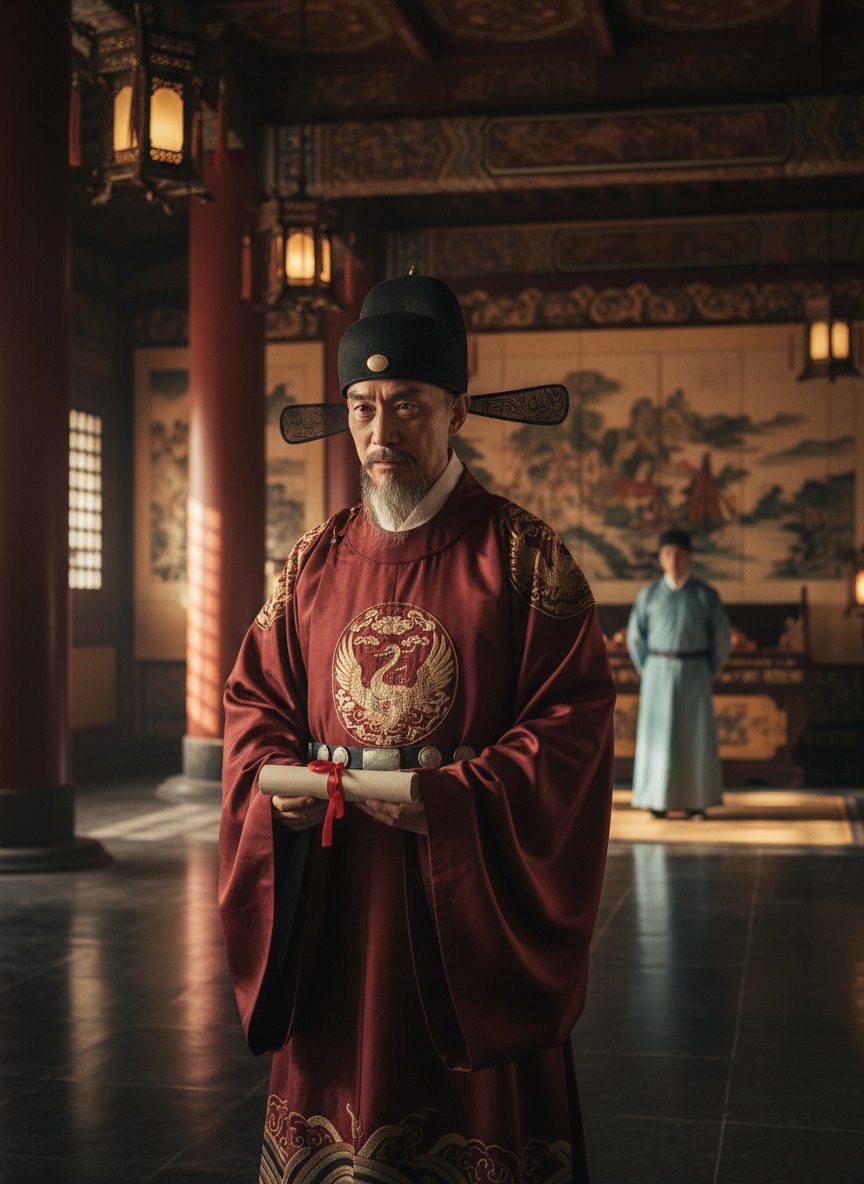
He was the most powerful man in the kingdom, yet he held no royal blood. His power came not from birthright, but from wisdom and integrity.
Yi Yin, a name now largely lost to the annals of time, commanded both respect and reverence in the Shang Dynasty during a turbulent period. His story begins not in the hallowed halls of a palace, but humbly enough in the heart of a vibrant, yet learning-filled environment. As one of the most critical figures in ancient China, Yi Yin transformed his humble beginnings into a legacy of loyalty and leadership that would endure for generations. His name was whispered across the wind-swept plains of ancient China as a person who could have seized a throne but chose a path of humility and fidelity instead.
The Shang Dynasty, ca. 1600 BCE, sat amidst the tumult of transition. When the old king passed, the kingdom was thrown into uncertainty. His heir, just a child, was not yet ready to hold the weight of power. The assistance of an experienced and capable hand was needed to guide the kingdom through these precarious times, and Yi Yin answered the call. It was Yi Yin who had already served two kings before, who had weathered crises like famine, and who was ultimately seen as the linchpin holding the empire together. When the mantle of regency fell upon him, it was as if destiny itself had been preparing him for this singular moment.
His early years belied nothing of the influence he would exert over a nation. Born in a time of plenty yet educated by hardship, Yi Yin learned the intricacies of statecraft under the wattled roofs where decisions were both life's daily bread and a matter of survival. Early records suggest he could have risen from the ranks of the enslaved or adopted—both statuses that ancient texts alternatively attribute to him before his staggering rise to power. Either way, he was said to have been employed as an adviser within the palaces, a journey from the earthen dwellings of the fields to corridors of the court that crafted his sharp intellect and devoted character.
Nothing less than a miracle was needed when the kingdom faced famine, and Yi Yin was instrumental in implementing innovative agricultural techniques, helping to preserve not only the economy but the very lives of his people. Through these acts, he earned the trust of the Shang rulers and established himself as an indispensable fixture in the royal court. This capacity to provide swift and tangible results to vexing problems earned him a reputation that spread far beyond the kingdom's traditional borders.
When the old king died, Yi Yin found himself standing beside a throne that many suggested he seize. But such ambition was foreign to a man dedicated not to self-aggrandizement but to stewardship. Wise in his governance and decisive in action, he ruled as a guiding guardian rather than a king, holding the kingdom in trust until the rightful heir could ascend. Under his provisional rule, the realm knew stability instead of a potentially ruinous power grab; he enforced justice and dispensed policies that evoked a balance between the varied influences across the kingdom's patchwork lands. His was an administration marked by tireless dedication, ensuring that when the young heir came of age, he would inherit a kingdom as strong and cohesive as it had been under his father.
With the passage of years and the boy grown into the resolve of manhood, the day came when Yi Yin was called to perform his final, most selfless act. It was a scene charged with profundity as Yi Yin, encumbered not by regret or reluctance, but with wisdom and relief, knelt before the new king. Here was a display of power shifting not by force but by conscious choice, a gesture as monumental as any singular battle in military history. By returning the throne, Yi Yin redefined the meaning of duty, elevating it from mere obligation to an ethos of lifelong service.
The intricacies of Yi Yin's choices remind us that leadership without ambition is as invaluable now as it was millennia past. He taught us that the most potent form of authority is derived not from coercion but from the respect of peers and subjects alike. The decisions he made—bold, gracious, and humble—continue to present a counterpoint to the unchecked ambition that so often marks historical narratives of power. Yi Yin's legacy is more than a set of pragmatic actions; it is a testament to how history remembers those whose greatest victories come not in seizing opportunity but in knowing when to bestow it.