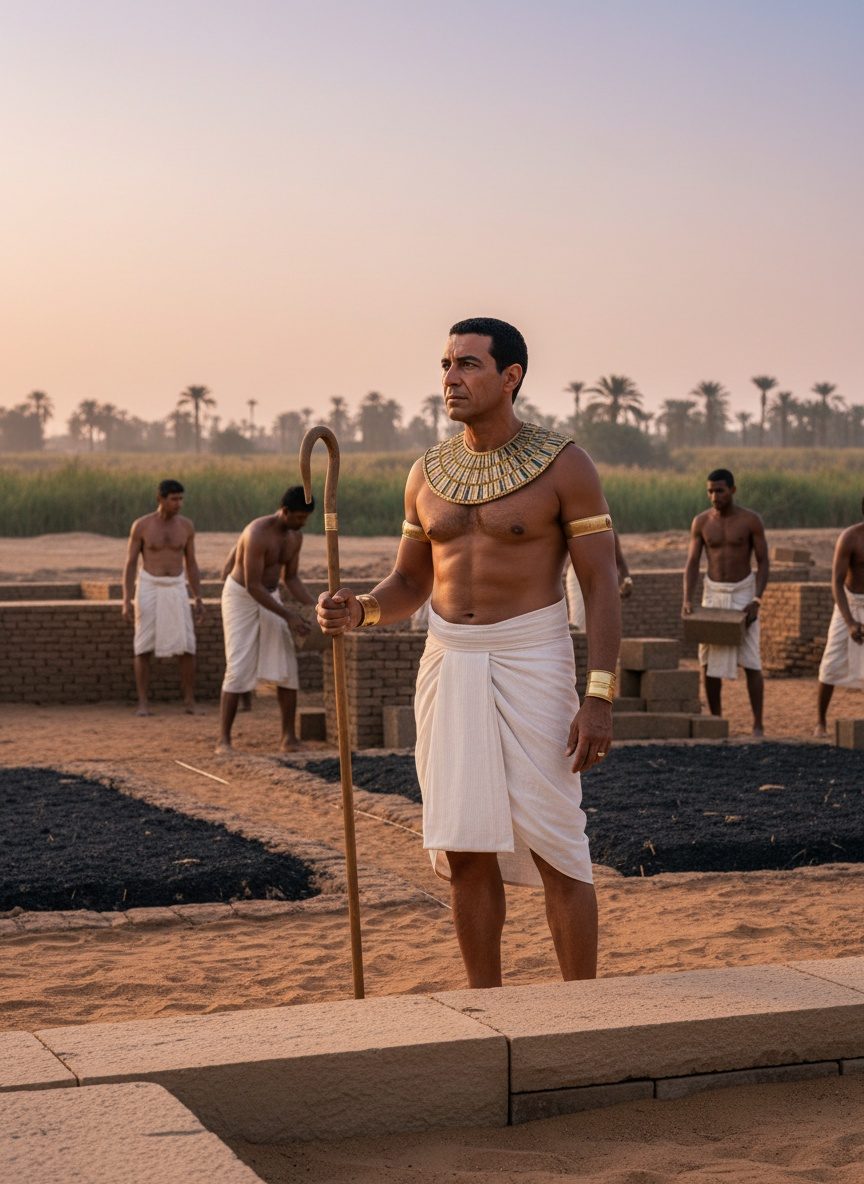
The Birth of a Unifying Force
The ancient land of Egypt, long divided into Upper and Lower regions, lay on the cusp of a historic unification. For centuries, these two halves existed in stark contrast—the fertile Nile Delta in Lower Egypt, with its endless fields and marshlands, opposed the more austere, arid lands stretching southward through Upper Egypt. Each region harbored its own traditions, deities, and rulers, yet a singular figure arose to change the tapestry of Egypt forever: Hor-Aha, son of the iconic King Narmer.
In the early stages of dynastic history, circa 3100 BCE, Hor-Aha emerged not only as a ruler but as the architect of a new era. This was a time when myth and history intertwined, bearing witness to the dawn of a civilization that would become one of the most revered across millennia. His decision to unite the Two Lands—symbolized by the intertwined papyrus and lotus plants—marked an unprecedented consolidation of power.
A Strategic Vision Unfolds
Hor-Aha made a strategic choice that would transcend his lifetime and serve as a cornerstone of Egyptian identity: the founding of the city of Memphis. At the time, the geographical position of Memphis was nothing short of genius. Situated where the rich, black silt of the Nile floodplains met the stark desert sands, this nascent settlement became the epicenter of Egyptian culture and administration.
Envisioning Memphis required foresight, as it was strategically located between Upper and Lower Egypt. This choice symbolized more than mere geography; it was a physical manifestation of unity. The city's unique position helped to centralize power, facilitate trade, and ensure the swift movement of armies, if needed. Even the etymology struck reverence; derived from the ancient name "Ineb-Hedj," which translates to "The White Walls," Memphis stood literal and figurative ground as a singular point of convergence.
The Granite Foundations of Memphis
The task of transforming this strategic location into a thriving city meant more than constructing mere infrastructure; it was about carving a legacy from the very stones of the earth. As myth holds, the city’s initial layout was marked in white, visible sandstone—a humble but enduring start for what was to become a formidable metropolis. Massive granite blocks, mined from quarries upstream, were transported along the steadily flowing Nile. Ingenious engineering allowed for their careful placement, ensuring that Memphis would withstand both the desert's harsh conditions and the test of time.
The labor that went into building this ancient city is often understated. Craftsmen, laborers, and architects toiled under the relentless Egyptian sun, pushing the boundaries of construction techniques available all those centuries ago. Yet, this effort was more than just manual labor—it was a cultural initiative, setting a tone of sophistication and stability that would resonate through Egyptian history for over three millennia.
A Symbol of Cultural Confluence
Memphis was not merely a political capital; it was a melting pot of culture and innovation. It attracted artisans, traders, and scholars from across the realms, establishing it as a land of opportunity where ideas and commodities freely flowed between civilizations. The city became a haven where the arts flourished, and advancements in architecture, astronomy, and governance were made.
Here, the mighty temple of Ptah witnessed the daily homage paid to the god believed to shape the world with his thoughts. The influence of such a deity, focusing on creativity and the physical construction of worlds, punctuated Memphis's very ethos. The vibrancy of its markets, the solemnity of its temples, and the bustle of its streets all contributed to a vibrant tapestry of life that enriched the ancient world.
The Long Shadow of Hor-Aha's Legacy
As years unfolded into centuries, Memphis anchored itself as an eternal city that outlived the rise and fall of countless empires. At the intersection of myth and reality, its story wasn’t lost in the shimmering sands or the changing tides of fortune. Even as other power centers rose and fell, Memphis retained its importance, buoyed by its historical roots as the first seat of the united Double Crown of Egypt.
In contemporary times, remnants of its grandeur might elude the casual observer, yet its impact is embedded in every significant accomplishment thereafter. Hor-Aha's vision bore fruit on the banks of the Nile, and his decision was more than pragmatic; it was visionary, tying a culture together with the threads of shared governance, faith, and prosperity. It resonates with the timeless lesson of unity through strategic choices—the echoes of which continue to inform leadership and cultural cohesion across the ages.
Hor-Aha may well be a shadowed name behind the iconic mask of Egyptian antiquity, but his contributions laid down the way for a civilization that conquered time itself, a lesson of foresight, unity, and the powerful legacy of building at the crossroads.