He was not born to rule. Yet, Egypt made him a god.
The Scribe Among Pharaohs
In the bustling, sun-drenched metropolis of Thebes, Amenhotep Son of Hapu was a figure unlike any other. Where mighty pharaohs held sway over the land with commanding presence, Amenhotep wielded the softer power of wisdom and humility. Born into modest means during the 18th Dynasty around 1390 BC, his rise to prominence was not a tale of conquest or regal inheritance, but of intellect, dedication, and compassion.
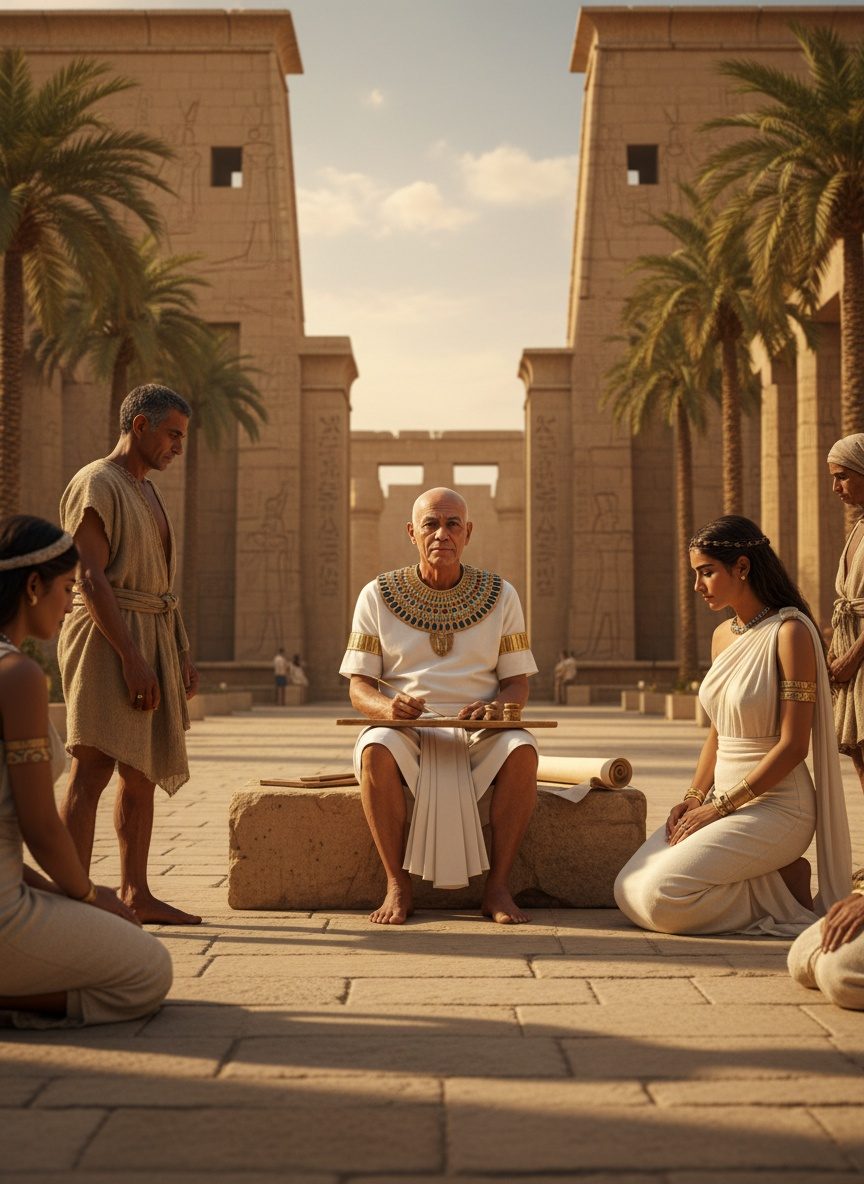
Where the Nile's waters overflowed, bringing life and prosperity, Amenhotep immersed himself in learning. As a royal scribe, he was privy to the inner workings of the pharaohs’ courts, places of grandeur where every stone bore witness to the divine order of Egypt. Yet, he remained grounded in the plights of the commoner. Offering his ear and advice to those who approached, he stood as a bridge between the omnipotent rulers and the voiceless undercurrent of society.
His master, Pharaoh Amenhotep III, recognized something unique in this scribe. The synergy between them transcended the typical servant-lord dynamic. Amenhotep, through tireless service and a sterling reputation for fairness, became indispensable to the pharaoh, who in turn bestowed upon him honors befitting not a mere advisor, but a true friend. Such was the respect and admiration that even as he meticulously oversaw the construction of temples and monumental projects, Amenhotep never lost sight of the everyday needs of the Egyptian people. It is said that no one was ever turned away, his kindness an expansive oasis in the desert of hardship.
The Architectural Visionary
Amenhotep Son of Hapu's legacy also carved itself into the very stones of Egypt. His architectural genius was instrumental in the creation of mesmerizing edifices that still inspire wonder. Under the sunlit gaze of Ra, multitudes of laborers moved as per his orchestrations on projects designed to connect mortals with the divine. The temples he helped construct were more than mere stone and mortar; they were enduring testaments to human transcendence.
His role in the creation of these monumental works was not limited to that of a project manager. Amenhotep infused these structures with a spirit of inclusivity and devotion beyond spiritual or royal worship. He planned with an endearing grace that allowed the temples to serve as sanctuaries not just for deities and royalty, but as spaces of respite for the suffering masses who sought comfort and hope.
The Temple of Amenhotep III, often hailed as one of Egypt's most magnificent constructs, stood not only as a testament to the pharaoh's power but also echoed the visionary brilliance of Amenhotep himself. This temple was decorated with opportunities for commoners to engage in rituals usually reserved for the elite, allowing them to glimpse the divine. Thus, Amenhotep's fingerprints extended beyond the shaping of stone, leaving an indelible mark on the societal fabric of Egypt.
The God-Commoner
Death, a threshold often separating mortals from immortals, became a gateway for Amenhotep Son of Hapu to achieve a profoundly rare honor. Upon his passing, he transcended the realms of memory and honor into deification—a rare elevation for a commoner within Egypt’s rigid social hierarchy. In a society that carefully curated the divide between the common man and godliness, his transition from scribe to deity was unprecedented.
The Egyptians, moved by his life and work, began to invoke his name not just as one of reverence, but as one of prayer. Shrines dedicated to him became common, and Egyptians visited these to seek guidance and intercession in both medical and personal matters. His memory lived on as a beacon of kindness and wisdom, admired not for the power wielded, but for the fairness he embodied. Amenhotep Son of Hapu, the voice of the common people, had become the rarest of entities—a commoner-god.
His story compels us to contemplate the power of humility and dedication. Amenhotep's life transcends time not because of regality, but because it champions a truth deeply resonant with humanity. It serves as a reminder that the most profound influence often arises not from thrones or chariots, but from openness to all who seek solace and from touches that resonate across class and creed. In the annals of history, he is a striking symbol of how genuine commitment to the well-being of others can lead to a timeless and divine legacy.