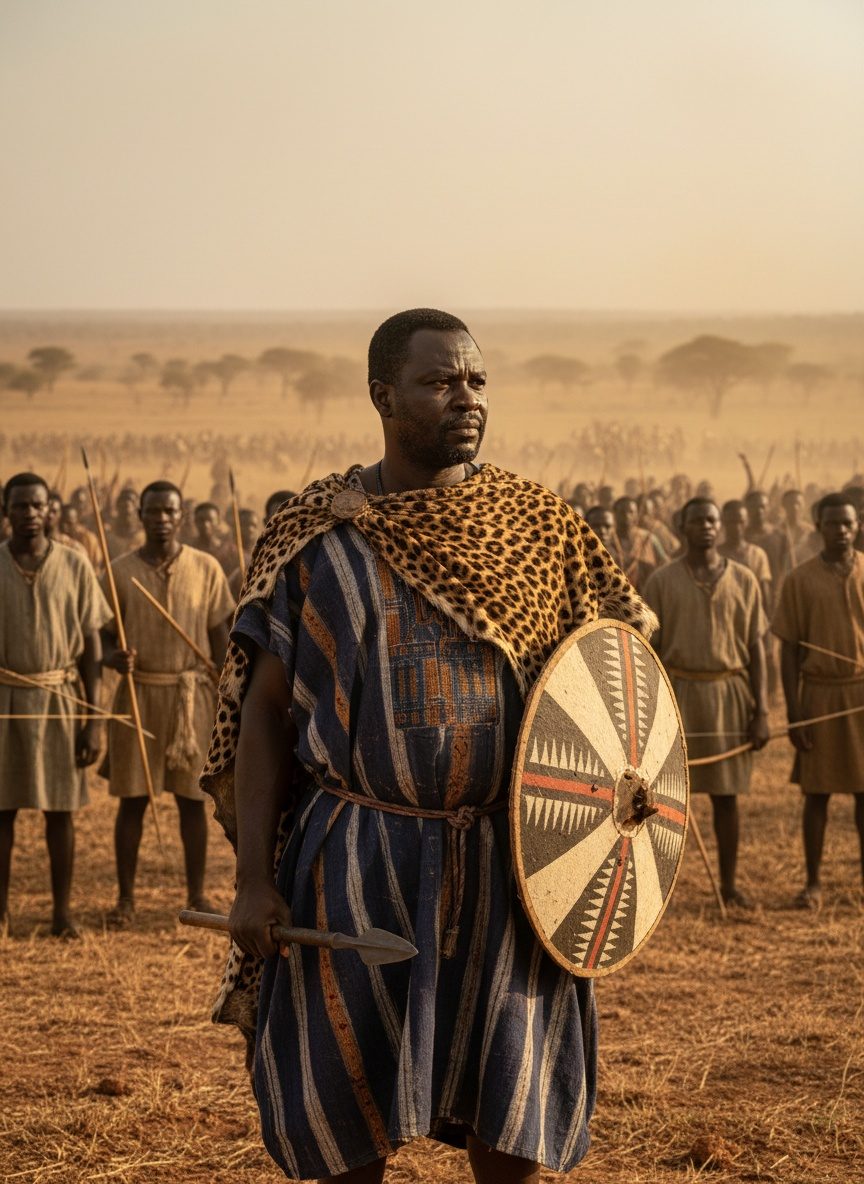
The sound of drums echoed through the air, the steady beat resonating with the pulse of a nation on the brink. It was March 1900, and the British governor's imposing figure loomed over the Ashanti capital, demanding the unthinkable—the Golden Stool, the very heart of the Ashanti identity. Inside the meeting hall, a stifling silence gripped the chiefs, their eyes cast downward, reluctant to meet the gaze of their people. But in that stifling moment, a lone figure rose. Yaa Asantewaa, the indomitable Queen Mother of Ejisu, grasped a rifle with fierce determination. Her voice, sharp as the blade sheathed at her side, pierced the silence. "If you, the men, will not go forward, then we will. We, the women, will. I shall call upon my fellow women. We will fight!"
The British had overplayed their hand, believing that the arrest of the Ashanti king would break the will of the people. However, they had underestimated the spirit of Yaa Asantewaa, a woman whose resolve was forged in the fires of resistance. The Golden Stool, symbolizing Ashanti sovereignty and the unity of their ancestors’ spirits, was more than just an artifact; it was the essence of their existence. Its desecration would mean nothing less than the submission of their souls. Yaa Asantewaa understood this profoundly, and her call to arms was not merely a response to foreign aggression but a defense of their sacred heritage.
The Ashanti, renowned warriors with an unbroken tradition of defiance, found themselves rallying behind the Queen Mother. Her leadership breathed new life into the struggle for independence. While Yaa Asantewaa had never been a soldier, her wisdom and unyielding courage kindled the spirit of a long-standing warrior culture, inspiring an entire nation to rise. As she marched at the head of her people, the gravel crunching beneath the resolute stride of her feet, the path was clear—resistance, not retreat, was the only way forward.
As the confrontation brewed, the British fortified their stronghold in the heart of the Ashanti homeland, convinced of their superiority in arms and numbers. But the forces they faced were fueled by a profound sense of duty and guided by a woman whose strategic acumen belied her lack of formal training. Yaa Asantewaa implemented guerrilla tactics, turning the thick Ashanti forests into a formidable ally. She infused her followers with the belief that their cause was just and that the spirits of their ancestors marched alongside them.
Among the verdant foliage and the winding paths, Yaa Asantewaa's forces waged a tenacious campaign. They harried the British troops, cutting supply lines, and employing hit-and-run tactics that sowed confusion in the ranks of their better-equipped foes. In the skirmish after skirmish, the Ashanti warriors displayed a level of tenacity that became legendary, their relentless spirit a testament to Yaa Asantewaa's unflagging leadership. While the British had assumed that they faced a primitive enemy, they instead encountered a sophisticated and determined opposition, guided by a leader who turned every disadvantage into a strategic advantage.
The weeks turned into months, and the conflict known as the War of the Golden Stool blazed on. The British casualties mounted, and morale plummeted as they faced the indomitable resolve of an adversary fighting to preserve its national soul. Yaa Asantewaa's name became a rallying cry, embodying the courage and resilience that defied the sunset of the Ashanti Empire's autonomy. Under her leadership, the Ashanti pushed the limits of endurance, their bravery seeping into the very soil of their homeland—a reminder of a nation's unyielding will.
Yaa Asantewaa's tale might be drenched in the tragedy of ultimate defeat, as external forces bearing industrial power and international intrigue finally overwhelmed the Ashanti fighters. Yet her legacy is one of profound empowerment and a testament to the power of leadership undeterred by the limits of gender or circumstance. She became a symbol of resistance, her tale shattering the colonial narratives that sought to portray African societies as passive or primitive. Her story is a canvas illustrating the defiance of imperialism and a vivid reminder of the rich tapestry of African history that often remains untold.
In our reflection on Yaa Asantewaa's resolute stand, we find more than inspiration; we uncover an integral chapter in the perpetual struggle for identity and self-determination. Her courage transcends time, echoing in modern movements for freedom and justice. As the sparks of her legacy illuminate the path toward emancipation, we remember her not only as a warrior and a leader but as a foremigrant bearer of unyielding hope for generations yet unborn. A reminder that true power often lies in the whispers of those who dare to stand up, rifle in hand, against the silence.