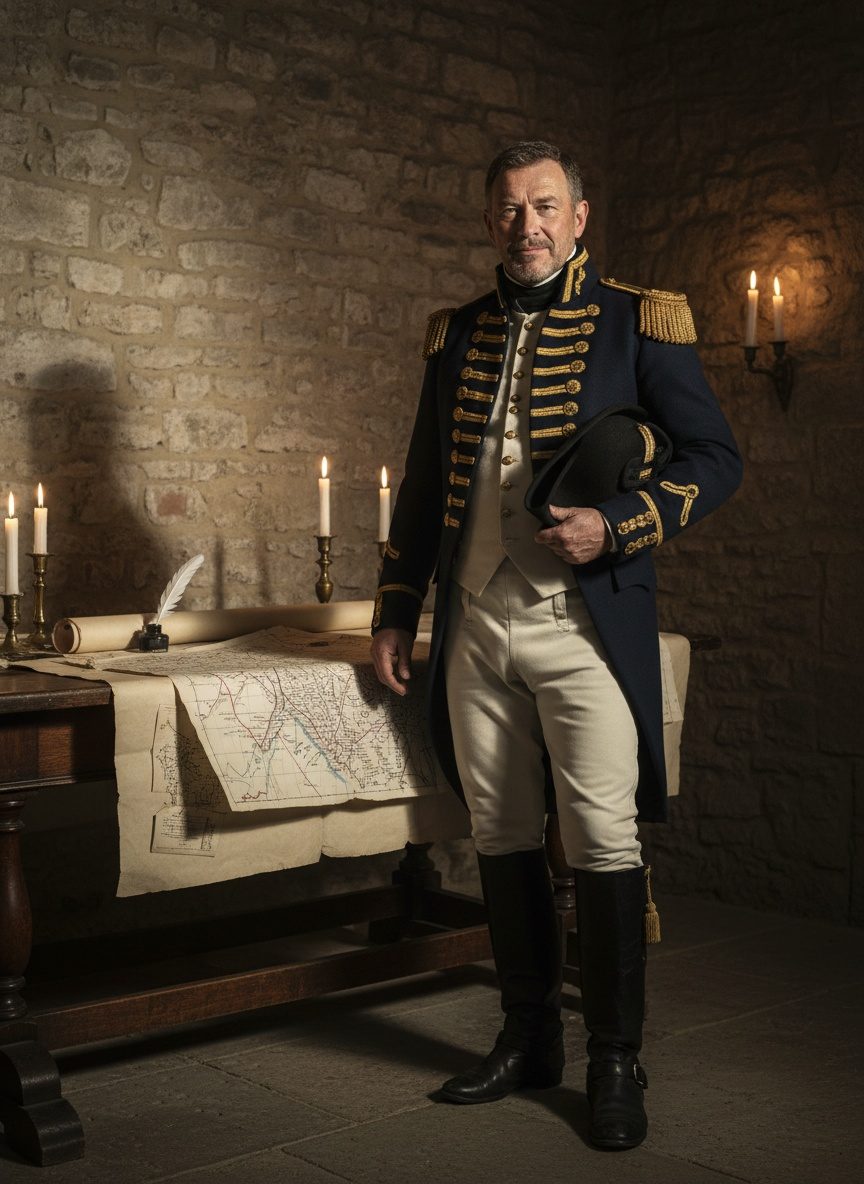
The air was still thick with the gunpowder haze of battle. The clamorous echoes of clashing steel and the cries of the wounded slowly dissipated into an eerie quiet, as if the world itself had stopped to breathe. On the muddy fields of Waterloo, the scene unfolded in grim tableau, where only hours ago, one of the most significant battles in history had reached its crescendo. The officers gathered around, eyes fixed on the figure clad in a scarlet tunic peppered with the dust of war. As the Duke of Wellington stepped away from the fray, a question poised — who was the greatest general of them all?
A Moment of Silence Amidst the Chaos
In the midst of post-battle introspection, Wellington’s reputation as an astute and decisive leader preceded him. He was the man credited with ending the turbulence that Napoleon Bonaparte had spread throughout Europe. As an instrumental figure, he held the weight of victory in his hands. Yet, when posed with a question meant to anoint the finest military mind, Wellington took a deliberate pause.
Perhaps it was the gravity of the battlefield that convinced him. The echo of cannon fire lingered in the recesses of his mind as he considered the man he had just vanquished. "Napoleon..." The name itself carried the heft of a thousand campaigns—a name that struck fear and admiration across continents. Wellington continued, "The greatest general that ever lived — except myself." The statement hung in the cold, damp air. It was not merely the vanity of self-laud; it was an acknowledgment of his adversary's genius, tempered by his own unparalleled victory.
The Emperor's Ascendancy
Napoleon Bonaparte was a name synonymous with both ambition and genius. Born on the island of Corsica, his rise was meteoric. His military strategies rewritten the rules of warfare, deploying audacious tactics that bewildered and overwhelmed enemies. From Austerlitz's radiant triumph to the calculated stalemate at Borodino, Napoleon demonstrated a prowess that redefined commanders' capabilities and the emperor's reach.
His campaigns, executed with precision and zeal, were more than mere conquests—they were symphonic masterpieces, each battle a movement in his grand composition. The legend of Napoleon was more than his battlefield acumen; it was his symbol, a singular representation of revolutionary change. Even his defeat at Waterloo could not erase the indelible mark he had left on history's canvas. And in that profound arena of conflict, Wellington recognized not only a formidable foe but a kindred spirit of military brilliance that he could not deny.
Waterloo: The Pivotal Encounter
The Battle of Waterloo was the culmination of Napoleon’s hundred days—a desperate gambit to reclaim the glory that had slipped through his grasp. The French forces, strong and determined, clashed against an allied army of British, Dutch, Belgian, and Prussian troops. The ground trembled beneath the weight of clashing armies, a ferocious struggle that tested the limits of human endurance and strategic skill.
Throughout that day, Wellington marshaled his forces with exemplary precision, countering every French maneuver with unyielding resolve. He positioned his troops upon the ridges, using the terrain to his unbeatable advantage, and held the line against relentless assaults. In contrast, Napoleon, employing bold and aggressive tactics, sought to break Wellington’s steadfast defense, but the Grand Armée could not outlast the coalition's resolve.
As evening descended, it was the Prussians under Blücher who tipped the scales, joining the fray with ferocious energy and sealing Napoleon's fate. The once-unstoppable force was broken. As Napoleon retreated, his dreams of empire remodeling lay scattered across the fields. That victory crowned Wellington, yet even in triumph, the British commander publicly revered the vanquished—a testament to mutual respect and acknowledgment of exceptional genius.
Understanding Greatness
Why did Wellington choose to eulogize the titan he had defeated? It is a narrative woven with complexity—an appreciation of merit where rivalry is tempered with respect. Within that proclamation, Wellington preserved Napoleon’s legacy, underscoring that true greatness transcends the immediate circumstances of victory or defeat.
This magnitude of respect cuts through the cacophony of mere mortal triumphs. Recognizing a superior opponent enhances one’s glory, not diminishes it, and Wellington’s words immortalized a story that underscores the dual nature of honor. The battlefield is but a tableau of advancing and retiring tides, yet through its chaos emerges a rare testament to human capacity—a peer's tribute that echoes through time, forever inscribed in the annals of history. As the guns of Waterloo went silent, the laurels of victory had twined an exceptional tale of two great generals, each defined by his form and each respected by the other.