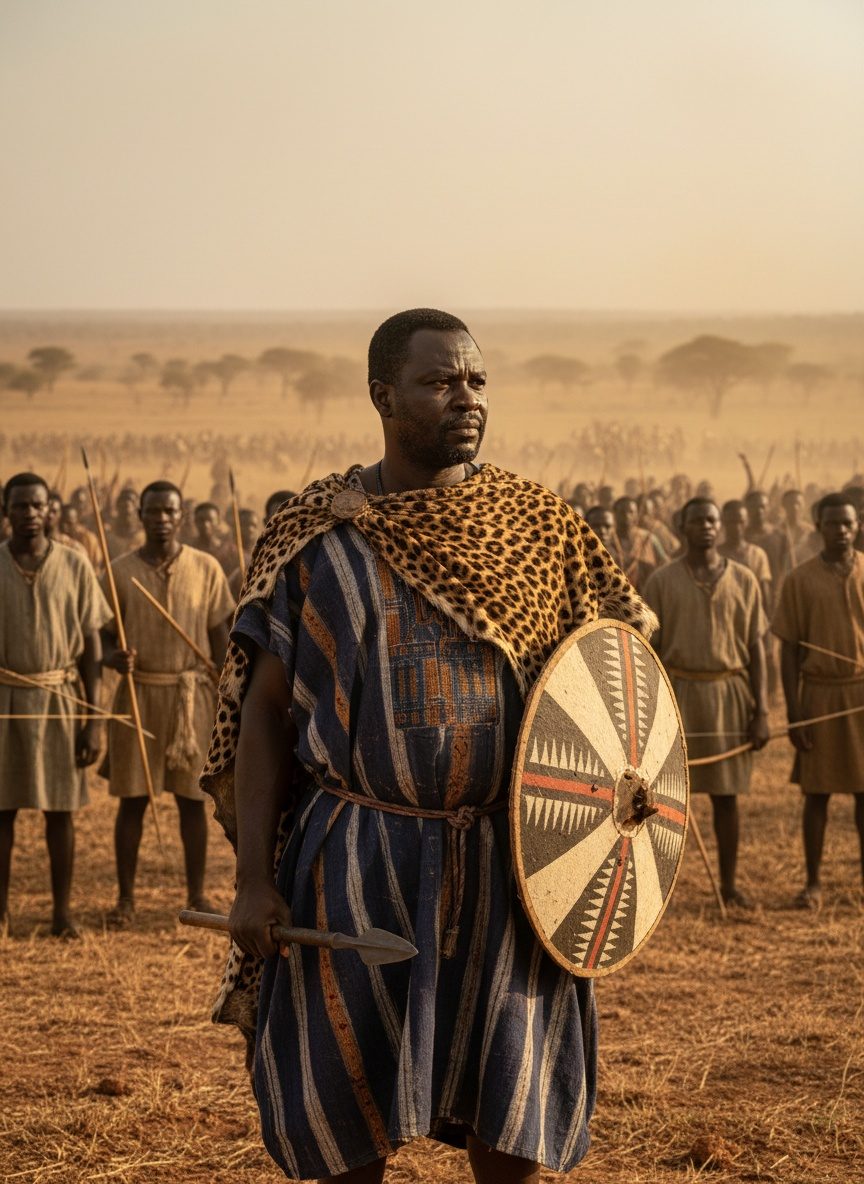
He could not walk. Yet, he was destined to rule. The man at the heart of this tale is Sundiata Keita, a figure from West African history whose resilience and determination defied both physical and political adversity to forge the Mali Empire.
Born at the cusp of greatness, Sundiata's early life was clouded with challenges. Crippled from birth, a condition for which he was cruelly mocked, he was neither the image nor the ideal of a future king. Yet, prophecies surrounding his birth signaled a future emperor. Raised in the kingdom of Niani, Sundiata was seen as the least likely to reclaim or expand any empire, especially against the looming shadow of Sumanguru Kante, the sorcerer-king of the Sosso people.
Sumanguru Kante was no mere king. Known far and wide as a formidable sorcerer, he had woven spells as intricately as he had woven alliances, ensconcing himself in fearsome legends. His reign extended across vast landscapes, imposing dominance over half of what was known in the medieval world of West Africa. When his forces drove Sundiata and his family into exile, it seemed to many a triumph as certain as the rising sun.
But exile became both an education and a crucible for Sundiata. Traveling through various lands, his experiences honed not just his resilience but also his political acumen and strategic vision. Stripped of the prestige of a stable kingdom, Sundiata embraced the lessons of adaptability and alliance. Religion, culture, and the art of diplomacy were as much his weapons as any sword or shield. He met kings, learned from their courts, and understood the binds of loyalty and kinship; eventually gathering a steadfast group of allies rallying to his cause.
The day that would mark the turning of an age dawned in 1235 AD at the plains of Kirina. There, two armies were pitted against one another in a contest that was as much a battle of wills as of warriors. The tales spun from that day paint vivid scenes of gallant charges under a sunburnt sky and the cacophony of clashing steel over cries of valiant men. But even more compelling were the sorcerous duels said to be waged by both kings, each tapping into the mystical arts that defined kingly power in that era.
Sumanguru, the sorcerer-king, stood on one side, wielding the dark reputation that had so long been his shield. On the other, Sundiata rose, not just on two feet but as a symbol of the hopes of many. The battle swung, surged, and raged; men who fought for and against an empire collided, their fates entwined with the mystic energies and mortal strength on that fateful ground.
As the day drew towards twilight, destiny bowed its head. Sumanguru Kante, despite his feared sorcery, was shattered not just in body but in spirit by Sundiata and his rallied followers. Some say it was Sundiata’s awareness of an obscure prophecy—the exact details of which whispered through generations—that allowed him to neutralize the dark power Kante wielded. Others claim it was purely Sundiata’s martial prowess and the unwavering loyalty of his allies. Perhaps it was both.
What transpired post-battle was nothing short of meteoric transformation. With the defeat of the Sosso king, Sundiata Keita unified the disparate factions of his homeland and surrounding regions. Over the years, he consolidated territories, cultivated unity, and embraced the multiplicity of cultures that thrived under his banner. He respected scholars and nurtured Islamic learning, paving pathways for cultural and educational prosperity that would resonate for generations.
Thus, Mali was born into its prime; a beacon of wealth and intellect, standing astride commercial routes that opened West Africa's riches to the world beyond. Its cities, like the fabled Timbuktu, flourished under Sundiata's progeny and became synonymous with legendary knowledge and wealth, drawing scholars and traders from far-flung lands.
Why does this story of a crippled child growing into the founder of the Mali Empire still matter? In it lies a narrative of overcoming adversity, of the possibilities born from resilience, and of an era often overshadowed but rich in its contributions to history. Sundiata’s tale, the battle of Kirina, and the subsequent rise of Mali remind us that the forces of history are not only forged through might but through the courage to challenge destinies conceived as impossible. It isn't just about an empire; it is a testament to visionaries who rise beyond their circumstances—echoing across centuries to resonate powerfully today.