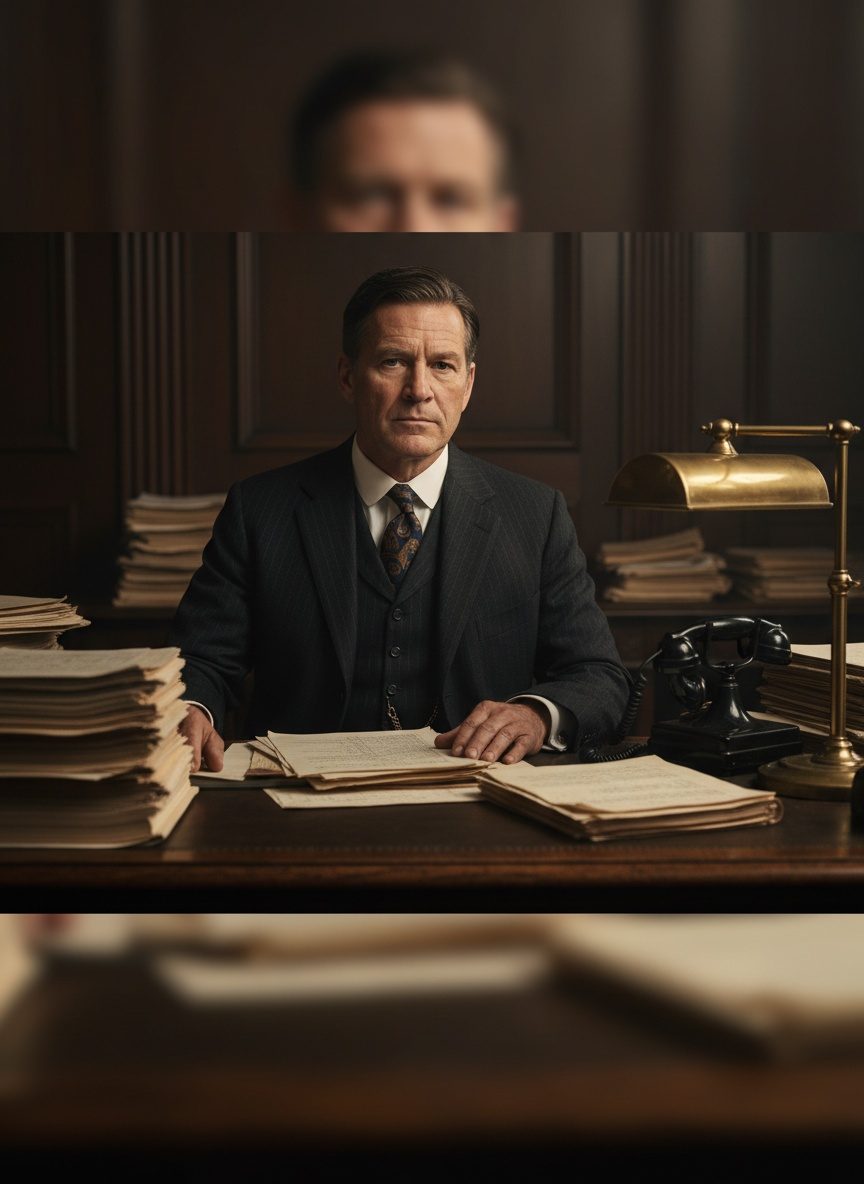
The cold wind whipped through Herbert Hoover’s overcoat as he stepped purposefully onto the bustling street outside the White House. Washington, D.C., with its stately columns and hurried officials, seemed like a world away from the remote mining camps he once traversed. Yet, in that moment, Hoover’s mind wasn’t on the powerful corridors of presidency but rather on an unwavering personal vow — a vow that saw every dollar of his presidential salary diverted elsewhere, far from his own pocket.
The Early Ambitions of a Self-Made Man
Long before he would become the 31st President of the United States, Herbert Hoover carved out a remarkable career as a mining engineer. Born into modest circumstances in Iowa, Hoover's journey through life was marked not only by professional success but also by personal resilience. After graduating from Stanford University in the late 19th century, Hoover embarked on a globe-spanning career that took him to distant corners, from the Australian outback to the rugged landscapes of China. His work in mining brought significant expertise and an impressive accumulation of wealth. By the time he returned to America amidst the rumblings of World War I, Hoover had transformed himself from a humble Quaker upbringing into a global economic powerhouse.
It was these early experiences, the formative years spent amidst the toils of the industry and the stark rigors of international commerce, that laid the foundation for Hoover’s unique approach to public service. He entered the arena of government leadership with an ethos not of taking but of giving back — of leveraging the comforts his success afforded him to serve a nation in constant need.
The Quiet Decision That Spoke Volumes
Perhaps the most remarkable aspect of Hoover's decision was the sheer quietude with which he enacted it. In the frenetic world of politics where grand gestures often come accompanied by fanfare, Hoover eschewed the spotlight in favor of silent action. His decision to donate his government salary did not start in the high-stakes oval office; it began much earlier, driven by personal principles rather than public praise.
As the U.S. Food Administrator during World War I, Hoover undertook the formidable task of managing supply chains and curbing shortages. His leadership not only demanded his utmost skill but also afforded him a substantial government paycheck. Yet, without fanfare or press releases, Hoover redirected these earnings to charitable causes — a practice he carried forward into his subsequent roles as Secretary of Commerce and, ultimately, as President. He did not seek accolades nor utilized this decision as a political gambit. Instead, it seemed an intrinsic value, a simple yet profound way to balance personal affluence with public duty.
Leadership in Times of Turmoil
Herbert Hoover's presidency was engulfed by the Great Depression, a time when financial certainties crumbled and countless livelihoods were devastated. His tenure in the White House, from 1929 to 1933, is often remembered for the economic turmoil that overshadowed it. However, Hoover never swayed from his core belief in civic responsibility. It was during these challenging years that his choice to forgo his presidential salary became an unspoken testament, a rare example where rhetoric in public service met reality.
Amidst the dark clouds of national despair, Hoover’s financial sacrifice was a whisper of solidarity — a reminder to some that leadership could still mean prioritizing the greater good. His ethos resonated beyond policy or legislation; it lived through action alone. The funds Hoover directed to charities supported communities struggling under the weight of the Depression, underscoring societal responsibility when it was desperately needed.
An Influence That Endured
Upon leaving the White House, the stark reminders of a nation clawing its way back to economic health lingered. Yet Herbert Hoover did not retreat into obscurity; instead, he persisted in service. Through the shadowy years of World War II and the Cold War’s early chill, Hoover continued to advise subsequent presidents and engage in civic and philanthropic initiatives.
The practice of donating his government earnings continued well past the corridors of elected office. Until his last days, Herbert Hoover lived true to an ethos largely unwritten about — an ethos where monetary gain was eclipsed by a relentless dedication to fostering the social welfare of a nation.
The Unseen Legacy of a Charitable President
Herbert Hoover’s quiet, steadfast commitment to donating his government salaries offers a deep reflection on the values of leadership. In a realm often driven by ambition and power, his actions served as a timeless reminder that wealth and influence can be leveraged not as means to personal ends but as opportunities for greater service.
In considering Hoover’s legacy, the power lies in unseen moments, the decisions made out of the public eye that spoke volumes about character and integrity. It’s a story of an individual who, amid the complexities and challenges of early to mid-20th century America, chose to navigate his path not with the calculations of a politician, but with the convictions of a devoted public servant. Today, his story may gently stir us to ponder the interwoven relationships between personal affluence, public trust, and the understated power of silent generosity.