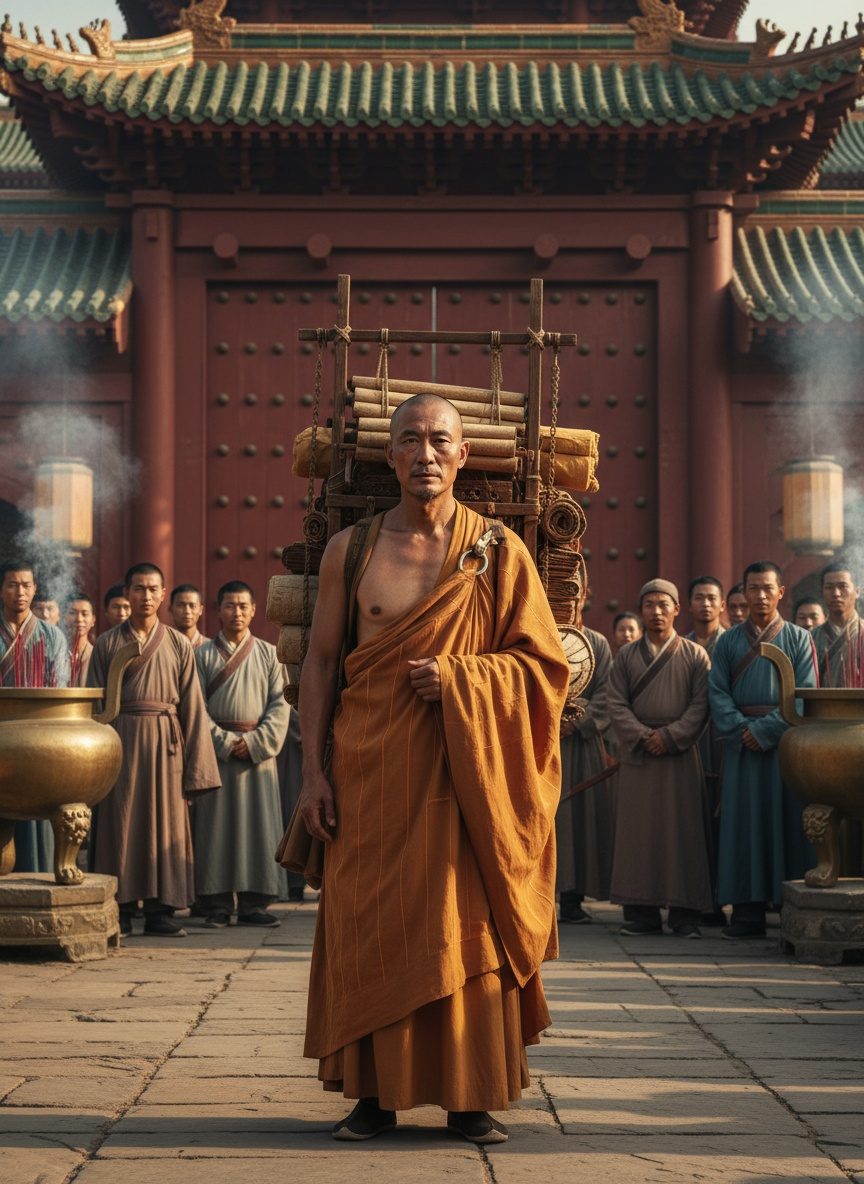
645 AD. Dust clung to the fabric of his robes, each step stirring the earth in a testament to his long and arduous journey. The city of Chang'an lay ahead, a sprawling expanse of roofs and walls, shimmering in the midday sun, waiting to embrace the one who ventured beyond the edge of the world.
The Monk Who Defied an Empire
More than a decade and a half before that remarkable homecoming, the monk Xuanzang stood at a crossroads in his life and in his soul. The vast expanse of the Tang Dynasty lay behind him, a realm of spiraling prosperity and cultural effulgence. Yet, his heart yearned for the spiritual wellspring that lay beyond, in the fabled land of India—home to the original teachings of Buddhism that had become the guiding light of his existence.
In daring to follow this inner calling, Xuanzang acted in defiance of a direct imperial decree that forbade travel beyond the borders of Tang China. Such defiance was perilous, a blatant affront to the Emperor Taizong’s authority. But Xuanzang’s resolve was unwavering; he would leave the safety and order of the known world to uncover the sacred texts that he believed were needed to illuminate the path to enlightenment for his people.
Across Deserts and Through Shadows
Xuanzang's journey was a tapestry of hardship and peril woven against the vast canvas of the Silk Road. His odyssey spanned sixteen harrowing years, a cavalcade across hostile territories and extreme climates. He traversed the merciless expanse of the Taklamakan Desert, where the very air shimmered with illusions—a sea of sand that had claimed countless lives.
The monk’s perseverance saw him through withering heat and the bone-chilling cold of mountain passes. He cleverly evaded bandits who lurked in the shadows of caravan routes, survived on prayer and meager rations, and leaned heavily on an indomitable belief that his quest was righteous.
Yet, for Xuanzang, the journey was not just a test of endurance but a spiritual pilgrimage. From the splendid cities of Central Asia to the sacred shrines of India, each place offered both a challenge and a treasure—a deeper understanding of the Buddha’s teachings that had become obscured and fragmented over time.
The Fruits of a Heroic Quest
Upon reaching India, Xuanzang found more than sanctuary—he discovered an intellectual paradise. He visited the great Buddhist university of Nalanda, an epicenter of learning where he immersed himself in the study of a wealth of philosophies and scriptures. It was here that he gathered not just texts but the wisdom of masters, teachers who imparted knowledge that went far beyond the mere written word.
The fruits of his quest were abundant. Xuanzang amassed 657 sacred texts, a monumental body of work that represented the pinnacle of Buddhist thought. These texts were not merely the relics of an ancient religion but a beacon of enlightenment and moral guidance—a spiritual lifeline for his homeland.
He prepared to return home, laden with these glorious treasures, his heart filled with a determination to sow the seeds of wisdom in his motherland.
Chang'an’s Resounding Silence and Deafening Roar
When Xuanzang appeared on the horizon, the streets of Chang'an fell silent in awe. His journey had become the stuff of legends, whispered in the shadows and spoken of in reverent tones. As he walked, lines of curious eyes peered over balconies and from behind market stalls, witnessing the return of the man who had ventured beyond all knowing.
The Emperor Taizong, who once condemned Xuanzang’s unapproved departure, sent word that he would personally welcome the returning monk. This unprecedented honor signaled not just a shift in royal regard but a recognition of the unparalleled achievements Xuanzang brought with him.
As the Emperor stepped out to meet him, the city erupted. The once-silent streets twisted into a kaleidoscope of sound—a roar that echoed across the capital. It was a celebration not just of a monk’s return but of the knowledge he carried, the promise of enlightenment that stood poised to reshape an empire’s spiritual horizon.
Inscribing Knowledge into the Fabric of a Civilization
Xuanzang’s contributions to China extended far beyond the sheer weight of the texts he brought back. His translations and teachings ignited a Buddhist renaissance within the Tang Dynasty. Through his meticulous work, Buddhist philosophies seeped deeper into the Chinese worldview, enriching its cultural tapestry and spiritual depth.
His life and journey became an inspiration for generations to come, not just for what he achieved, but for what he represented—a testament to the power of conviction, the pursuit of knowledge, and the resilience of the human spirit in the quest for truth. Xuanzang’s epic tale bridges the past and present, reminding us that the pursuit of understanding, in the face of insurmountable odds, holds the power to reshape destinies.