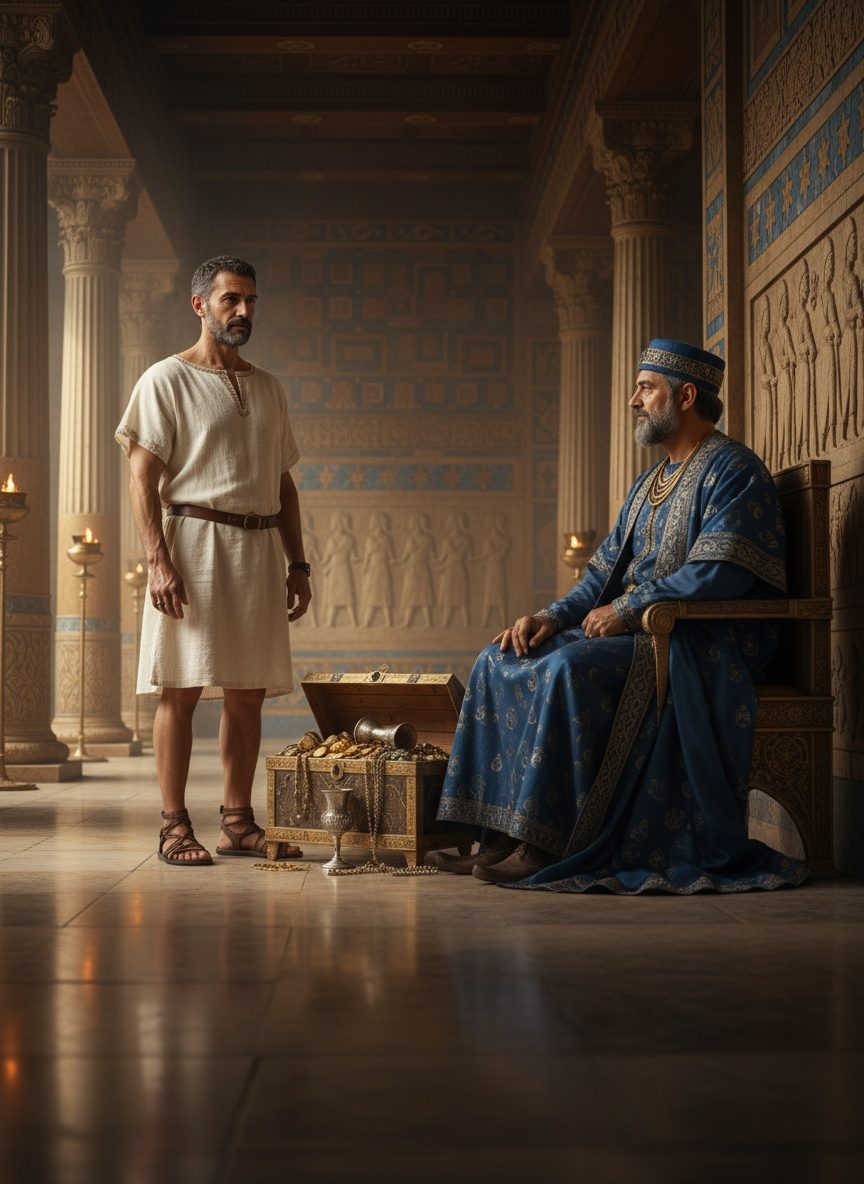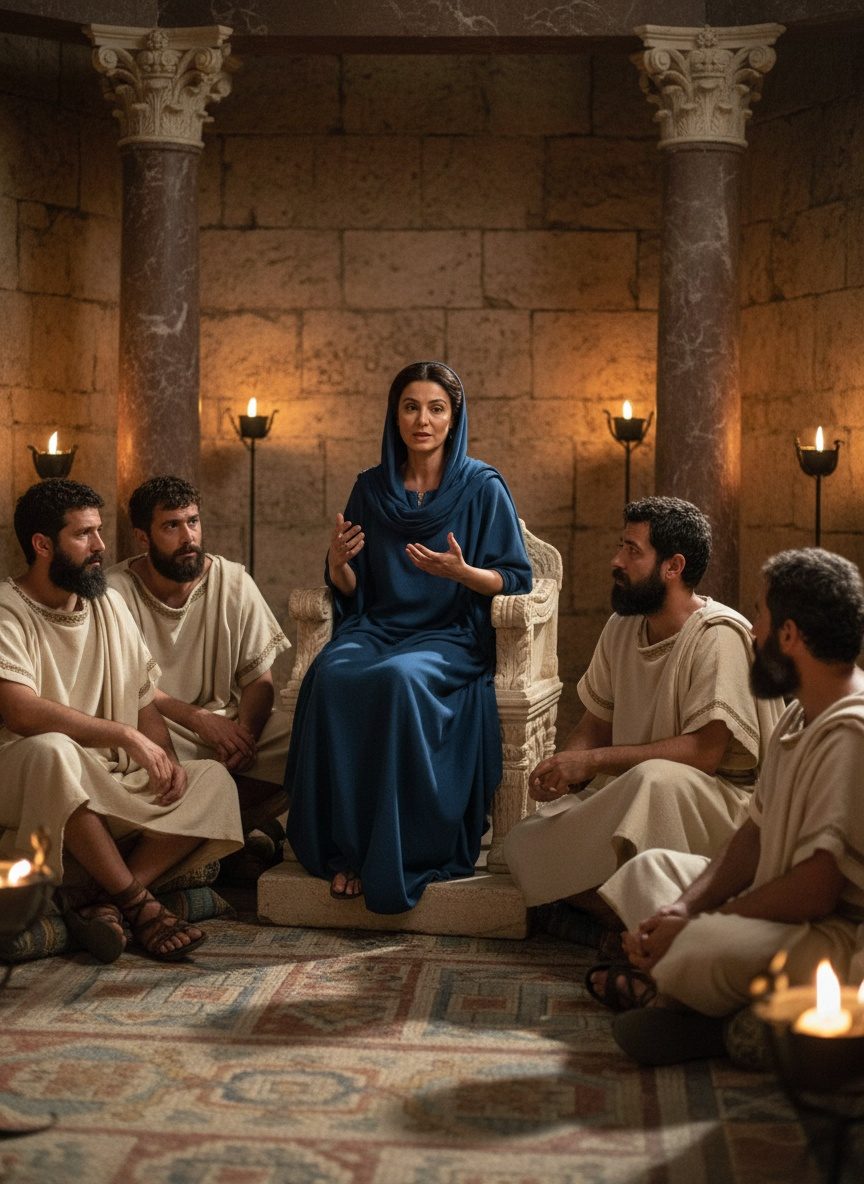
The warm eastward wind rustled through the cypresses of fourth-century Pergamon, where the sunlight cast long shadows over cobblestone streets. The mid-morning air buzzed with the sounds of distant conversations and the quiet footfalls of citizens going about their day. Yet within the grand halls of the philosophy school, a different kind of silence reigned. It was the kind that falls only in the presence of unexpected genius—an expectant, reverent kind of quiet.
This was no ordinary gathering of minds. Here, Sosipatra, a woman whose fame for intellect and prophetic insight had traveled faster than the Roman roads themselves, held court. Her listeners included the most celebrated philosophers of the era, steeped in Neoplatonist thought and versed in the classics. But today, they listened, not spoke. For when Sosipatra began to debate, their rigorous defences crumbled like clay under the expert precision of her arguments.
The Oracle of Asia Minor
No one who met Sosipatra could overlook the singularity of her mind. Besides a natural eloquence in discourse, she had a seemingly preternatural ability to access knowledge as though plucking manuscripts directly from the ether. To hear her speak was to witness something almost supernatural, yet utterly rational. People asked her: who on earth could have taught her to outshine the well-read men of Rome? Her answer, perplexing as it was disarming, was that she remembered no such teacher.
Sosipatra was not merely a philosopher; she was seen as a living oracle within Roman Asia Minor. Her tours de force in philosophical debates were complemented by her formidable precognitive abilities. Stories proliferated of her predicting events as easily and confidently as one might read the weather in the sky. Her insights into the future were not of vague, veiled proclamations, but vivid depictions that took on a life of their own weeks, months, even years later.
Despite the blend of awe and suspicion that surrounded her, Sosipatra sat confidently as a professor at a philosophy school. In doing so, she broke more than philosophical ground. Her presence and stature were a testament to a world where intellectual achievement could transcend gender norms, and hers was an era already teetering at the edge of dramatic social evolution. The way she commanded respect and attention, with no shortage of skepticism yet little disregard, was noteworthy even within the broader currents of Roman intellectual society.
Whispers of Divine Instruction
To have stood before Sosipatra and inquired about the source of her wisdom was to venture into a mystery cloaked in both human and divine intrigue. Some who spoke with her were convinced she was inspired by otherworldly entities. This belief was partly fueled by Sosipatra's own enigmatic remarks, as she seemed to reference memories more ancient than her years might suggest, particularly during the discussions where she unfurled truths with such ease it shook the learned men to their philosophical cores.
However, her own articulations were less about divinity than they were about the raw manifestations of a powerful intellect. The most remarkable aspect of Sosipatra wasn't merely her seeming ethereal connection to the universe's truths, but her critically sharp, interactive reason. She used her capabilities not just to amaze or assert dominance over Rome's finest minds, but to create an interactive learning experience—transforming her philosophical queries into a multi-dimensional dialogue that unfurled as naturally as breathing.
Indeed, Sosipatra’s influence seemed to stretch beyond the mere accumulation of accolades. Her presence initiated a subtle shift within the cerebral circuits of her era—an acknowledgement that wisdom might spring from sources other than years worn into the ground through experience and academic tutelage. Her role as a lecturer, prophet, and interpreter of both human and divine signals served as both a reflection and impetus of the changing tides within a Roman society eventually headed toward Christian dominance.
A Woman in an Epoch of Transition
Sosipatra stood as a figure of intrigue nestled against the backdrop of the Late Roman Empire—a time of great intellectual and ideological flux. The philosophical schools of the time were repositories of classical thought, and in many ways, symbols of Rome’s declining grip on its colonial breadth. As these schools grappled with transforming ideas, from pagan practices to the inevitable Christian ethos, Sosipatra's life beckoned as a beacon of intellectual resilience and dexterity.
Her teachings and predictions proved act as a living bridge between the heterodox world that had flourished for centuries in Roman lands, and the coming of a new order that would dominate the ensuing centuries. In this sense, Sosipatra can be seen as an embodiment of the transitional energy that swept across the Roman world—a figure anomalously ahead of the conjugating lines binding past and future.
Ultimately, her life offers a provocative meditation on the power of intellect unmoored from the conventional constraints of identity and circumstance. Though her methods and insights might remain largely anecdotal in the annals of history, Sosipatra’s singular presence within the philosophical schools of her time suggests an enduring truth: the greatest debates are often guided not by the answers they produce, but by the questions they inspire.