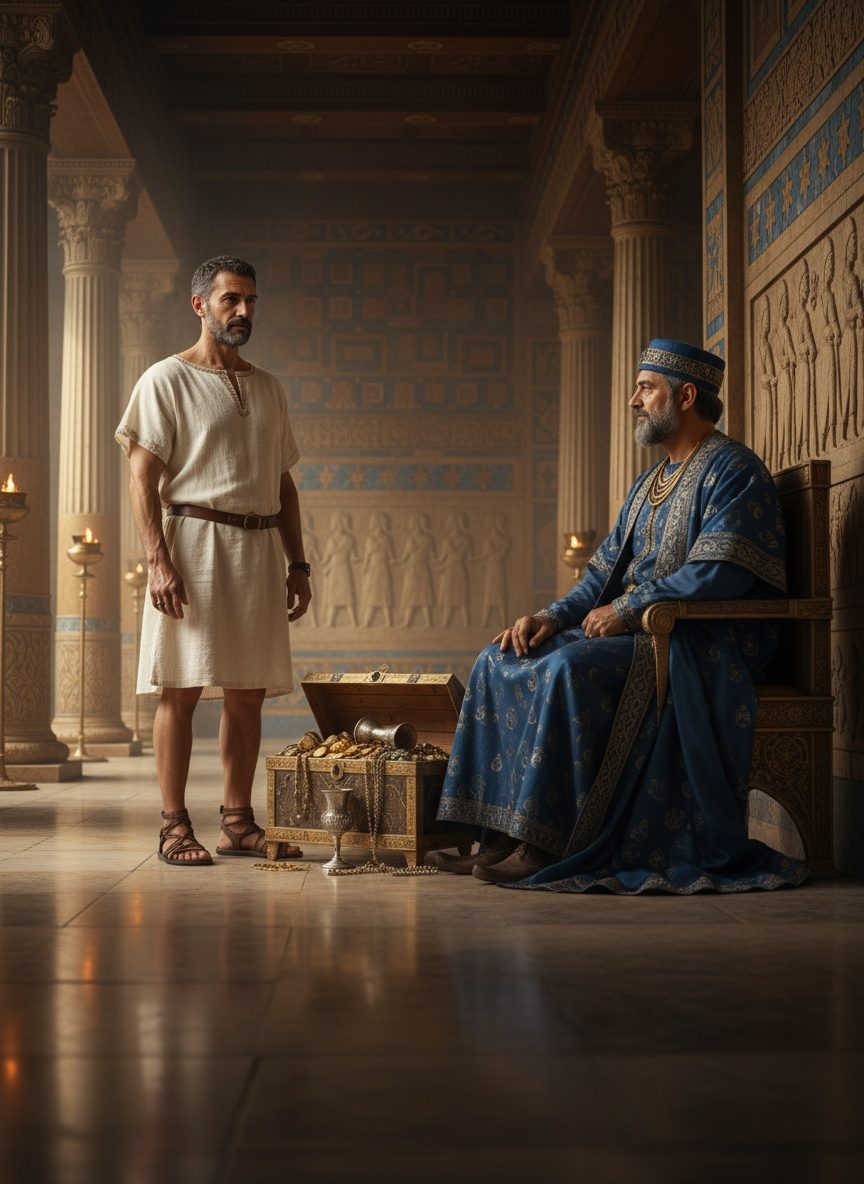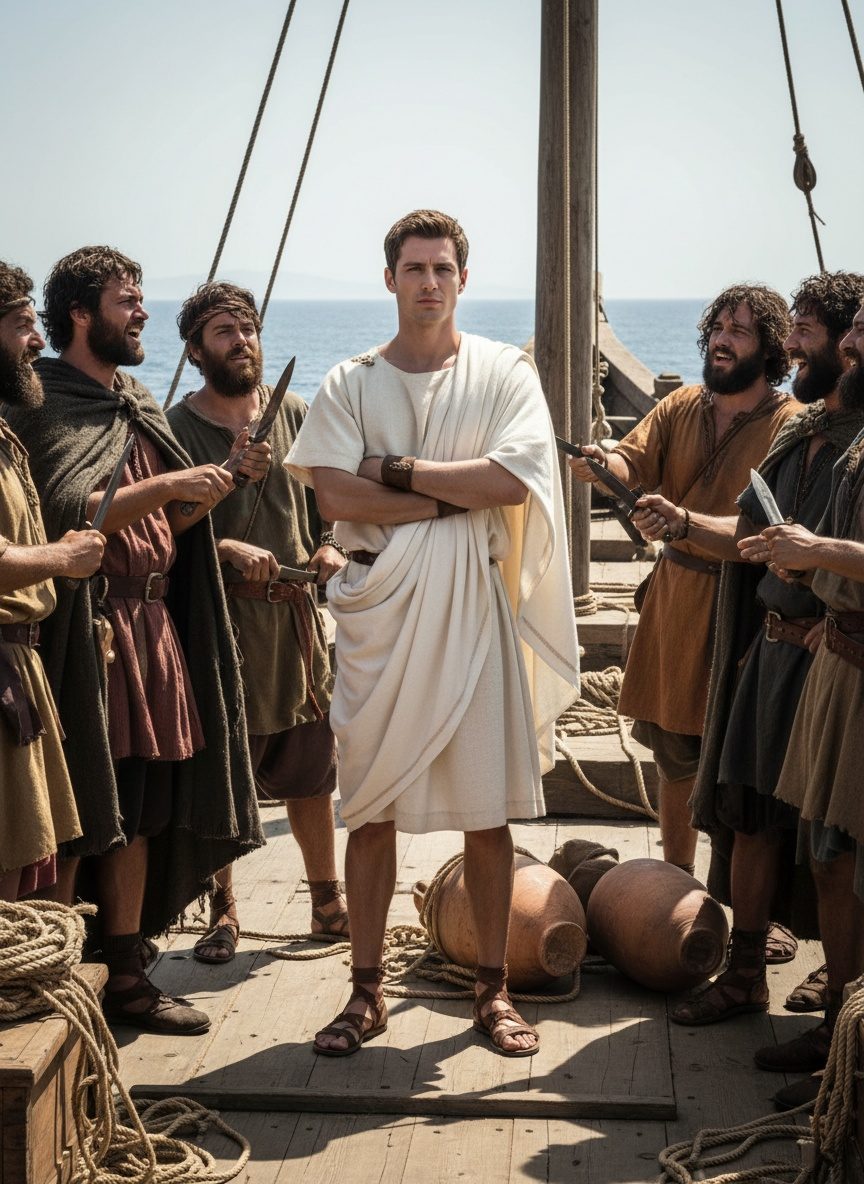
Julius Caesar was a captive of pirates. He might have preferred a more luxurious accommodation than their company.
In 75 BCE, somewhere in the Aegean Sea, a band of Cilician pirates captured a young Roman noble named Julius Caesar. Most people would find the situation terrifying, but Caesar was not most people. Rather than cower before his captors, Caesar displayed what can only be described as audacious arrogance. The pirates demanded a ransom of 20 talents of silver for his freedom. Caesar, taking stock of his own perceived value, scoffed at the low sum and demanded that they raise the ransom to 50 talents. He wasn't merely haggling over his worth; he was already asserting his dominance over them.
The very idea of prisoners negotiating their ransoms is unusual, yet there was an unsettling confidence in Caesar's demeanor. For the pirates, used to their victims pleading and groveling, this was unexpected. Their initial incredulity notwithstanding, they agreed to the higher ransom, a decision they would soon rue.
Life among the pirates was perhaps amusing to Caesar, but it was never once frightening. Despite the circumstances, he treated the ship as if it were some sort of peculiar conference of jesters gathered solely for his amusement. Night after night, he regaled his captors with poetic recitations, composed verses that mocked them, and engaged in games where he teased their ignorance of his identity. The pirates might have chuckled at first, but behind Caesar's laughter lay a razor-sharp blade of irony—one they would feel soon enough.
His boldest threats were also cloaked in humor. He would often, as though tossing out a jest, remark that once free, he would return to seize them all and exact vengeance through crucifixion. The pirates laughed off these declarations as little more than the fanciful banter of their captive. Yet, to any observer with an ear for conviction, Caesar was not speaking in jest. Instead, he was preparing himself mentally, promising retribution that was all too real.
Eventually, after weeks dappled with sharp exchange and sinister wit, the ransom was paid, and Caesar was released. Perhaps, as they jangled their freshly gained talents, the pirates celebrated their enriched coffers, blissfully unaware that the young Roman's retribution was hurtling toward them like a storm across a tranquil sea.
True to his word, Caesar wasted no time upon his return to civilization. His mind, singular as it was in its focus, orchestrated a fleet and braced them with the sole purpose of vengeance. Caesar took to the sea once more, this time not as a captive but as the hunter. He scoured the Aegean waters, his determination as relentless as the tides. The image of a vengeful predator pursuing prey he had deliberately allowed to escape was not one painted by the ancients, but in essence, created by Caesar himself.
It proves that this was no aimless expedition. Caesar’s pursuit was inexorable as he tracked down the pirates, whose laughter had once filled the sea air. Each capture echoed a haunting requiem of their misplaced mirth. And true to his pledge, he crucified each one, indulging in the act of ruthless justice he had promised while bound by them.
Such events send ripples beyond the immediate realm of vengeance. They attest to the profound nerve and calculated foresight of a man whose great legacy would one day stride across the stage of history. The incident was a foreshadowing of Caesar’s life—a life where defiance in the face of adversity would become his signature and where bold proclamations, no matter how implausible to others, were always punctuated by swift action.
The modern reader might wonder why this tale of audacity and retribution matters. It provides a glimpse into a pivotal figure in history, a demonstration of Caesar's remarkable character during his earlier, less documented years. It reveals a man who could translate personal insult into strategic advantage, and who would stop at nothing to assert the power he believed intrinsic to his very being.
It also serves as a warning from the past, echoing through the annals of history: never underestimate those who laugh at their misfortunes, for their laughter might just be the battle cry of future triumph.