63 BC. The Roman Senate basked in the first light of dawn, casting shadows over cobblestones polished smooth by centuries of steps.
The Whisperings in the Streets
In the heart of the mighty Roman Republic, whispers had begun to seep through the bustling streets. From the crowded marketplaces to the ornate villas of the city's elite, a chilling rumor floated: a conspiracy to burn the ancient city to ashes, to murder its leaders in cold blood, and to topple the head of the most powerful republic the world had ever known. It was said that men of prominence were behind this scheme, figures thought to be loyal to Rome’s grand institutions.
In these tales of intrigue, the citizens of Rome could almost taste their fear mixed with the dust of daily life. This fear reached the Senate House itself, a place where the Republic’s fate was deliberated. Here, survival relied on vigilance and loyalty to the state. As the whispers grew louder, the burden of action rested heavily on the shoulders of the few who dared to confront betrayal head-on.
The Day of Revelation
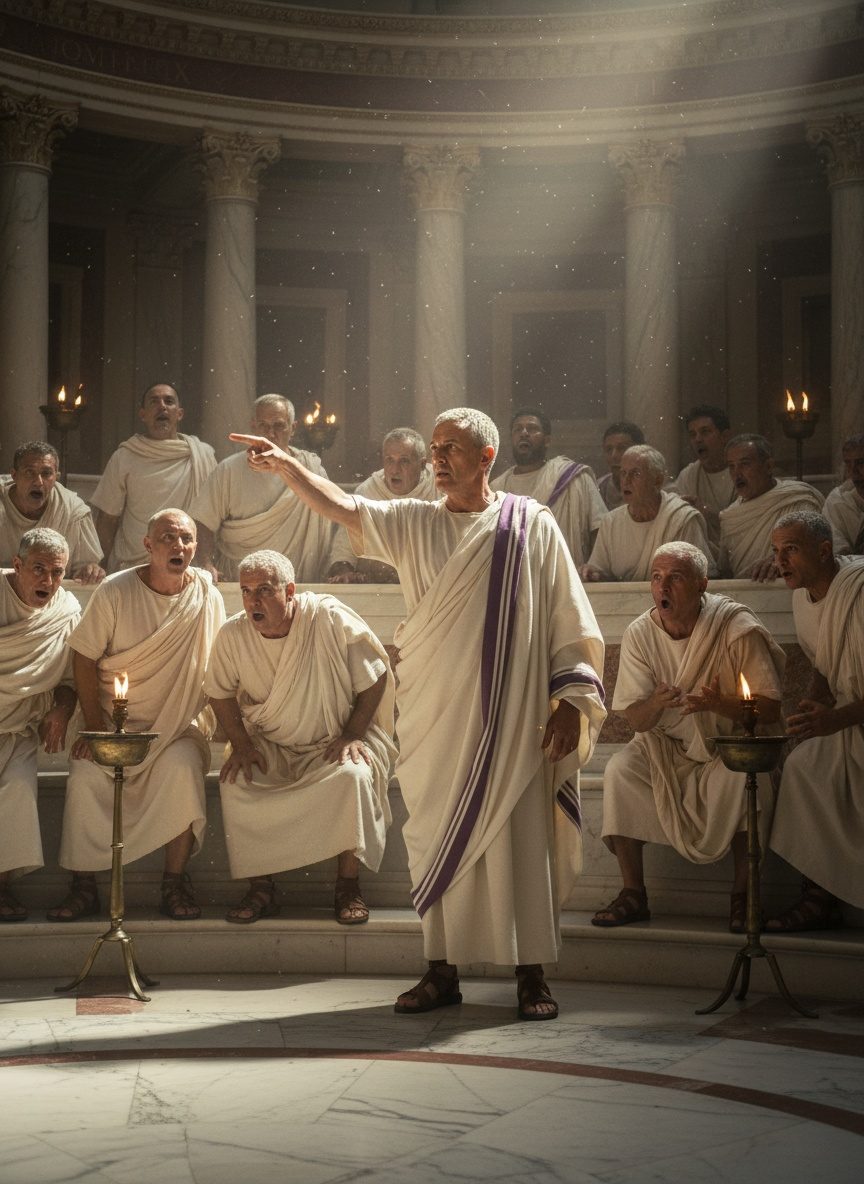
The Senate convened under the vaulted ceiling that morning, its members arrayed like the columns surrounding their chamber. Among them was a man whose actions would soon echo through history — Servilius. Tacitus, an elder statesman known for his unwavering resolve and sharp intellect, rose from his seat. His eyes scanned the room, landing momentarily on those whom he would soon name, their fates intertwined with his own courage.
Silence descended as Servilius began to speak. The chamber fell still, save for the rustling of togas and the faint murmurings of uneasy senatorial ranks. With deliberate cadence, he read aloud the list of conspirators, his voice unwavering against the oppressive tension. Each name was pronounced with clarity, eternally linking it with treachery in the annals of Roman history. Every name was a dagger against the heart of the Republic, every traitor a reminder of the high stakes their democracy faced.
The Faces of Betrayal
The accused, seated among colleagues and friends, felt the panicked weight of Servilius’s words. In that moment, the faces of betrayal were laid bare under the unyielding gaze of their peer. The conspirators, who had once moved through the city's bustling thoroughfares with confidence, had now become the embodiment of criminal ambition.
These men, once considered the stewards of Rome’s glory, were now exposed by the light of truth. It was ironic that those who sought to burn Rome would find themselves illuminated by a flame they could not extinguish — the flame of justice. This exposure was not just a list, not just words in a speech, but a stark reminder of the fragility of trust and the decisive power of transparency within a republic.
An Unexpected Twist
What Servilius did next, however, veered from the narrative expected even by the most seasoned politicians in the Senate. After laying bare the conspiracy, he did not call for immediate retribution or demand a flurry of punishment. Instead, he proposed something that became a pivotal moment in Roman political culture: a trial, transparent and public, conducted before the eyes of those they had sworn to protect.
This decision reframed the challenge they faced. It was not just about punishment but about upholding the dignity of Roman law. In suggesting this path, Servilius sent a message to the world: Rome would not fall to chaos or corruption but would rise above it with the power of its own enduring principles. The trial would be a beacon for justice, a demonstration that even at the brink of destruction, Rome would uphold its duty above all else.
The Legacy of Courage
The actions of Servilius and the trials that followed became a defining episode in the annals of the Roman Republic. Defending the state was not only about wielding swords and raising shields, but about standing in the halls of power and speaking truth to it. This historic confrontation against betrayal reverberated through the ages, setting a precedent for how nations might face internal threats without succumbing to lawlessness.
More than two thousand years later, the courage displayed that day in 63 BC continues to resonate. It serves as a reminder of the power individuals possess to shape the course of history through steadfast integrity and faith in just governance. The story of Servilius in the Senate binds us to the lessons of the past, urging us to confront modern challenges with the same clarity of purpose, even when the path is fraught with peril. In the heart of Rome, under the weight of infinite pasts, an elder statesman stood up, spoke truth, and in doing so, fortified the very foundations of his world.