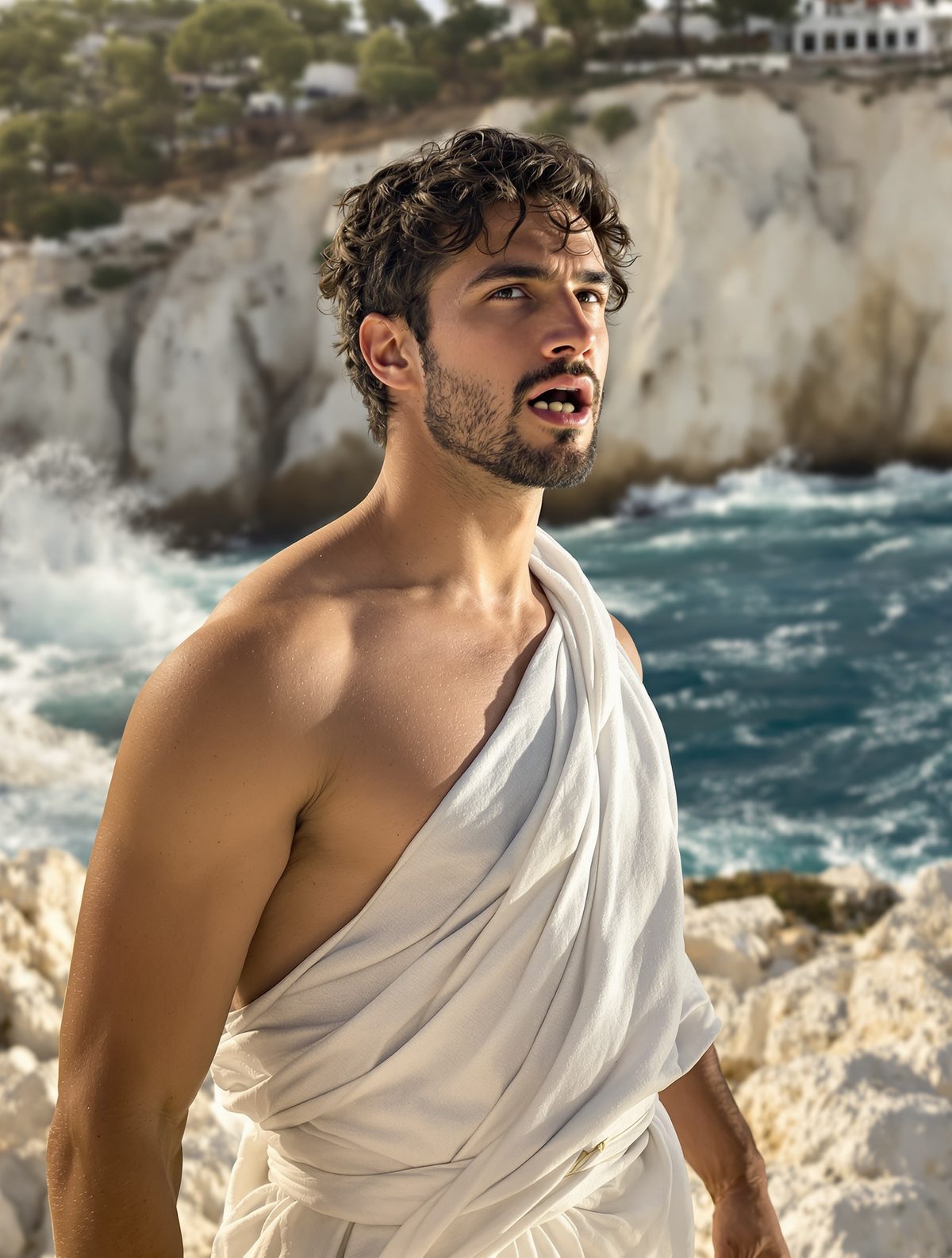
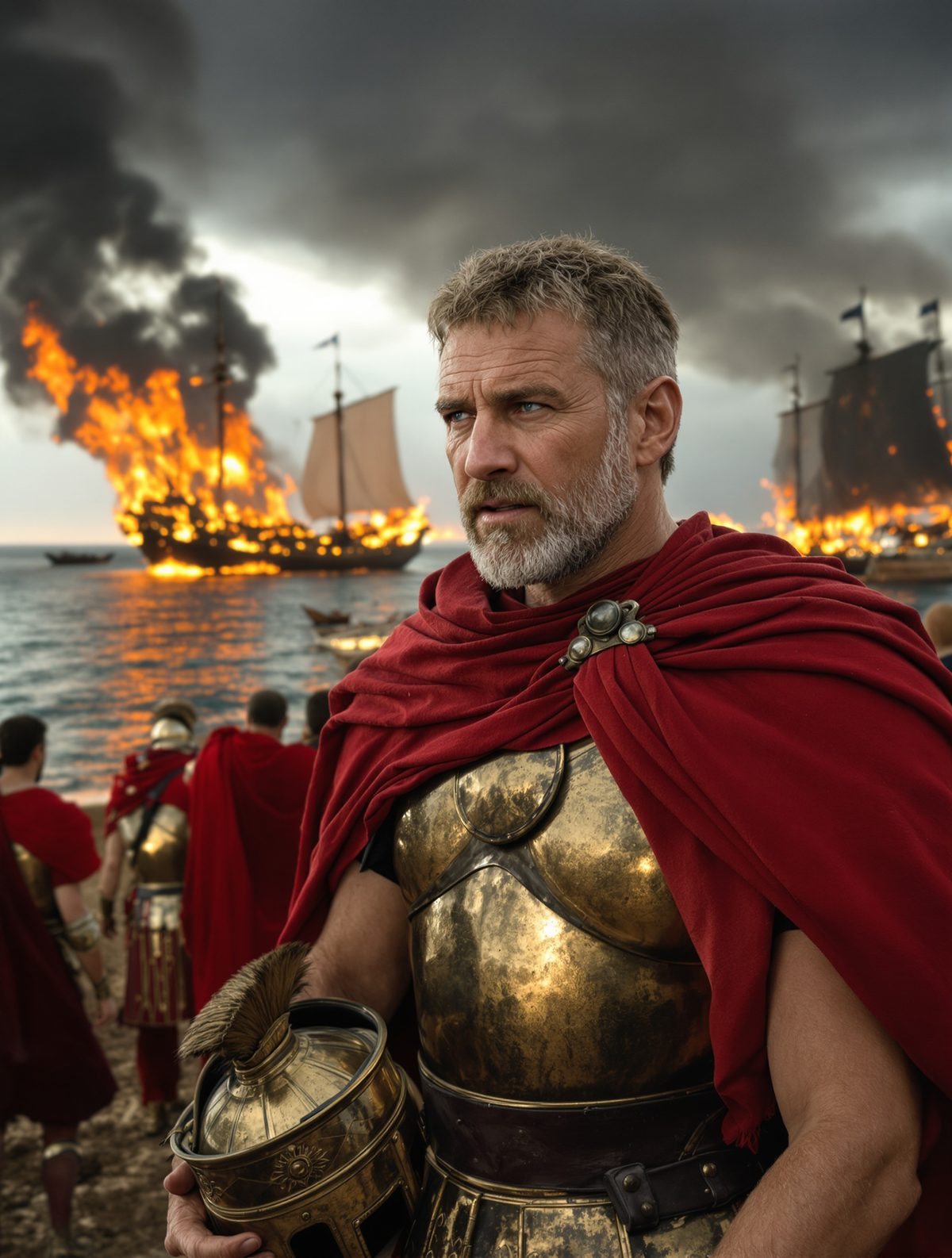
Picture this: The most powerful man on Earth stands on a windswept shore, watching his soldiers march down to the water's edge. But they're not preparing for battle against an enemy army. Instead, they raise their whips high and begin lashing the waves themselves, shouting curses at the sea as if it were a defiant prisoner. Nearby, other soldiers hurl heavy iron chains into the churning waters, symbolically binding the ocean for its "crimes" against their king.
This wasn't madness—this was justice, Persian style. The year was 480 BC, and Xerxes I, ruler of the largest empire the world had ever seen, had just declared war on nature itself.
The Bridge That Would Conquer Worlds
To understand why a king would punish the ocean, we need to step back to one of history's most audacious engineering projects. Xerxes wasn't just any ruler—he commanded an empire stretching from India to Ethiopia, encompassing roughly 44% of the world's population. But there was one prize that had eluded Persian conquest: Greece.
The narrow strait of the Hellespont (modern-day Dardanelles) separated Asia from Europe, and crossing it with a massive army was no simple task. Xerxes' solution was breathtaking in its ambition: he would build not one, but two massive bridges across the mile-wide strait, creating a highway for his invasion force that ancient sources claim numbered over two million people.
The Persian engineers were masters of their craft. They anchored 674 ships in a precise line across the Hellespont—314 penteconters and triremes on one side, 360 on the other. These vessels, lashed together with enormous flax and papyrus cables, formed the foundation for wooden roadways wide enough for chariots, cavalry, and endless columns of infantry to cross side by side.
The bridges were marvels of ancient engineering, incorporating tension cables made from materials sourced across the empire. The project took months to complete and required coordination between Egyptian, Phoenician, and Persian craftsmen. When finished, the bridges stretched nearly 4,000 feet across the water—longer than the Golden Gate Bridge's main span.
When Nature Struck Back
But the Hellespont had other plans. Just as Xerxes was preparing to begin his historic crossing, a violent storm erupted from the northeast. Ancient historian Herodotus describes the tempest as arriving "suddenly and with great violence," turning the normally manageable strait into a cauldron of destruction.
The massive waves, driven by howling winds, snapped the carefully tensioned cables like violin strings. The bridges, which had taken months to construct and represented the pinnacle of Persian engineering, were torn apart in a single night. Ships were driven onto rocks, wooden planking scattered across the waters, and years of planning vanished with the dawn.
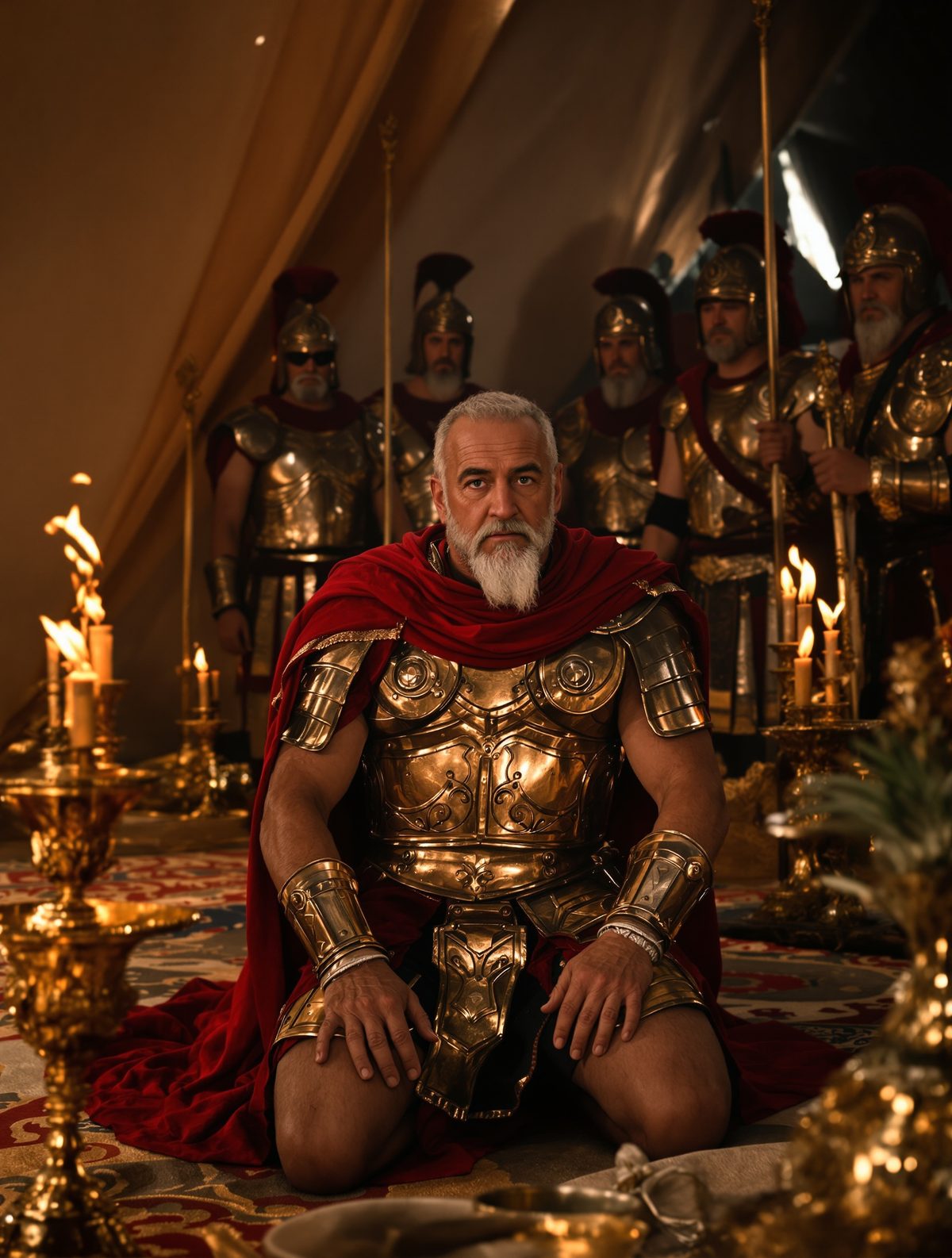
For any other ruler, this would have been a devastating setback requiring months of rebuilding. But Xerxes wasn't any other ruler. He was the shahanshah—the "King of Kings"—a man who believed he ruled by divine mandate and whose word was absolute law throughout the known world.
The storm wasn't just a natural disaster in Xerxes' mind; it was an act of rebellion.
Divine Justice, Persian Style
What happened next reveals everything about Persian concepts of divine kingship and cosmic order. Xerxes didn't see the storm as bad luck or poor timing—he saw it as deliberate disobedience from the Hellespont itself. In the Persian worldview, the king's will was supposed to be absolute, extending even over the forces of nature.
The punishment Xerxes decreed was as systematic as it was bizarre. He ordered his soldiers to march to the water's edge and deliver exactly 300 lashes to the waves—the same punishment reserved for human criminals in the Persian legal system. As they whipped the sea, the soldiers shouted formal accusations: "Bitter water, your master punishes you because you wronged him when he did you no wrong!"
But Xerxes wasn't finished. He commanded his men to throw fetters—heavy iron chains used for prisoners—into the depths, symbolically binding the rebellious waters. Some accounts suggest he even ordered red-hot irons to be plunged into the sea, as if branding a runaway slave.
Perhaps most shocking of all, Xerxes ordered the beheading of the engineers who had overseen the bridge construction. Unlike the symbolic punishment of the sea, this was brutally real—the king's fury demanded human as well as divine satisfaction.
The Bridges Rise Again
With the ocean properly "disciplined," Xerxes commanded new engineers to rebuild the bridges. The second construction project incorporated lessons learned from the first disaster, with stronger cables and better storm-resistant design. The Persian engineers, no doubt motivated by the fate of their predecessors, worked with unprecedented care.
The new bridges proved their worth. When Xerxes finally began his crossing in the spring of 480 BC, the spectacle was unlike anything the world had ever seen. For seven days and seven nights, the greatest army in human history streamed across the Hellespont. Herodotus claims the crossing was so vast that the army "drank rivers dry" along their route.
The procession was carefully choreographed to demonstrate Persian power. First came the sacred horses of the sun god, followed by Xerxes himself in a golden chariot, then the elite Immortals—10,000 Persian guards whose ranks were immediately refilled whenever someone fell. Behind them marched contingents from across the empire: Scythian archers, Indian war elephants, Ethiopian warriors with painted bodies, and Arab camel riders.
The bridges held firm throughout the massive crossing, vindication for both Persian engineering and perhaps, in Xerxes' mind, for his punishment of the rebellious waters.
The Echoes of Hubris
The story of Xerxes and the Hellespont became legendary throughout the ancient world, but not for the reasons the Persian king might have hoped. Greek writers like Herodotus saw the episode as the perfect example of barbaric hubris—a tyrant so drunk on power that he believed he could command the very elements.
The irony wasn't lost on contemporary observers: the man who whipped the sea would ultimately be defeated by the very Greeks he crossed the Hellespont to conquer. The Persian invasion, despite its massive scale and careful planning, ended in disaster at the naval battle of Salamis and the land battle of Plataea. Xerxes returned to Persia a broken man, his reputation shattered and his empire's aura of invincibility destroyed forever.
Yet there's more to this story than simple hubris. Xerxes' actions, bizarre as they seem to modern minds, reflected a sophisticated understanding of political theater. The Persian Empire was built on the idea of absolute royal authority—the notion that the king's will could reshape reality itself. By publicly punishing the sea, Xerxes wasn't just venting his anger; he was reinforcing the cosmic order that kept his vast empire together.
In our age of climate change and environmental crisis, there's something almost familiar about a powerful leader declaring war on nature itself. The tools may be different—carbon emissions instead of whips, corporate boardrooms instead of royal courts—but the fundamental arrogance remains remarkably similar. Xerxes' story serves as a 2,500-year-old reminder that nature, unlike human subjects, doesn't recognize the authority of kings, presidents, or CEOs.
The waves that destroyed his first bridge were indifferent to his power, just as rising seas today remain indifferent to human authority. Perhaps that's the real lesson of Xerxes and the Hellespont: the most dangerous leaders are those who forget they're not actually gods.