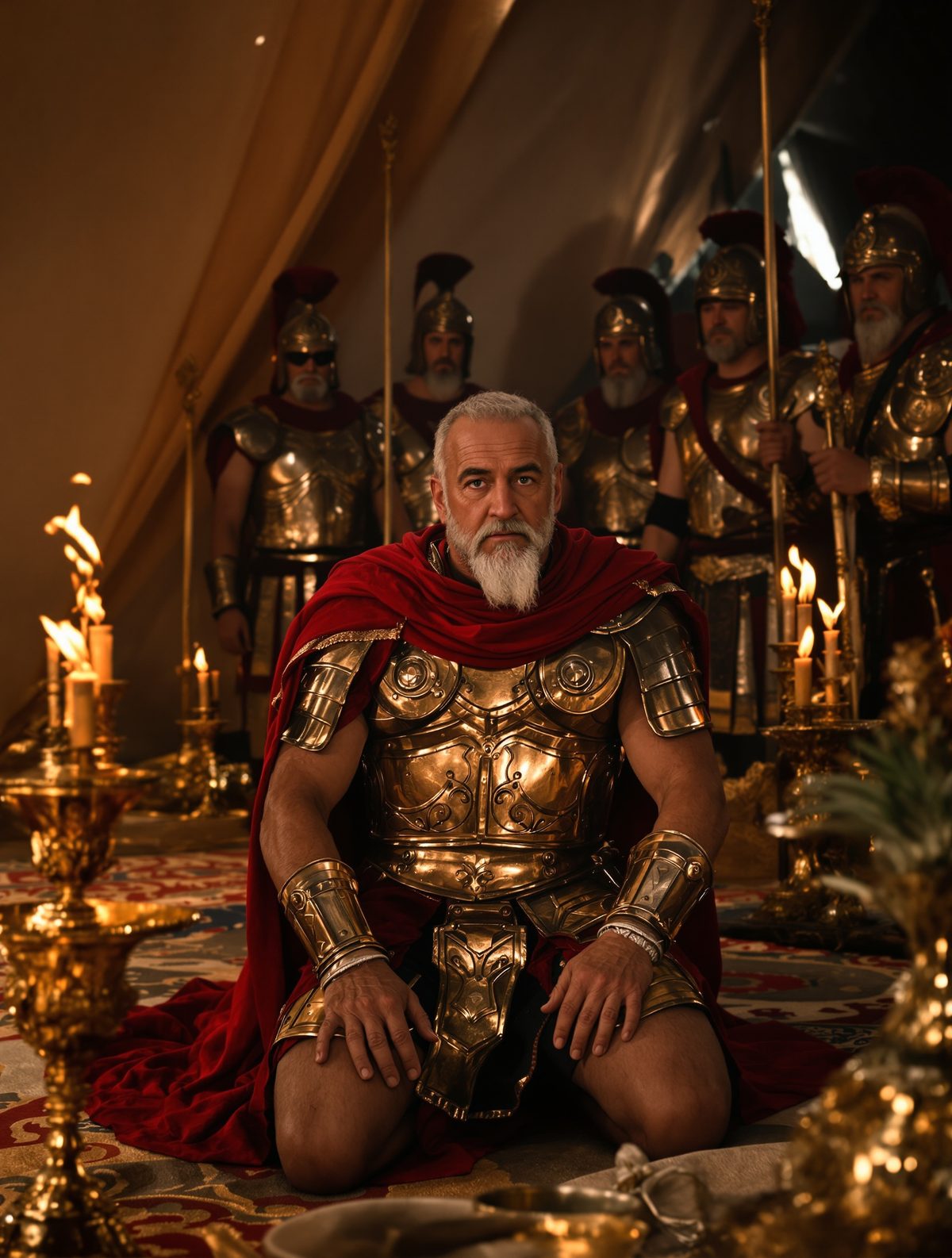
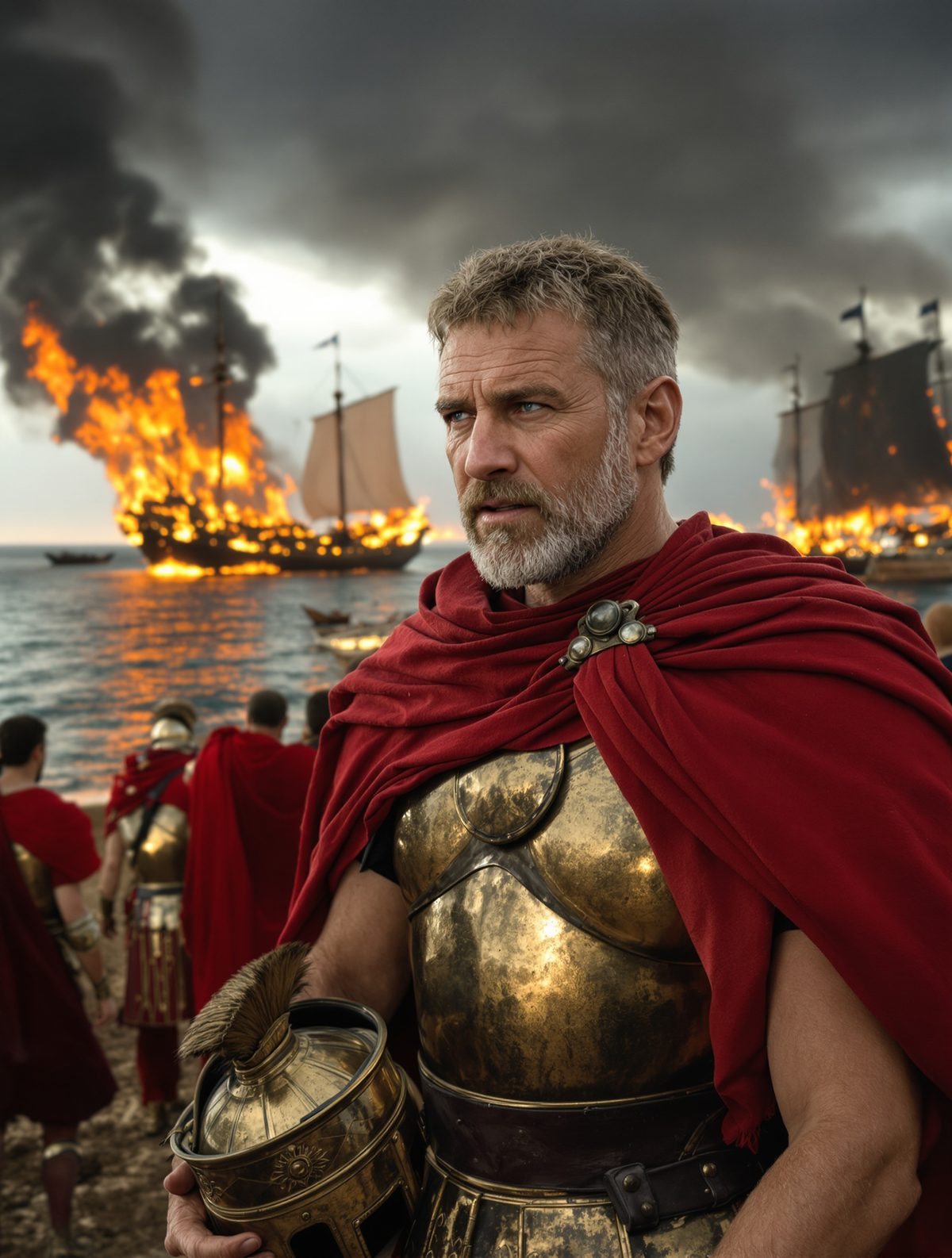
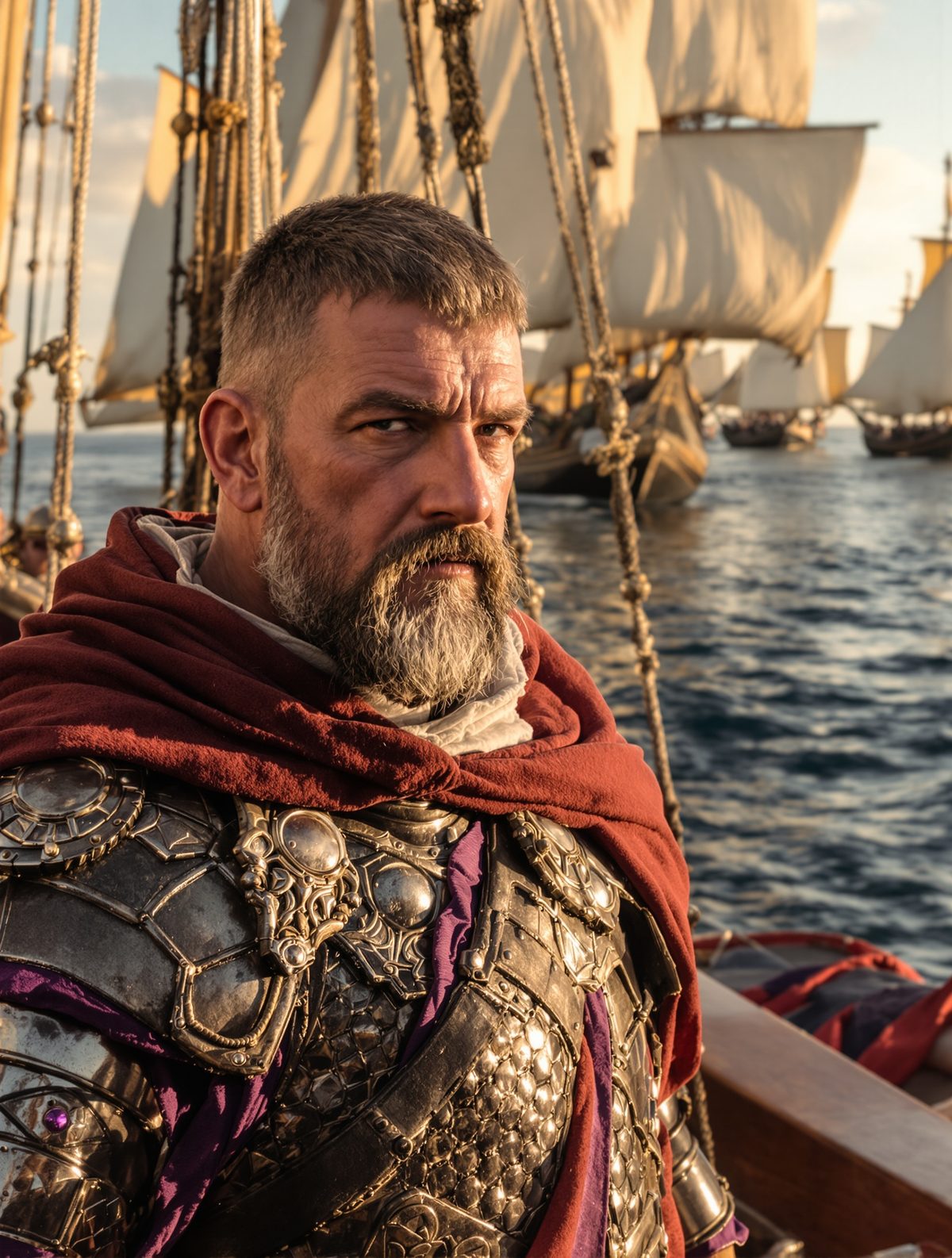
Picture this: a scrawny teenager standing alone on the rocky shores of ancient Athens, mouth crammed full of pebbles, screaming at the thunderous Mediterranean waves. Spit flies. His jaw aches. The stones cut his tongue. But young Demosthenes refuses to quit. This boy—who couldn't pronounce a single word without stammering—would one day command audiences of thousands with the most powerful voice in all of Greece.
It's 355 BC, and Athens desperately needs a hero. Philip II of Macedon is marching south, threatening to crush Greek independence forever. What the city-state gets instead is something far more unexpected: a former stutterer who learned to speak by torturing himself with rocks.
The Boy Who Couldn't Say His Own Name
Born around 384 BC into a wealthy Athenian family, Demosthenes seemed destined for greatness—until he opened his mouth. The boy suffered from what ancient sources describe as a severe speech impediment that made him nearly incomprehensible. He couldn't pronounce the letter "R," his voice was weak and breathy, and he had a nervous shoulder twitch that made him look like he was constantly shrugging.
But fate had already dealt young Demosthenes a cruel hand before his speech problems even mattered. When he was just seven years old, his father—a successful sword manufacturer also named Demosthenes—died suddenly. The boy's guardians promptly looted his inheritance, leaving him virtually penniless by the time he came of age.
In ancient Athens, where public speaking wasn't just important—it was everything—Demosthenes faced a nightmare scenario. Athenian democracy ran on oratory. Citizens didn't vote for representatives; they gathered in the ecclesia (popular assembly) and debated issues themselves. If you couldn't speak persuasively, you were nobody. And Demosthenes could barely speak at all.
The first time he attempted to address the assembly at age 20, disaster struck. He stumbled over his words, his voice cracked, and the crowd actually laughed him off the platform. Ancient accounts describe him fleeing in humiliation, his political dreams apparently shattered before they'd begun.
The Torture Chamber by the Sea
What happened next would become the stuff of legend—and the foundation of every "overcome your obstacles" speech for the next 2,400 years. Demosthenes didn't give up. Instead, he did something so extreme it borders on masochistic.
He built himself an underground study and locked himself inside for months at a time, shaving off half his hair so he'd be too embarrassed to go outside. But the real training happened at the seashore, where Demosthenes developed his infamous pebble technique.
Here's how it worked: He'd fill his mouth with small stones—sharp, uncomfortable pebbles that cut his tongue and made speaking agony. Then he'd attempt to recite speeches over the crash of the waves, forcing his voice to project above the natural cacophony. The logic was brutal but brilliant: if he could speak clearly with a mouth full of rocks while competing with the Mediterranean's roar, normal speech would feel effortless by comparison.
But that wasn't all. To fix his shoulder twitch, he hung a sword from the ceiling positioned so that any involuntary shrug would stab him in the shoulder. He practiced facial expressions in front of a mirror for hours. He did breathing exercises to strengthen his weak voice. Most remarkably, he learned entire speeches by heart—not just his own, but the greatest orations in Greek history.
For nearly two years, Demosthenes subjected himself to this grueling regimen. Ancient sources suggest he sometimes practiced eight hours a day, emerging from his training sessions bloody and exhausted but gradually, incrementally better.
The Phoenix Rises from Pebbles
When Demosthenes finally returned to public speaking around 351 BC, Athens barely recognized him. The stammering boy had become a rhetorical powerhouse. His voice now commanded attention, his arguments cut like surgical instruments, and his presence dominated any room he entered.
His breakthrough moment came with his first Philippic—a blistering speech warning Athens about the growing threat of Philip II of Macedon. The word "philippic," meaning a bitter verbal attack, entered the language because of these speeches. Standing before the assembly, Demosthenes painted a terrifying picture of Macedonian expansion and Athenian complacency.
"You sit around asking each other: 'Is there any news?'" he thundered. "Could there be any news more serious than a Macedonian making war on Athens and managing the affairs of the Greeks?"
The crowd sat transfixed. This wasn't the same stammering youth they'd mocked years earlier. This was something new: a master orator who could make grown men weep, rage, or march to war with nothing but words.
The Greatest Showdown in Rhetorical History
Demosthenes' ultimate test came in 330 BC during the trial of Ctesiphon, which became a proxy battle between Demosthenes and his greatest rival, Aeschines. The case centered on whether Ctesiphon should be punished for proposing that Demosthenes receive a golden crown for his service to Athens.
What unfolded was the rhetorical equivalent of a heavyweight championship bout. Aeschines spoke first, delivering a devastating attack on Demosthenes' character and policies. He was smooth, polished, and merciless. When he finished, many observers thought Demosthenes was finished.
Then Demosthenes rose to deliver his masterpiece: the On the Crown. For hours, he systematically dismantled Aeschines' arguments while defending his own life's work. The speech was so powerful that Aeschines—one of Athens' finest orators—was forced to flee the city in shame after losing the case by an overwhelming margin.
Here's a detail they don't teach in classical rhetoric classes: Demosthenes had prepared for this moment his entire career. He'd studied Aeschines' speaking style, memorized his favorite arguments, and crafted responses to points his rival hadn't even made yet. The boy who once tortured himself with pebbles had become the ultimate rhetorical strategist.
When Words Weren't Enough
But even the greatest orator in Greek history couldn't talk his way out of political reality. In 338 BC, Philip II crushed the Greek alliance at the Battle of Chaeronea, ending Athenian independence forever. Demosthenes had spent decades warning about this exact outcome, but his countrymen acted too late.
The end came in 322 BC. Alexander the Great was dead, and the Macedonians were hunting down Greek resisters. Demosthenes, now 62, fled to the island of Calauria. When Macedonian soldiers arrived to arrest him, he asked for a moment to write a letter. Instead, he bit down on the tip of his writing stylus, which he'd filled with poison.
The man who'd conquered his stutter with stones died as he'd lived—on his own terms, with characteristic drama.
The Pebbles That Changed History
Today, when we talk about "overcoming obstacles" or "turning weakness into strength," we're echoing a story that began with a stammering boy and a handful of pebbles on an ancient Greek beach. Demosthenes didn't just cure his speech impediment—he transformed it into his greatest asset by developing a work ethic so intense it bordered on self-torture.
Modern speech therapists don't recommend the pebble technique (for obvious reasons), but neuroscience has validated Demosthenes' core insight: the brain's plasticity means we can literally rewire our weaknesses through deliberate, intensive practice. The boy who couldn't pronounce his own name became living proof that our greatest limitations might just be our greatest opportunities in disguise.
In our age of instant gratification and quick fixes, Demosthenes' story feels almost alien. He spent years in solitary practice, endured physical pain, and emerged transformed. His legacy isn't just the speeches that moved nations—it's the radical idea that we can rebuild ourselves from the ground up, one painful pebble at a time.