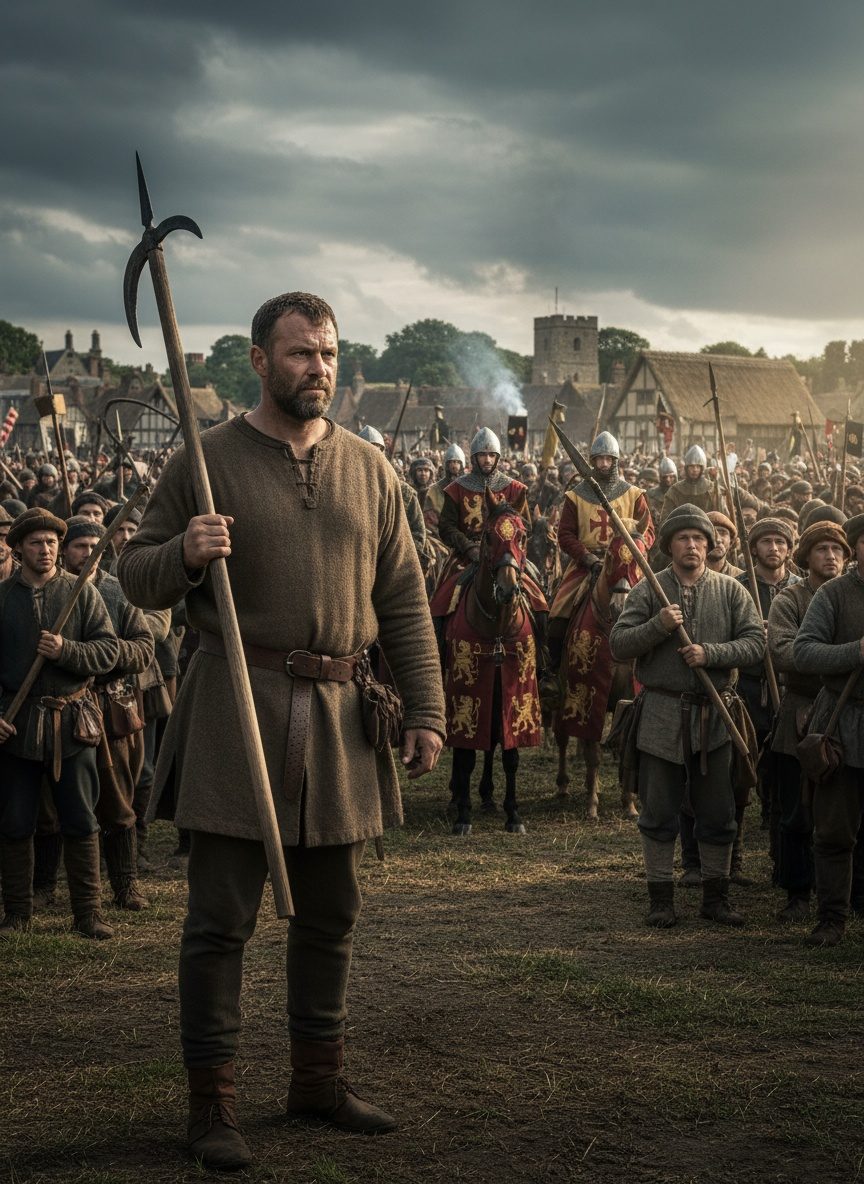
The clang of metal, the crackling of fire, and the scent of charred wood swirled around him as Wat Tyler approached the heart of London. Smoke clawed at the sky above the burning edifices, the once grand Savoy Palace now a pyre. The peasant leader's eyes, fierce and unwavering, scanned the frenetic scene around him. Sixty thousand voices echoed his resolve as they surged through the cobbled streets, a formidable human wave on a collision course with royal authority.
The Sparks of Rebellion
The rebellion that roared to life in June 1381 was not born in the sweltering heat of discontent alone; it was ignited by a specific spark. The cause? An oppressive tax, the third in a series of poll taxes imposed upon the already burdened denizens of England. For the laborers of Kent and elsewhere, it was a symbol of unendurable tyranny, a yoke made heavy by the merciless hands of royal collectors. This was a land rife for rebellion — the soil tilled by generations of resentment, anxiety, and injustice.
As the embers of outrage kindled across the landscape, a blacksmith from the green fields of Kent rose to lead. Wat Tyler was not a noble or knight but a man of the soil, strong and resolute. His hands, accustomed to furnace and hammer, now shaped the insurgent resolve of those who had suffered long in silence. Men gathered, empowered by the clarion call for freedom and equity. For the peasants, Tyler was more than a leader; he was their voice, bold and uncompromising.
March of the Multitudes
The march to London was not merely a physical journey; it was a declaration, a path of defiance carved through fear and expectation. Ordinary men became extraordinary, shedding the roles of peasants and serfs, and adopting a mantle of purpose. As they trampled roads and fields, tales of their progress spread far and wide. Each mile conquered was a shred of fear cast off, each village behind them a testimonial to their growing numbers.
And so, they arrived at the gates of London. The air was thick with anticipation, hot with the promise of change. For the first time, the ordinary stood at the threshold of power, daring to demand recognition alongside barons and bishops. The invaders were messy, but their message was clear. As Londoners watched, some joined in, their fate entwined with those who had once been strangers.
The Fall of the Tower
The Tower of London — a grim symbol of authority and confinement — was breached. The prisoners, kept within its stone walls, saw daylight once more, released into the chaos by their liberators. Among them were radicals, wronged by laws skewed in favor of the elite, and commoners punished for their dissent. The Tower’s fall resounded through the echelons of power, a manifesto written in action rather than words.
This was more than a symbolic victory. By taking the Tower, Tyler and his followers had demonstrated their ability to challenge the very seat of medieval power. The government had been caught off balance, its might diminished before this industrious force. They had laid bare the vulnerabilities of a kingdom that had overlooked them for too long.
The Field of Fate
Amidst this tumult, Tyler found himself on another battlefield — this time within a field in Smithfield, face-to-face with King Richard II. Only fourteen years old, the boy king stood at the eye of this storm, fraught with gravity beyond his years. Here was Tyler, chest heaving with the weight of a nation’s hopes, his eyes locking with those of opposing fate.
This meeting was the axis upon which the rebellion turned. Tyler sought reforms, not just for now, but for the generations to follow: abolition of serfdom, fair wages, and rights for those who toiled. Yet, as Tyler put forth his demands, the scene turned tragic. Accounts vary — some say treachery, some say misunderstanding — but it ended with Tyler’s life spilling onto the earth, sealing the fate of the revolt.
Echoes Through Time
The rebellion of 1381, with all its fiery passion and tragic conclusion, left a tapestry of questions and lessons woven into the fabric of English history. For many, the bravery and audacity of those who dared to challenge the entrenched inequities painted a picture of potential not fully realized, a dream deferred by the brutality of power.
Though unsuccessful in their immediate aims, the actions of Wat Tyler and his followers reverberated through the corridors of time, an early rumbling of the demand for recognition, agency, and the rights of the common people. The uprising held a mirror to the society that spawned it, reflecting truths that would not be forgotten. As England’s feudal system slowly disintegrated in the succeeding centuries, the echoes of the peasants’ steps on London's streets remained a reminder of what unbridled human spirit can dare to attempt — and sometimes, despite the odds, what it can achieve.