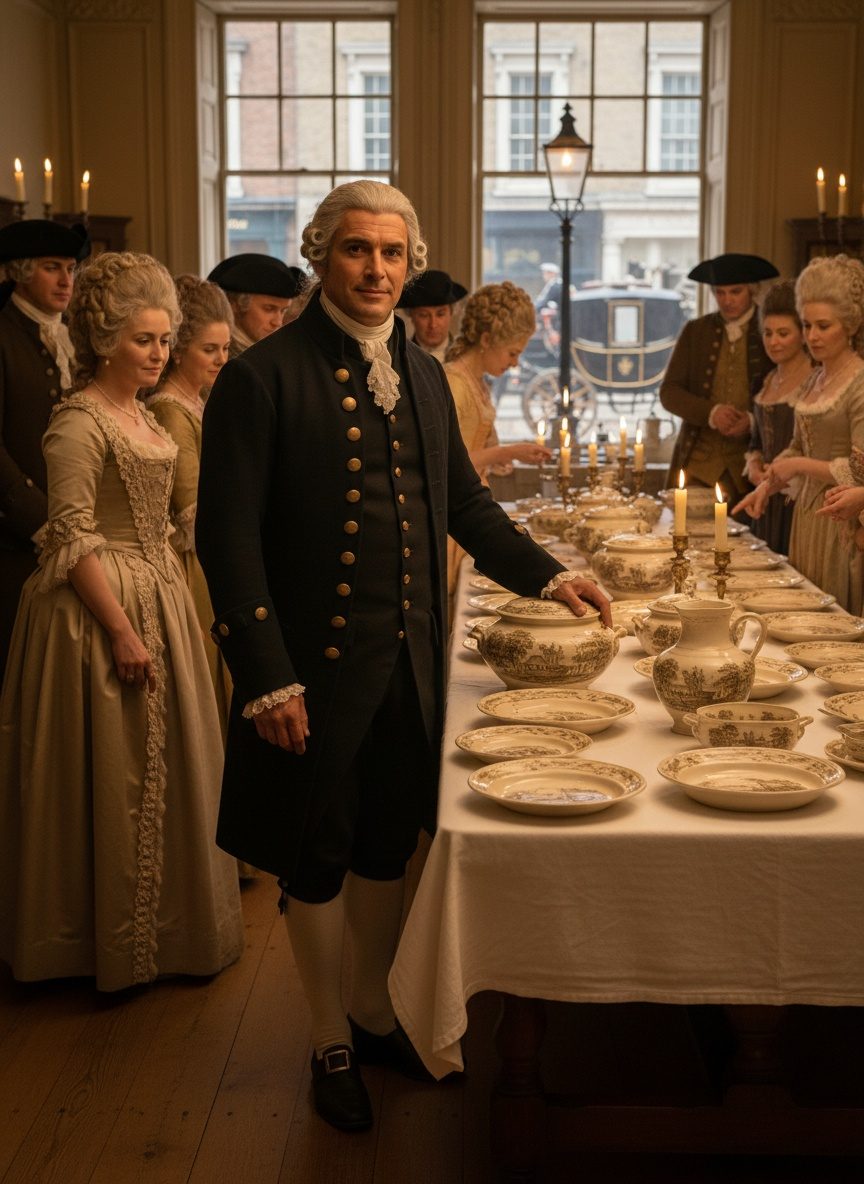
The dense fog clings to the cobbled streets of London, muffling the clatter of horse-drawn carriages and the echoing chatter of early risers. It is 1773, and the air is thick with anticipation. Nestled among the bustling streets is an exhibition like no other. Glittering under the dim candlelight are gleaming displays of cream-colored pottery, each piece whispering of elegance and innovation. This is Josiah Wedgwood's moment. The elusive stakes? To dazzle Empress Catherine the Great of Russia and, in doing so, forever revolutionize British trade.
The Vision: From Kilns to Courts
In the heart of Staffordshire, a visionary potter sat amid the fiery glow of his kilns, dreaming of more than just crafting clay. Josiah Wedgwood saw beyond borders, imagining a world where his intricate designs could grace even the most opulent courts of Europe. The opportunity came when Catherine the Great, the powerful Empress of Russia, placed an order for a staggering 952 pieces of his cream ware.
This was no ordinary commission. Wedgwood knew that serving an empress wasn't just about function; it was about pageantry and strategic foresight. The order was a doorway into the Russian elite, a stage to showcase the sophistication of British craftsmanship. To realize this vision, he concocted a plan that would turn an act of commerce into a spectacle of marketing genius. Every piece had to embody perfection, and more critically, every piece had to captivate the world's imagination.
A Feast for the Eyes: The London Showcase
In a move that startled his contemporaries, Wedgwood decided that the Empress's service would first debut to London before being shipped to Russia. He understood the power of public curiosity and harnessed it with aplomb. The exhibition space became a theater where each visitor played a pivotal role in the narrative of Wedgwood's ascent.
The display attracted throngs from all walks of life, from curious onlookers to influential patrons. They were greeted by an awe-inspiring assortment of meticulously crafted pieces, every item a testament to precision and artistry. The cream ware, with its subtle beauty and innovative techniques like "Queen's Ware," set a new standard that transformed pottery from mere utility to art.
Wedgwood showcased every item with an eye that wasn't just commercial but also deeply attuned to aesthetic appeal. Visitors marveled at the delicacy of designs that told stories of pastoral tranquility and classical myth. Wedgwood's foresight to display the collection in London ensured that it wasn't just Catherine the Great who took notice, but the entire English elite—and beyond.
Navigating Cultural Currents: The Russian Reception
After the dazzling London showcase, the meticulously packed pieces journeyed towards a different destiny in Russia. By the time they arrived at the illustrious Russian court, the anticipation had built to a fever pitch. Catherine the Great, no stranger to grandeur, expressed her delight at receiving such exquisite works of art. Wedgwood's pieces were not merely functional but cultural emblems, bridging two powerful empires in one elegant flourish.
Catherine's reception of the cream ware wasn't just validation for Wedgwood; it was a testament to the growing diplomatic and cultural ties between Britain and Russia. Here was an Englishman whose visionary artistry had captured the imagination of one of the world's most discerning rulers. The influence of this exchange transcended its commercial roots, embedding itself within the fabric of international diplomacy and commerce.
A Legacy Cast in Porcelain
The aftershocks of Wedgwood's triumph rippled far beyond the confines of the 18th century. So impressed was the world by his creations that orders poured in not just from the European nobility but from enthusiastic collectors and aspiring entrepreneurs. The exhibition in London marked a significant turning point in the commercial and cultural exchange across continents, marrying art with enterprise in an unprecedented fashion.
Moreover, it highlighted the power of strategic marketing and branding, with Wedgwood himself becoming a prototype for modern businessmen. It wasn't merely about what was sold; it was how it was sold. By leveraging public curiosity and setting new standards in design, Wedgwood had redefined the potential of British trade, making his brand synonymous with quality and innovation.
In the threads of this narrative lies a potent reminder that sometimes the most transformative stories are not grand battles or treaties, but rather the quiet revolutions woven through art and commerce. Josiah Wedgwood's tale is a testament to the power an artisan holds to shape culture, link worlds, and leave an indelible imprint on history—the kind of legend they left out of the textbooks.