Many believe the end of the British Empire was a tumultuous affair of conflict and loss. In Cyprus, it was an act of diplomacy and handshake.
The Island's Unyielding Spirit
For years, Cyprus had been the stage of a complex and often violent struggle for freedom. The island, rich in history and culture, had been a jewel in the Mediterranean, its strategic location too tempting for any empire to ignore. But beneath its sun-baked hills and azure coastline lay an unyielding desire for independence, a spirit that refused to be silenced or subdued.
The Cypriot people, caught between the ambitions of larger powers, endured years of conflict as they pushed back against British rule. As skirmishes persisted and protests grew bolder, the British government was forced to rethink its strategy. The drumbeat of autonomy was too loud to ignore, echoing throughout Nicosia's narrow streets and into the halls of power in London.
The Reluctant Advocate
Amidst this backdrop of tension emerged Sir Hugh Foot, the last British Governor of Cyprus. A man of contradictions, Foot was a servant of the Empire yet a champion of change. His ultimate goal was not to perpetuate British control, but to ensure a smooth transition to self-governance for the Cypriots, a notion that was met with skepticism from all sides.
Foot's task was formidable: convince the British government to allow for a generous settlement that would ease the island into independence while ensuring stability and peace. He became a sort of reluctant advocate for the islanders, lobbying both discreetly and doggedly for their cause. But Foot understood that real change requires not just rhetoric, but compromise and a deep understanding of one's adversaries.
This journey led him to countless meetings with Cypriot leaders and strategic discussions with officials back in Britain, each step building towards the inevitable—an island free to chart its own course, free of colonial shackles.
The Quiet Ceremony
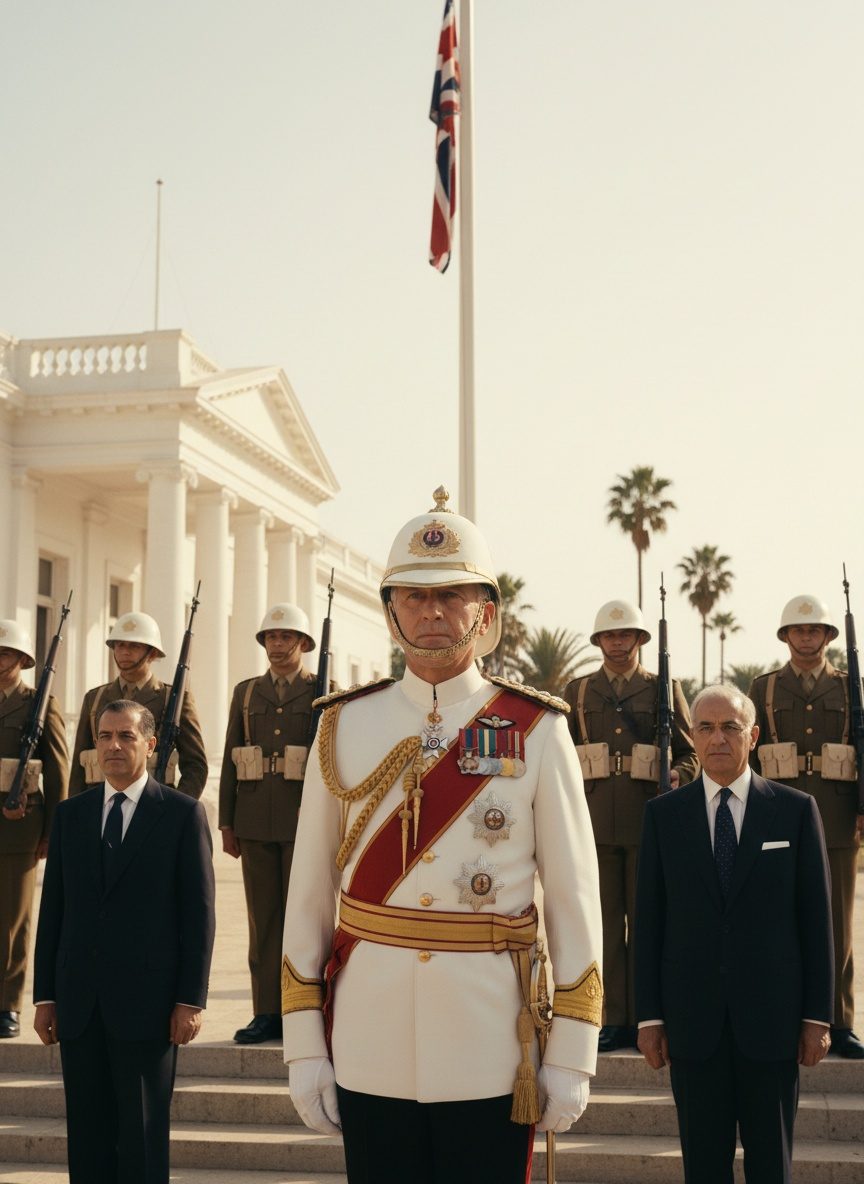
The morning of August 16, 1960, was one of silent anticipation. As officials and dignitaries gathered outside Government House in Nicosia, a sense of history being written hung in the air. The Union Jack, representative of an era of British dominance, fluttered proudly in the mild Mediterranean breeze, knowing it would soon be retired from its post.
Sir Hugh Foot, his demeanor calm and composed, signed the papers that would officially grant Cyprus its independence. A moment heavy with significance, it carried the weight of centuries of colonial rule and the promise of a new era. As the flag of Cyprus was raised, there was no grand fanfare or resounding applause, just a dignified acknowledgment of a chapter closing.
For Foot, it was a poignant moment. He had done what many thought impossible—exiting gracefully while ensuring the island's best chance for a peaceful future. With the transfer of power complete, Foot stepped off the stoop of history and into the awaiting car, leaving behind a legacy of quiet dignity and forthright action.
The Lessons Left Unspoken
Cyprus’s journey to independence may not have been as loud or as publicized as other struggles, but it was no less significant. The negotiation and handover orchestrated by Sir Hugh Foot stand as a testament to the power of diplomacy and the importance of understanding and respecting a people's desire for self-determination.
This story, often overlooked in history books, serves as a reminder that the end of imperialism can be achieved not just through conflict, but through resolution and mutual respect. As the Cypriot flag waved over the island for the first time in 1960, it symbolized not just freedom, but the potential for peaceful transition even amidst deeply entrenched divisions.
In today’s world, where struggles for autonomy and identity continue to unfold, the quiet courage of Hugh Foot and the resilience of the Cypriot people resonate more than ever. The story of Cyprus in 1960 is one that whispers across the years, calling for understanding and reminding us of a simple truth: sometimes the most profound victories are won not with might, but with grace.