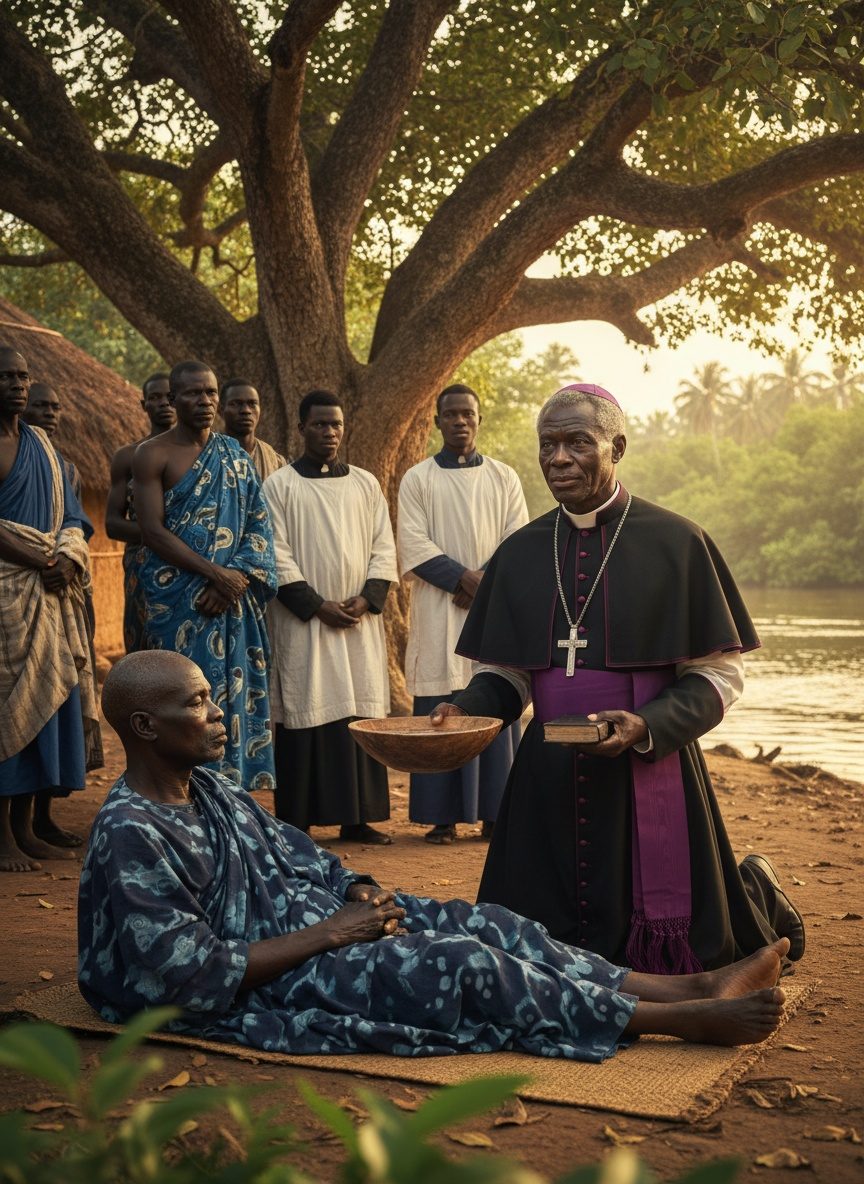
The air hangs heavy with the scent of rain in the Niger Delta, where the dense canopy shields the earth from the sweltering sun. Here, amidst the whisper of the rustling leaves and the distant call of exotic birds, history is quietly unfolding. It's 1864, and the tropical humidity clings to two figures by the side of a tranquil river. One man, a towering figure draped in the solemn garb of bishops, bends low toward another, a local chief seated on a wooden stool, frail in his final days. As raindrops begin to patter gently on the broad leaves above, the words spoken here are neither rain nor wind — they are words of transformation; a story that defies the blurring line between oppressor and oppressed.
From Chains to Clergy
Samuel Ajayi Crowther unveils the extraordinary arc that life can draw from unimaginable hardships. Born in what is now Nigeria, Crowther was just a young boy when the harsh hands of destiny snatched him from his native Yorubaland. Sold into the grim heart of slavery, he was torn from everything familiar and thrown toward an uncertain fate across the unforgiving Atlantic. But rescue came from an unlikely quarter — the masts of a British Royal Navy ship loomed on the horizon during a time when Britain's conscience was stirred towards the seas, searching for vessels bearing the human cargo of the slave trade. One such patrol intercepted Crowther's captors, offering him a pathway not just to freedom, but to a new life that would eventually lead him back home in an unexpected way.
In Sierra Leone, where emancipated slaves sent resounding echoes of liberation, Crowther found himself symbolically reborn. Here, positioned at the crossroads of African and British cultures, he embraced the education laid out by missionaries, quickly mastering English and several African languages. Crowther's prodigious talent for languages formed the cornerstone of his destiny; it was this very skill that allowed him to transcend his origins, entering the annals of ecclesiastical history as the first Black Anglican bishop of Africa. A title laden with historical gravity, symbolizing how the tides of empire and fate had conspired to return him to the soil he might have called home had the world been just.
Baptism By the Delta
Now, deep in the heart of the Niger Delta, Crowther's journey arrives at a profound junction. Here, before him, knelt the chief, a man endowed with the traditional power to alter destinies and command the lives of his subjects. Once, such a chief might have been his owner; the social fabric of the Yoruba and other tribes woven with the threads of power and servitude. Yet, it was under the auspices of divine providence and history's fickle dance that this chief lay beside the river ready to accept baptism from the hands of one whose very life carved an indelible script upon history's page.
The air was ripe with symbolism as Crowther dipped his hand into the rippling water, his voice weaving in melodic Yoruba, the language of their shared ancestry. The words spoke of rebirth and forgiveness, not just for the chief before him but for a continent and its peoples. It was an epiphany both personal and communal, a watershed moment that spoke volumes about resilience and transformation. Few could fathom the emotional weight Crowther bore — honoring his conversion and new faith while standing on the very soils that once tasted the despair of his people's plight.
As rivulets of water drift back to their source, Crowther's priestly hands reached onward, anointing the chief with the sacred rites of the Christian faith. Yet within this act was a gesture that reached beyond religion: an offering of peace, a bridge between cultures, between a past marred by bondage and a future illuminated by understanding.
Echoes Across Time
As the baptized chief stood, testament to a newfound spiritual journey in his waning days, the sky opened above with a sun that broke through cloud and rain alike. This moment, captured in a collage of nature's grandeur and human drama, unfurled into the wider story of Africa during the Victorian Era, painted in the hues of the Scramble for Africa. It was a time full of tumult, where foreign powers drew arbitrary lines across a land deep with ancient tribal roots, a time when men like Crowther faced the tides of European expansion, creating stories that transcended textbooks.
Crowther’s legacy was a silent but potent rebuke to the colonists who sought to impose their will upon the African continent. He stood as a testament to resilience, viewed not through the worn lens of conquest, but through an optique of shared fraternity and lasting prayer. His story whispered through the alleys of history carries a potent message — that the power of humility and faith can bridge chasms vast and seemingly insurmountable.
Thus, in the fold of the delta and the embrace of African land, Samuel Ajayi Crowther beckoned a new dawn. Century by century, the narratives of those who challenged the boundaries of their times echo across the pages of hidden history, urging us to listen closely, to understand deeply, and to remember always — that the forces of humanity’s spirit know no chains.