The Eighth Army crossing the Po River seemed like just another operation in the long slog through the Italian campaign. In reality, it marked the swift unraveling of the Axis defenses in Italy and heralded the end.
The Po River: More Than a Body of Water
The Po River, Italy's longest river, snakes its way across northern Italy, sprawling over the flat plains like a natural barrier. But barriers exist to be overcome. By April 1945, the Eighth Army, under British command, faced this formidable obstacle. It marked the last significant hurdle in a campaign that had trudged laboriously from Sicily, through the mountains of central Italy, and up the boot. Yet despite its imposing width, the Po was more than a geographic feature—it was symbolic of the fading energy and defiance of Axis forces in Italy.
The Allies knew the significance of this river crossing. If achieved successfully, it would pierce the last line of Axis defenses, leading to a cascading collapse of German resistance in northern Italy. This wasn’t just a battle for terrain; it was a race against time. Every day gained meant a day closer to the end of a brutal war.
The Pioneering Ingenuity of the Bailey Bridge
When the time came to cross the Po, the Eighth Army turned to a revolutionary piece of engineering: the prefabricated Bailey bridge. This modular steel bridge was an unsung hero of Allied success, enabling rapid deployment and unmatched versatility. The British could now bridge this watery divide literally overnight. This ingenuity, combined with the speed of operations, was a stark contrast to the battles of attrition that had characterized much of the earlier Italian campaign.
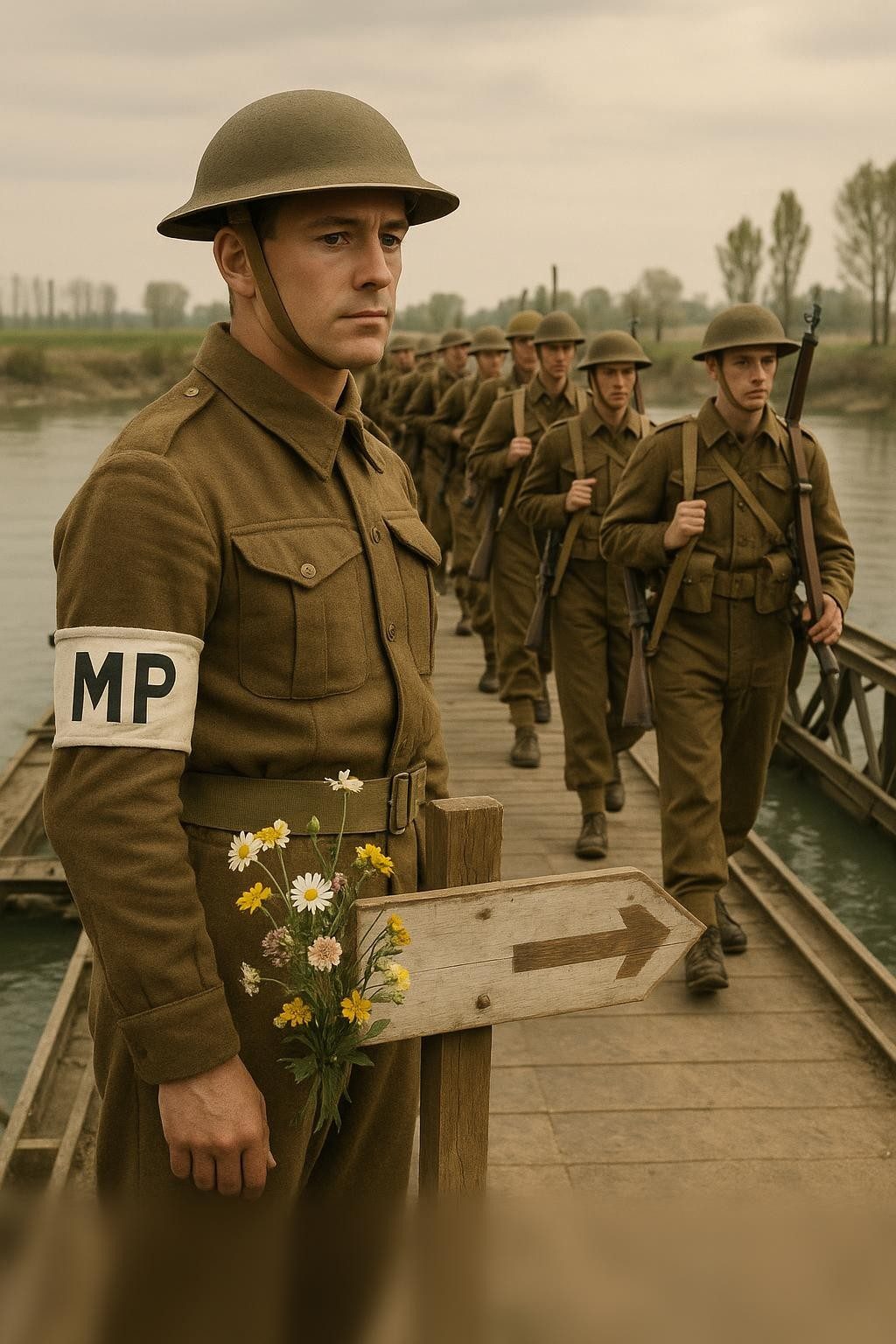
As the pontoon Bailey bridge stretched across the Po near Ferrara, soldiers and vehicles flowed effortlessly over it. It was an astonishing feat, not just of engineering, but of logistics as well. Troops moved east from the river, supported by continuous streams of supplies and reinforcements, creating a relentless wave of pressure on the crumbling Axis front.
Bridging More Than Just Water
With the crossing of the Po, the Allied forces bridged more than a river—they bridged the gap to liberation for northern Italy. The strategically vital route facilitated the sweeping advance as town after town fell into Allied hands like ripe fruit. Military policemen, stationed at crossroads and tasked with maintaining order, were greeted with flowers by exuberant local populations, a reflection of the pent-up relief and hope pervading the Italian countryside.
This sudden shift was not devoid of irony. Even though northern Italy had long languished under Axis control, the swiftness of the Eighth Army’s advance caught many by surprise. Town squares soon filled with jubilant crowds, eager to see the faces of those who had brought them the promise of peace. Men and women lined the streets, waving as nearly endless columns of soldiers and vehicles pushed ever forward.
The Domino Collapse of Axis Resistance
Just four days after the crossing of the Po, the residual strength of the Axis in Italy disintegrated entirely. The campaign, which had been a litany of slow, grueling battles up the Apennines, now ended in a sprint to victory. What had taken months of toil to gain was now surrendered in mere days. The German forces, realizing their untenable position, capitulated. The surrender was a simultaneous ending—a swift, decisive closure to the longest Allied campaign of the European war.
This denouement, while unexpected in its speed, was strategically anticipated. Operation Grapeshot had been designed to unpick the defenses around the Po and force a breakthrough. It worked more decisively than any Allied strategist might have predicted. This operation was the ultimate culmination of not only military might but also psychological warfare—a psychological tipping point for beleaguered and retreating forces who could not stem the tide of the Allied advance.
A Rapid Resolution to Prolonged Struggle
The fall of northern Italy in April 1945 was a clarion signal that the end of World War II in Europe was imminent. This crossing transformed a drawn-out campaign of attrition into a sweeping cascade of liberation. The images of dusty vehicles and weary soldiers streaming past fields and villages, heralded by joyous onlookers, encapsulated the paradox of war—a simultaneous farewell to hard-fought battles and a greeting to freedom's dawn.
The Po River and the swift fall of Italy stand as a potent reminder that sometimes the longest struggles end in unexpectedly rapid resolutions. This moment, elusive in many histories, was a stark illustration of momentum. When the Eighth Army crossed that bridge, they closed the chapter on one of the war’s toughest narratives, leaving only the indelible memory of their dash through the heart of Italy in its final pages.