The year was 1842. The waters of the Pearl River still trembled with the chaos of battle as the British fleet withdrew, leaving the Chinese Empire teetering on the precipice of change. The Qing Dynasty, steeped in millennia of tradition and isolated from the ripples of global dynamics, had suffered a humiliating defeat in the First Opium War. Amidst the whispers of confusion and disgrace, one scholar dared to do the unthinkable. Wei Yuan, a name soon to become infamous, approached the devastation not with despair, but with determination. He set in motion a plan to map the entire Western world — their lands, their strategies, their weapons — and advised China on how to confront these formidable foes. This is the astonishing tale of a map that terrified an emperor.
National Defeat and Individual Resolve: The Aftermath of the Opium War
In the dust of August 1842, the streets of Canton echoed with the murmurs of disbelief. The Treaty of Nanking had been signed, and with it, a new era commenced. Most officials in the Forbidden City recoiled from the prospect of examining the very forces that had turned the tides of power, preferring instead to retreat into familiar antiquities. But Wei Yuan was different. With the resolve of a seer, he discerned both threat and opportunity in the ashes of defeat. He understood that China's ignorance of the rest of the world was not just a cultural quirk, but a critical vulnerability.
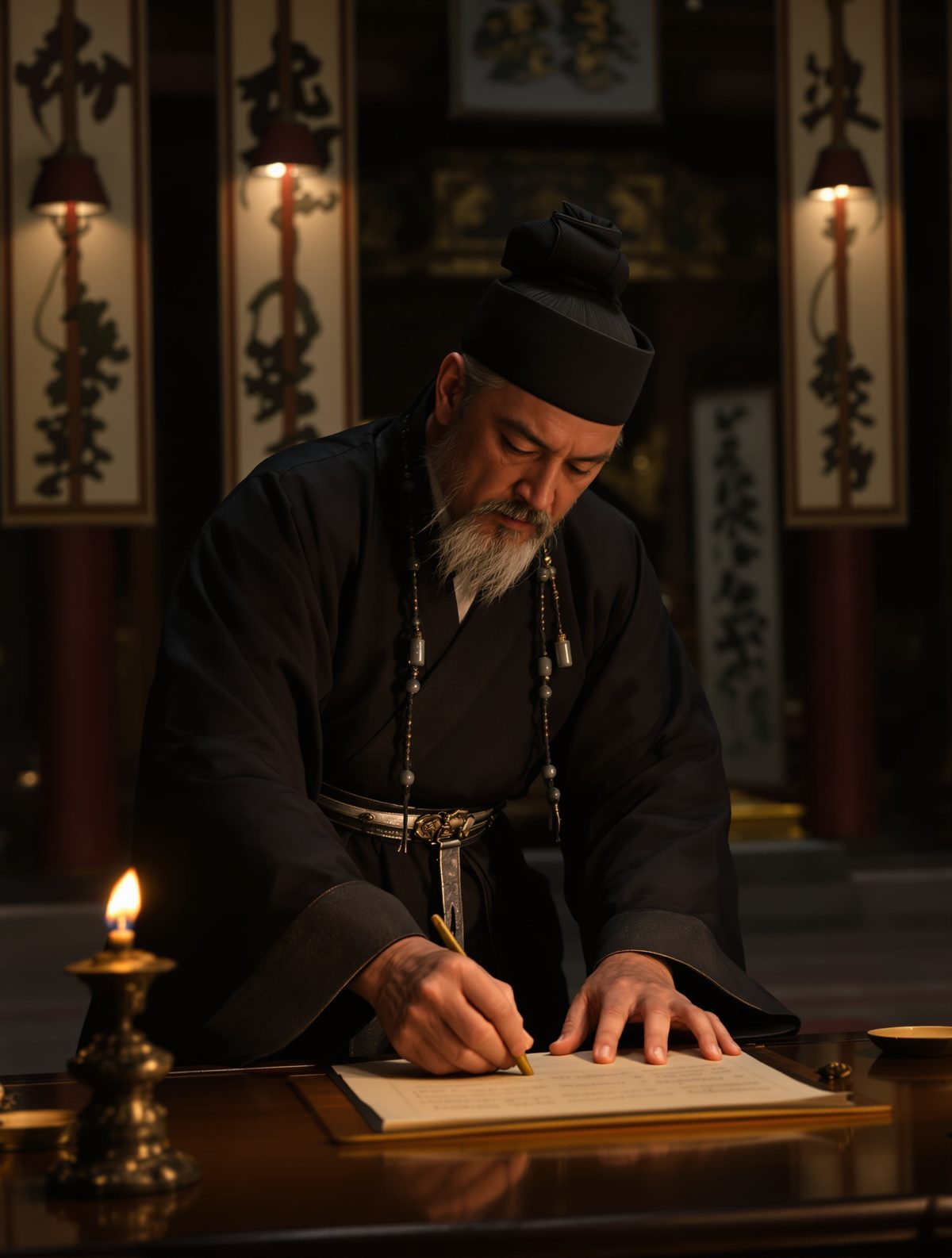
Wei, born in 1794 in Shaoyang, Hunan Province, was a scholar of considerable reputation. Known for his pragmatic approach to Confucianism, he realized that the Qing Dynasty was in desperate need of what the West excelled at — military and technological advancement. His objective was audacious, revolutionary even. He intended to illuminate China’s darkest hour with the light of knowledge gleaned from their conquerors.
The Birth of a Magnum Opus: Exploring the "Illustrated Treatise on the Maritime Kingdoms”
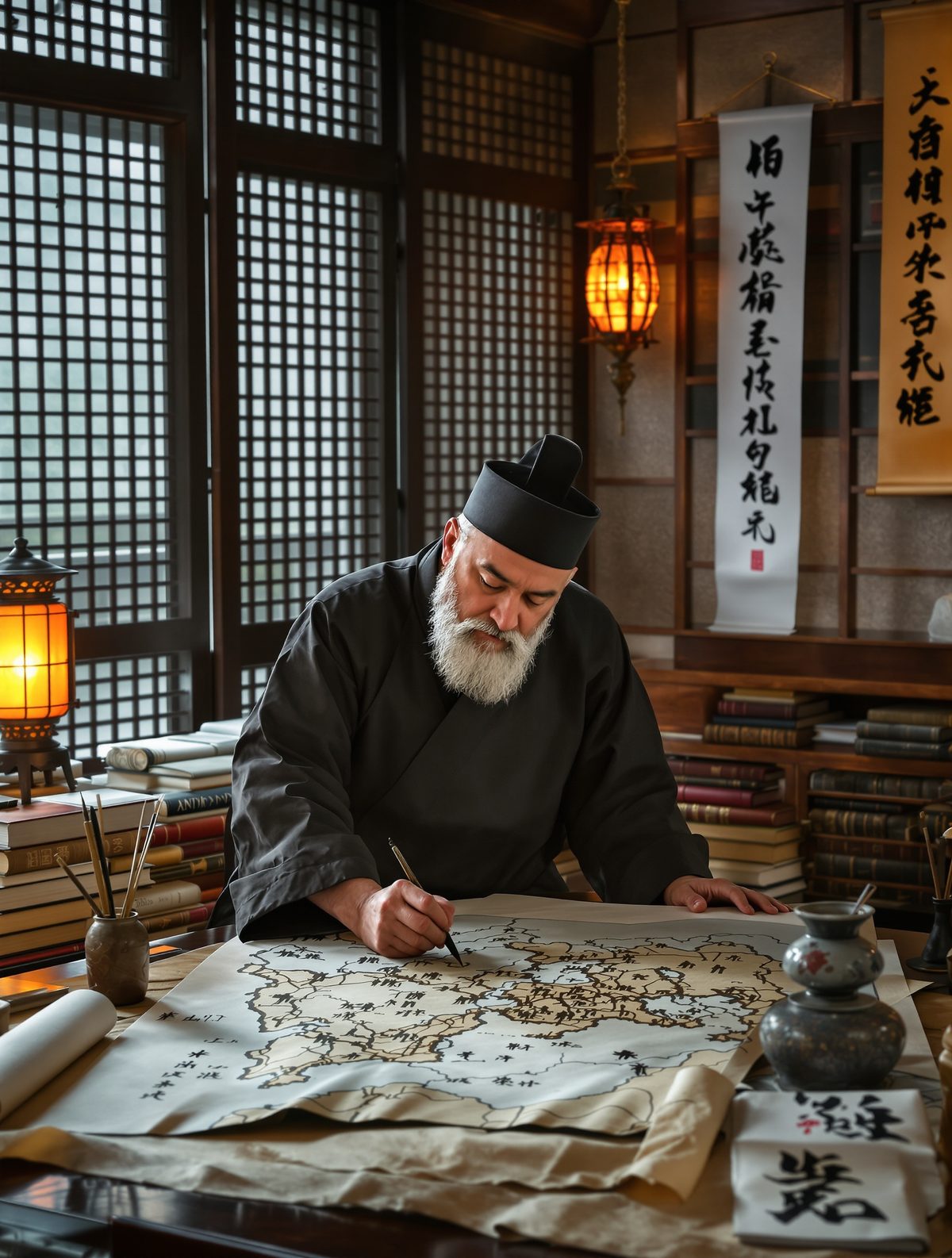
In 1843, Wei Yuan embarked on the monumental task of educating himself and his compatriots about the Western world. The result of years of meticulous research and relentless investigation was encapsulated in his seminal project, the "Illustrated Treatise on the Maritime Kingdoms" — *Haiguo Tuzhi*. This work was not just a book; it was a lifeline thrown to a floundering empire, a detailed cartographic analysis and a strategic compendium.
The treatise covered 50 volumes, housing maps and descriptions of 45 countries. The meticulous compilation included details about geography, political structures, military composition, and naval architecture. Wei Yuan's work was exhaustive and unprecedented. He synthesized information from a myriad of missionaries, traders, and Western texts, a feat that required not only intellectual rigor but extraordinary courage.
The knowledge was staggering. With it, Wei uncovered the secrets of steam-powered ships, rifled guns, and disciplined naval tactics that set Western fleets apart. In doing so, he crafted more than a book; he crafted an argument for change, an appeal to embrace reform over ruin.
When Maps Became Weapons: Challenging the Imperial Mindset
Wei Yuan’s map, a frightening sight to the uninitiated eyes of the Qing court, was more than just lines on paper; it was a mirror reflecting China’s vulnerability. The scope of his maps revealed to the emperor and his advisors the sheer magnitude of the world beyond their borders, a world that extended much further than the fringes of the Middle Kingdom had ever imagined.
This was a radical twist — an educational bombshell planted onto the imperial desks. While other officials continued to adhere to outmoded practices, Wei’s document doubled as a manifesto for reform. He urged the dynasty to learn from the West, not merely to withstand the next encounter, but to thrive in an era of emerging global exchange.
Wei advocated for a contemporary approach that later scholars termed "self-strengthening," proposing that China innovate its military technology while preserving its cultural essence. The maps were not just conduits of fear but of enlightenment, hinting at a broader worldview and the potential for adaptation.
Ripples of Change: The Unanticipated Influence of Wei’s Work
The reception of Wei Yuan's treatise varied drastically, its impact not immediately obvious in the corridors of power. While the emperor dined on traditional conservatism, scholars and reformists across the nation digested the contents of *Haiguo Tuzhi* with fervor. Wei's work resonated with an emerging class of intellectuals who recognized the need for substantial change.
The treatise influenced the initial stirrings of the Self-Strengthening Movement (1861–1895), a period marked by attempts to salvage a crumbling empire through Western technology and practices. This unforeseen consequence extended Wei’s legacy beyond the man and his immediate era, seeding reformist ideologies that reverberated into the 20th century.
While his efforts did not reverse China’s course immediately or comprehensively, they rattled the status quo, carving out intellectual space for discourse amid isolationist attitudes. His work laid a precarious but real foundation for later developments in Chinese military and industrial reform.
Wei Yuan’s Legacy: A Map for Modernity
In today's interconnected world, the importance of Wei Yuan's approach is starkly clear. His work serves as a timeless reminder of the value in learning from others, especially in times of perceived defeat. As we navigate modern global challenges, from technological advancement to geopolitical tensions, Wei’s story underscores a critical truth: understanding one’s adversaries can be as powerful as direct confrontation.
Wei did what seemed inconceivable to many in his era — he studied the enemy, adapting their strengths without forgoing his compatriots' unique perspectives. His legacy is not just a reflection of his times, but a beacon urging every generation to look beyond immediate borders and embrace the intricate web of shared human progress.