In the sweltering heart of Tenochtitlan, beneath the electrifying skies of the Aztec capital, a new ruler ascended the throne. The air was thick not only with humidity but with anticipation and skepticism. Tizoc, the young emperor, inherited the most formidable empire in pre-Columbian Mesoamerica in 1481 AD. Yet here lies a tale that defies the grandiosity of its beginning. Tizoc, the man who commissioned his own eternal glory, carved a monument to victories that were more myth than reality. This is a story of ambition, hubris, and the lengths a leader will go to validate their power.
The Weight of an Emperor’s Crown
As the successor to the illustrious Ahuitzotl, Tizoc stepped into a role that carried both challenge and opportunity. The Aztec Empire, a sprawling dominion powerfully held together by warfare and tribute, depended not just on inherited authority but on visible prowess in battle. Unlike his formidable predecessors, Tizoc's first campaign to prove his worth was a fumbling defeat. Charged with the sacred duty of expanding the empire's reaches, Tizoc set his sights on the Mezquital Valley tribes to the north.
The campaign, meant to be a spectacular display of military might, instead revealed the cracks beneath the empire's veneer of invincibility. Tizoc's forces returned with a mere 40 captives, a count woefully insufficient for the grand sacrificial ceremonies that marked Aztec victories. Rumblings of discontent spread like wildfire through the streets of Tenochtitlan, and the young ruler found himself on precarious footing.
Stone and Deception: A Monument to Misguided Glory
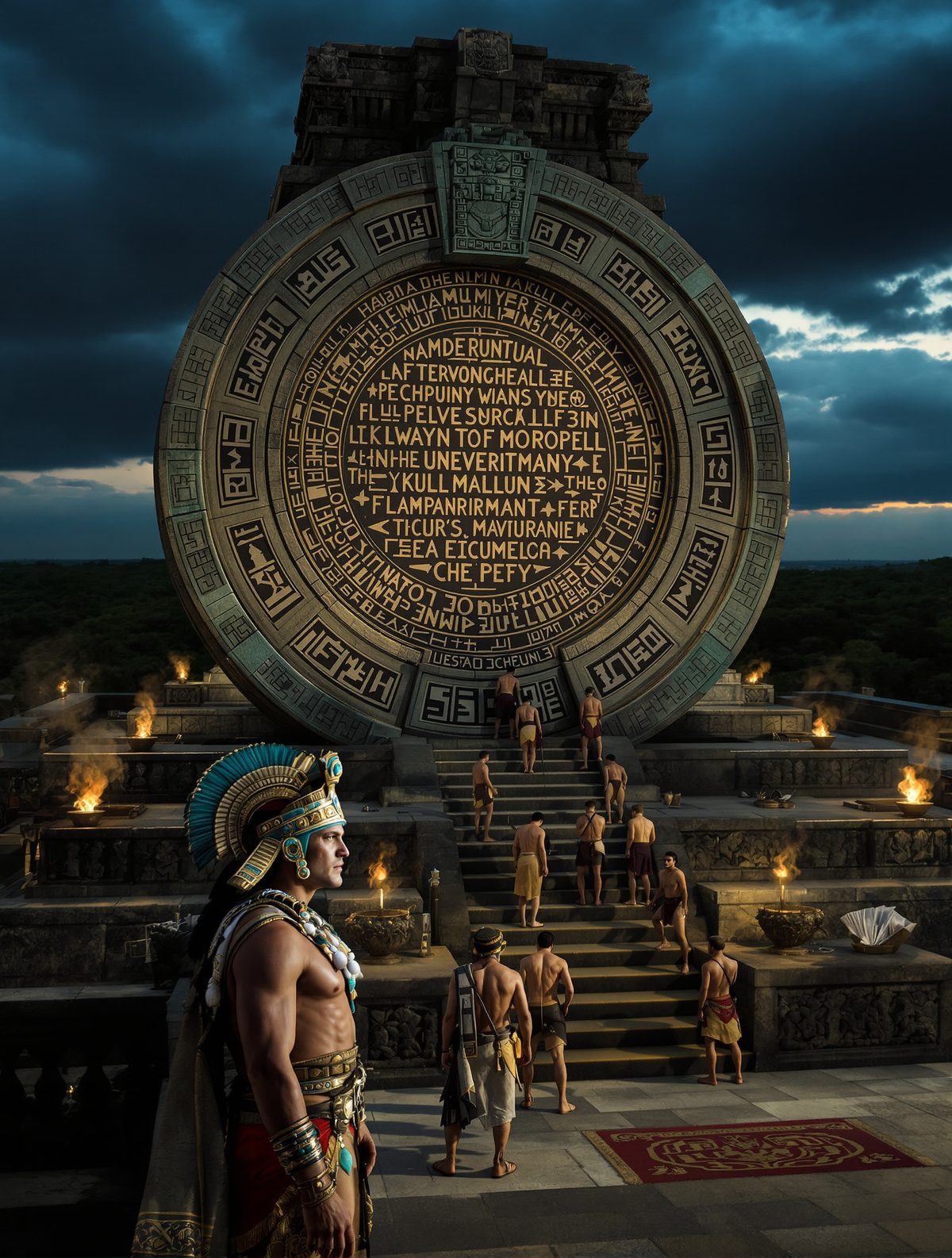
In desperation, Tizoc resorted to a different kind of warfare: one not fought with obsidian blades, but with the chisel on stone. Eager to obliterate the whispers questioning his strength, he commissioned a monolithic stone carved with the record of his "great victory." This was the Tizoc Stone, a circular sculpture depicting the emperor personally vanquishing his foes, his image standing proud and divine-like above them.
The stone's intricate carvings tell a story of triumph, depicting scenes of submission and domination, intended to cement Tizoc’s place in the pantheon of powerful rulers. Yet the stark reality stood as a silent but enduring contrast to the words and images etched in rock. The empire, well-versed in interpreting royal propaganda, was not so easily convinced. The glaring mismatch between deed and documentation began to eat away at Tizoc’s credibility.
Intrigue and Poison: The Court’s Deadly Verdict
Within the walls of Tizoc’s court, murmurs of dissatisfaction morphed into concrete talk of action. The political climate was brutal, a place where the stakes were life and death and dissatisfaction could quickly turn bloody. Tizoc’s inability to live up to his predecessors’ monumental successes led to whispers of conspiracy among the nobility.
By 1485, the seeds of mutiny had borne deadly fruit. Tizoc died under mysterious circumstances, widely believed to have been poisoned by those who sought a ruler more befitting of their great empire's lineage. Ironically, Tizoc’s death was as much a testament to his shortcomings as the monument he built. Among Aztecs, the fight for power was won not only on the battlefield but within the labyrinthine politics of their own palaces.
The Tizoc Stone: Truth Carved in Irony
The Tizoc Stone, through no fault of its own, stands as a testament to the paradox of power—a ruler attempting to sculpt legacy from defeat. Over 500 years later, this artifact is much more than just a relic of a failed reign. It provides a stark reminder of the human condition’s deep-seated need for validation and control of narrative—a timeless struggle for appearance over actuality.
The stone currently resides in the National Museum of Anthropology in Mexico City, a silent witness to the ambition and failure of its commissioner. It propels the viewer back to the dusty streets of a bustling capital, where the very stones underfoot bore witness to the deceit, ambition, and vulnerability of rulers who sought to define their time.
Lessons from the Echoes of Time
Tizoc’s tale, though rooted in the past, echoes into our present with uncanny relevance. It tells of leaders caught in the web of their own narratives, highlighting how the urge to create a legacy can sometimes drive us further from it. The desire to appear infallible, to shape how posterity will remember us, is a deeply human urge—one that persists across cultures and centuries.
In today’s world, where leaders, celebrities, and individuals can curate their life stories to a global audience with only a few keystrokes, Tizoc’s cautionary tale rings truer than ever. The line between truth and embellishment remains dangerously thin, and the stories we choose to etch into the "stones" of modern media continue to reveal as much about our aspirations as they do the reality we inhabit.
The legacy of Tizoc is not just one of failed conquest, but a potent reminder to forge authenticity in the face of adversity and to reconcile the stories we tell about ourselves with the truths that define us. It's a story they never taught you in school, one that reminds us to look beyond the carvings of victory to the true battles that shape history.