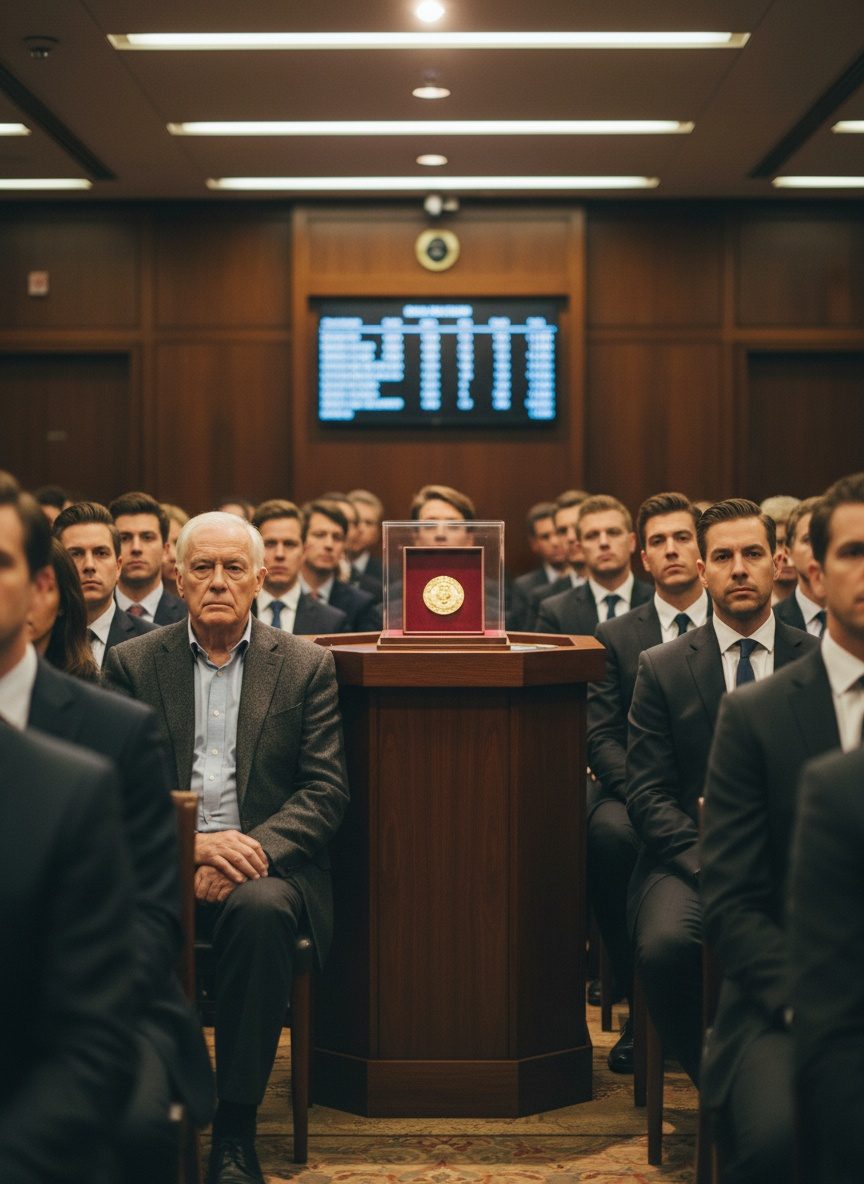
December 4, 2014. The auction room buzzed with a kind of eerie excitement.
The anticipation hanging in the air was palpable as bidders from around the globe gathered in a glass-walled room at Christie’s auction house in Manhattan. It wasn’t just any auction; it was an event that was making history even before the first bid was placed. The spotlight shone on an object of immense prestige and achievement—the Nobel Prize medal belonging to Dr. James Watson, one of the co-discoverers of the DNA double helix. For the first time ever, a living Nobel laureate was selling their prize. But the auction was more than just a transfer of gold; it was a gambit filled with personal and public implications.
The Nobel Medal That Sparked Controversy
Dr. James Watson, a name cemented in the annals of scientific history, was auctioning his Nobel Prize medal awarded in 1962. Alongside Francis Crick and Maurice Wilkins, Watson was credited with one of the most significant scientific breakthroughs of the 20th century—the discovery of the structure of DNA, the molecule of life itself. It was an achievement that transcended laboratories, rippling across biology, medicine, and genetics to redefine our understanding of life.
Yet, Watson’s decision in 2014 to part with his medal triggered surprise and stirred controversy. It was not merely the sale of a token of scientific merit, but a juxtaposition against a backdrop of reputational challenges that Watson had faced. By the time of the auction, Watson's career had become marred with contentious remarks and debates, leading him to be somewhat ostracized by the scientific community. It was speculated that this sense of alienation, combined with financial motives, pushed him to sell.
On that winter’s day, heads turned, and breaths were held as the gavel came down. $4.1 million—the final bid. It was a price that not only stunned the room but also the world, reflecting the enduring value and complex narrative attached to that small piece of gold. The identity of the buyer, however, was initially shrouded in mystery, adding another layer to this unfolding drama.
Alisher Usmanov: The Unexpected Bidder
The name that emerged from the anonymity was as unexpected as the gesture that followed—Alisher Usmanov, a Russian billionaire and philanthropist known for his ventures in expanding digital technologies and his stake in companies like Facebook and Alibaba. Usmanov, not known for scientific pursuits, was suddenly at the heart of a storied auction result. But his reasons for purchasing the Nobel medal were noble and immediately captured global attention.
Usmanov revealed he never intended to keep the medal. For him, the legacy encapsulated in that Nobel was beyond ownership. In a public statement, he asserted a medal representing a person’s life’s work should reside with its rightful owner. Usmanov recognized not only Watson's extraordinary contributions to science but also the personal significance and passion that the medal represented.
This act of return wasn’t merely generosity; it was steeped in a deep respect for the transformative moments of scientific discovery. By sending the medal back to Watson, Usmanov defied the commercialism that often colors tales of wealth and prestige. His gesture went beyond profit and possession, transforming the auction’s narrative from one of loss and exile to a chapter of redemption and recognition.
Reflections on a Life's Work
As the medal made its journey back to Watson, it carried with it a message profound in its simplicity—recognition and respect have intangible values that gold and fame cannot replace. It was a powerful reminder of how the ethos of science extends beyond the labs and theories; it’s about the ideas and insights that propel human understanding forward and the people responsible for these pivots in knowledge.
The story of Watson’s medal is more than just one of an auction or a return gift; it’s a tale interwoven with the strands of human ambition, vulnerability, and reconciliation. It speaks to the complexities of legacy—how a career and its accolades can be both celebrated and scrutinized, cherished yet controversial. Alisher Usmanov’s unexpected intervention added an unexpected yet poignant footnote in the larger narrative of scientific history.
Why does this story matter? It reminds us that scientific achievements are not merely milestones but integral parts of a broader human journey. And in that journey, the forces of reputation, respect, and responsibility are just as critical as the quest for knowledge itself. As Watson held his medal once more, it signaled that while we may at times stray into the shadows of our pasts, there are moments of grace and dignity that bring us back to the light, underscoring the enduring human capacity for empathy and understanding.