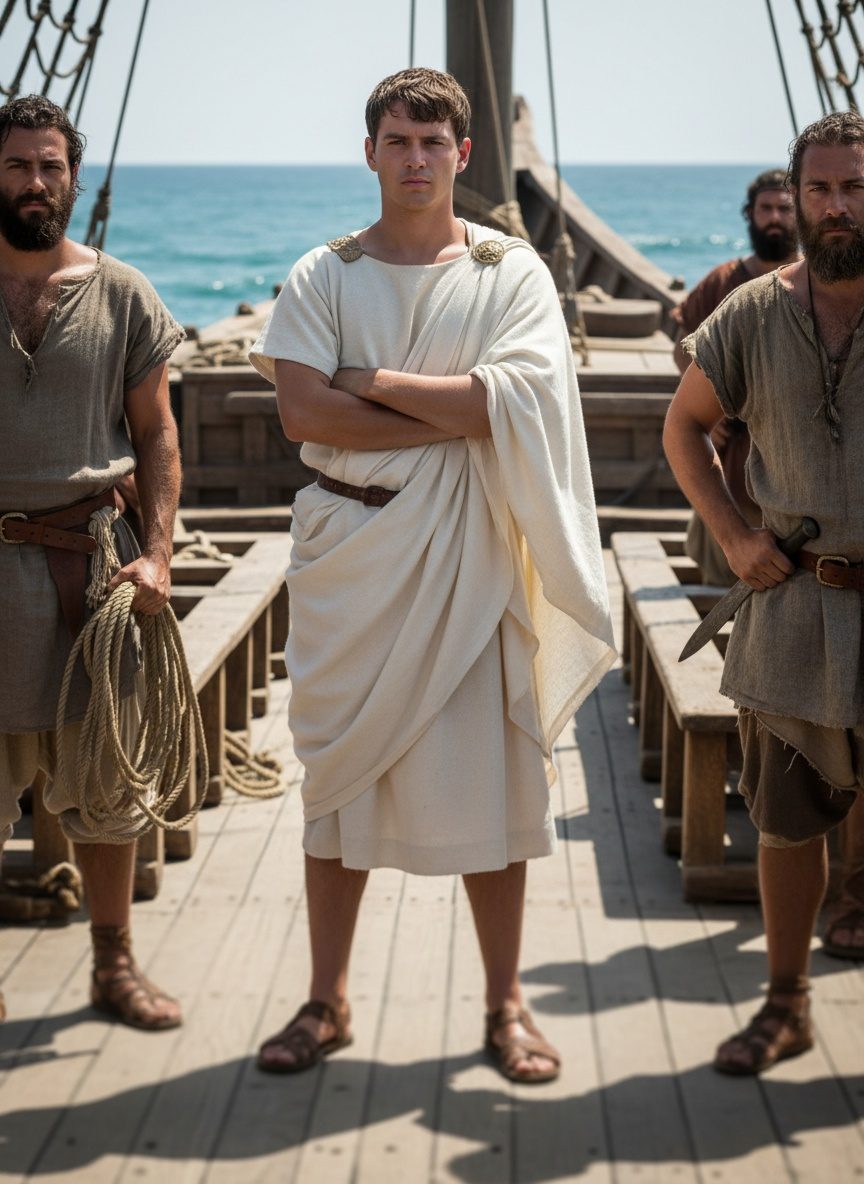
75 BC. The salty breeze of the Aegean Sea crackled with the cries of gulls.
The Calm Before the Storm: A Voyage Interrupted
Julius Caesar, not yet the storied ruler of Rome, found himself ensnared in an unexpected ordeal. Barely in his mid-twenties, Caesar had chosen to cross the Aegean Sea. It was a routine voyage, one that many of his Roman peers embarked upon, seeking education and enlightenment in the Hellenistic lands. But as Caesar sailed through the tranquil waters, his vessel came under attack. A band of Cilician pirates, notorious throughout the Mediterranean, ambushed his ship, capturing its passengers and crew. This was piracy at the height of its impunity, fueled by the disorder plaguing Rome’s weakening Republic, too embroiled in internal strife to secure its maritime domains.
Caesar was taken to a hidden cove on a nearby island, shackled alongside other captives. But where desperation and terror might grip a lesser man, Caesar simply watched, his mind calculating his next move.
The Audacity of Caesar: Upping the Ante
As Caesar found his footing in his primitive new surroundings, the pirates, unaware of the megalithic personality they had ensnared, named their price for his release: 20 talents of silver. Julius Caesar, with an air of almost amused disdain, laughed at the sum. The demand was beneath his stature, a blatant undervaluation of his worth. In a bold move that startled his captors, Caesar insisted that they increase the ransom to 50 talents—a sum that bespoke both arrogance and wisdom. By placing a higher value on his head, he subtly asserted his importance and ensured that his friends and family would take the abduction seriously.
The pirates, perhaps out of greed or bemusement, agreed to his terms, further convinced of their captive’s unique nature. They allowed Caesar to dispatch his friends to arrange the sum, a nod to the genuine control he seemed to exert even in his captivity. Meanwhile, Caesar ingratiated himself with his captors, participating in their rough activities, composing poetry, and regaling them with speeches. He was far from the image of a man under duress. But his glib vow—a declaration that he would see every one of them hanged—became a running jest. The pirates laughed along with their captive, not realizing the Roman’s words were laced with iron resolve.
Life Amongst the Predators: Caesar’s Captive Court
In his paradoxical role as beloved prisoner, Caesar spent some 38 days with the pirates. He moved among them with the charisma and confidence that would eventually propel him to the apex of Roman power. During his captivity, he maintained a semblance of his Roman routine—insisting the pirates be silent while he slept and chiding them for their illiteracy. It was a blend of camaraderie and command that spoke of a leader born, not made.
Yet beneath this convivial surface, Caesar’s mind ticked ceaselessly. To his captors, he was a charming peculiarity, a captive without fear. But, history reveals, only Caesar truly understood the stakes, his calm dealings reflective of a cat toying with mice before the pounce. Each calculated interaction, every show of magnanimity and wit, served only to obscure his true intentions and the dark promise he made to himself.
The Tables Turn: Caesar’s Vengeance Unleashed
When the 50 talents finally arrived, Caesar was released. Yet freedom was merely the overture to the drama that was about to unfold. With the pirates’ echoing laughter still fresh, Caesar set his equally formidable ambition against them. He proceeded to Miletus, a thriving coastal city, where he immediately organized a small fleet. Ignited by his singular intent, Caesar set sail with a resolve that his deceptive nonchalance during captivity had concealed.
Under the command of this vengeful spectre, the sea offered no refuge to the pirates. Caesar navigated the now familiar waters with cold precision, and soon his forces reclaimed the island. Many of those who had laughed along with the audacious Roman found themselves at his mercy. True to his word, yet as is often omitted from retellings, he appealed to the governor of Asia, pleading that the pirates be put to death in accordance with Roman law. When bureaucracy threatened delays, Caesar took matters into his own hands and saw them crucified as promised—a grim testament to the fury that lurked beneath his charismatic exterior.
A Lesson in Power: The Shadows of Caesar’s Optimism
This episode in Caesar's life, often obscured by the grand chronicles of his later triumphs and tragedies, is revealing. It demonstrates not just a brash young man defying fate, but encapsulates the essence of who Julius Caesar would become—a master of perception, a strategist who contorted adversity to his advantage, leaving a domain forever changed by his passage. His interaction with the pirates is more than an anecdote of audacity; it’s an embodiment of his relentless pursuit of action over mere words, leaving history to marvel not just at the outcome, but at the conviction entwined with every gesture.
The story is a stark reminder that even the most perilous moments may cloak the foundation of a legacy. It serves, too, as a suggestion of Caesar's eventual disillusionment with the structures of Republic Rome, hinting at the tumult that he would later ignite in his rise to power. What commenced as an unexpected interlude with the pirates was a foretelling of Caesar's meteoric rise and the transformative imprint he would leave upon a world caught unawares.