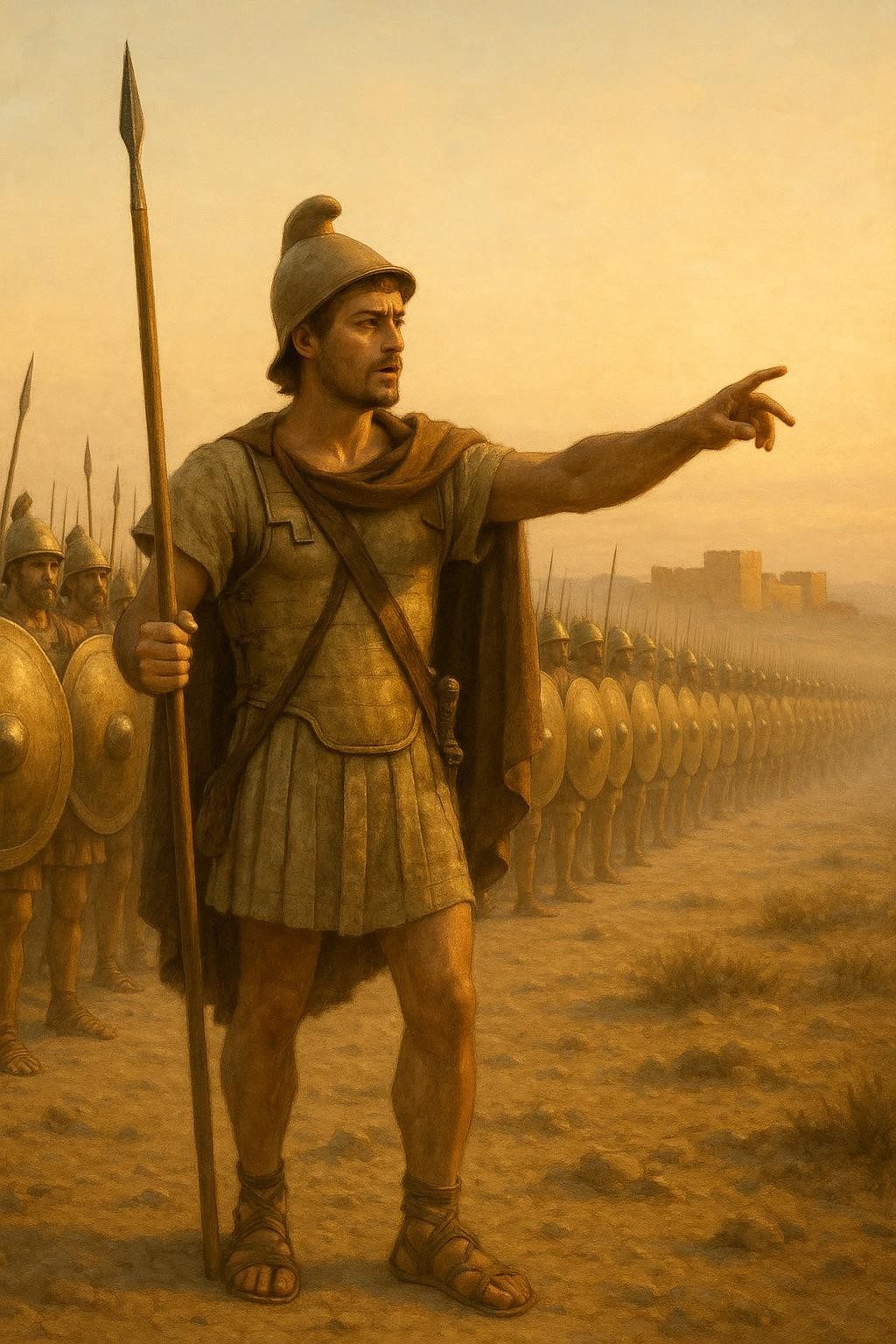
401 BC. The dust of the Persian plains clung to the sandals of ten thousand Greek mercenaries.
They were far from home, deep in the heart of the vast Persian Empire, with no allies save the memory of their homeland behind them. Sent on an ambitious campaign under the rebel prince Cyrus the Younger, these Greeks, known as the "Ten Thousand," now faced a dire predicament. Their fortunes had taken a drastic turn following the unexpected death of Cyrus at the Battle of Cunaxa, rendering their mission moot and their position precarious.
With their employer and protector gone, the Greek soldiers found themselves in a perilous situation, surrounded by the immense forces of the Persian King Artaxerxes II. The Greeks were isolated, vulnerable, and every mile deeper into foreign territory took them further away from the safety of Greece. Yet a glimmer of hope appeared in the form of Tissaphernes, the satrap of Lydia, who offered them a semblance of peace and protection. A seasoned political operator and a man known for his cunning, Tissaphernes extended an olive branch, suggesting a negotiation under a flag of truce, promising safe conduct and goodwill.
Trusting in the conventions of parley, the Greeks were persuaded to send their generals into the Persian camp for talks. Among them was Clearchus, the bold Spartan general who had commanded them with authority and skill. But under the guise of amity, Tissaphernes had crafted a devious snare. The Greek generals entered unarmed, expecting diplomacy and terms; instead, they met with betrayal and treachery. Captured and later executed, they left the army leaderless in one swift, ruthless stroke.
The Greeks, now without command and confounded by the loss, faced a crisis as morale plummeted. Despair circled like vultures over the heads of men who saw no way forward through the alien wilderness that surrounded them. The specter of annihilation loomed. Yet from within their ranks rose a voice as unexpected as it was crucial, a voice that would galvanize the demoralized army into action.
Xenophon, an Athenian nobleman and scholar, had joined the expedition with curiosities that extended beyond war. Though young and a stranger to military rank, his education and insight conferred upon him a natural leadership at this moment of need. In the cool shadows cast by the fading light of the Persian sun, Xenophon addressed his fellow soldiers in a speech that reverberated through time, inspiring men to cling to hope and muster their resources.
He reminded them of their strength, their skill in battle, and their indomitable spirit. "The past may help shape us," he urged, "but it does not define our future." What unfolded next was a testament to human resilience — a march that would become legendary. This was the Anabasis, the arduous journey of retreat the Greeks undertook to return to the safety of their homeland, across hostile lands and perilous mountains.
Xenophon's leadership was marked by strategic shrewdness and a profound understanding of the men he led. Adapting to new circumstances, he reorganized the army and appointed a council of officers, instilling a new democratic sense of order that empowered soldiers to fight for more than survival — for each other. His constant reminders of the homes and families that awaited them inspired camaraderie and a shared purpose.
Advancing north, the Greeks made their way through territories rich with challenge and danger, from the sweltering lowlands to the treacherous passes of Armenia. They navigated enemies and the vast, indifferent wilderness with a skill that equaled their courage. Hunger gnawed, the elements oppressors, yet driven by the beacon of home, they pressed forward.
Less heralded are the strategic maneuvers and alliances crafted along the way that secured vital passage and supplies, speaking to the adaptability and negotiations led by Xenophon. His wisdom gleaned from Socratic teachings fostered trust and stoicism in moments of despair. The minds of readers often linger on the battles against both human and environmental foes, but the greatest triumph was the unity forged under pressure, the quests for survival transcended by common hope.
As their numbers swelled with newly freed slaves, the enterprise became more complex than just a mercenary retreat. It transformed into a migration of myriad peoples guided by perseverance and tenacity. At last, the Greeks reached the Black Sea's sight, signaling a return to the Greek world and freedom from the clutches of a foreign empire.
This epic tells of resilience against insurmountable adversity, showcasing human nature's intrinsic drive to endure despite overwhelming odds. Xenophon's record of the journey, his Anabasis, became an invaluable historical account and remains studied for its insights into leadership, camaraderie, and the unyielding spirit of adventure.
The story of the Ten Thousand matters in our world of fleeting certainties — a reminder of leadership born out of necessity, the extraordinary lengths to which individuals will go to reclaim agency in desperate times. It resonates as an inspiration for those who chart paths through uncertainty, seeking to turn trials into triumphs, walking forward with the knowledge that history is forged in the hearts and hands of those unlikely figures who rise to meet it.