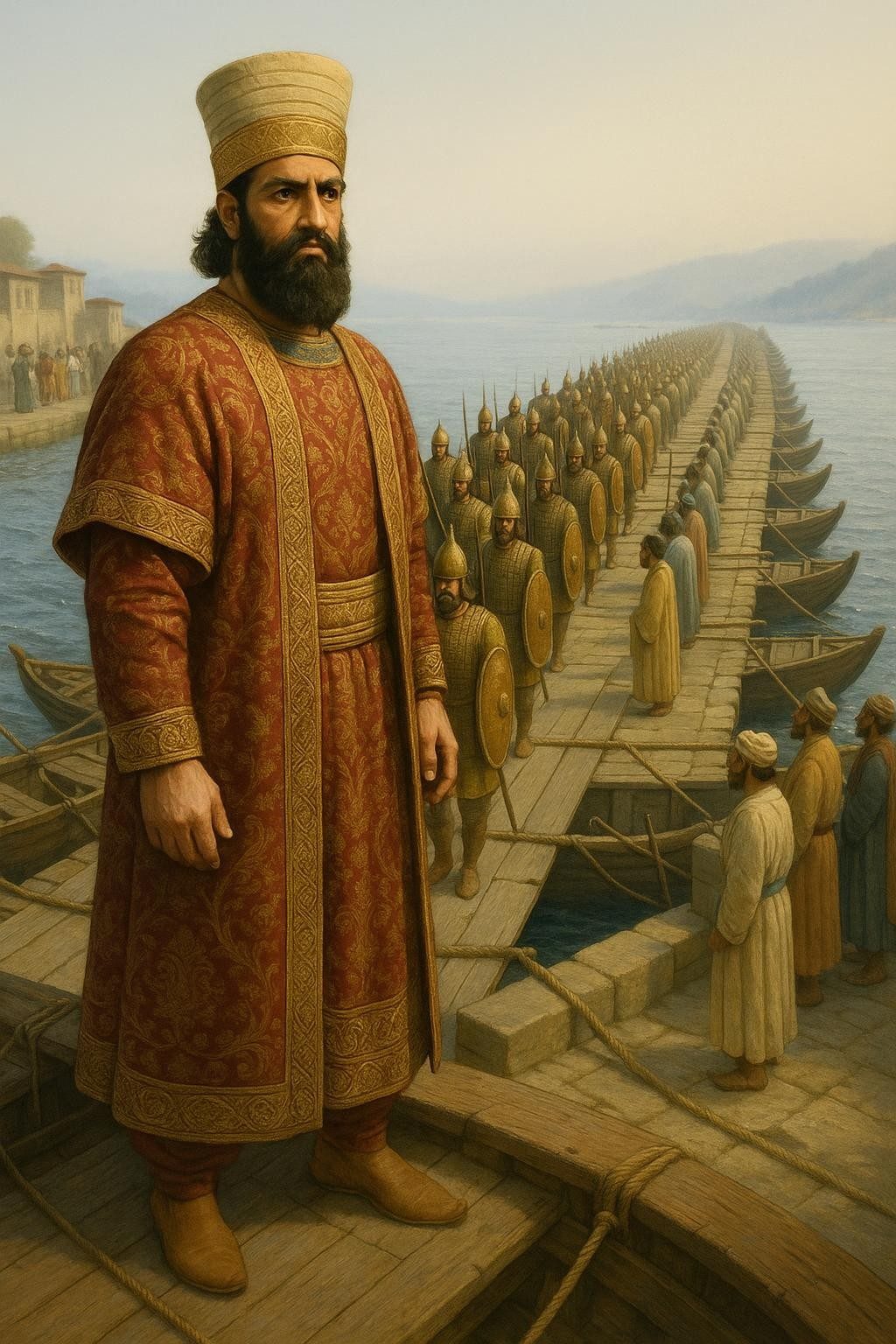
Thousands of Greek soldiers found themselves engulfed in the expansive beauty of Persia's hinterland. Yet, amidst the grandeur, an ominous betrayal loomed.
The March of Ambition
In 401 BC, an extraordinary spectacle unfolded as ten thousand Greek mercenaries embarked on an ambitious campaign that would carve a memorable moment into the stone of history. The Greeks had allied with Cyrus the Younger, a Persian prince vying for the throne. His ambition was as vast as the lands he sought to rule. For these seasoned soldiers, it was an opportunity, a promise of wealth, and a daring expedition into the very heart of the Persian Empire, upturning the conventional wisdom of warfare.
Amidst endless deserts and lush valleys, the Greek phalanxes cut through the landscape with precision. Each step was thunderous, echoing in unison the hope of glory and riches. The famed Ten Thousand faced a hardened core of the Persian military, radiating the sheer tenacity honed through countless battles. They marched further from homes and shores, navigating terrain both foreign and treacherous.
Yet, this story, destined for victory, soon met with the crushing weight of reality as Cyrus fell at the Battle of Cunaxa. What began as an expedition for glory swiftly transformed into a desperate struggle for survival.
A Delicate Hospitality
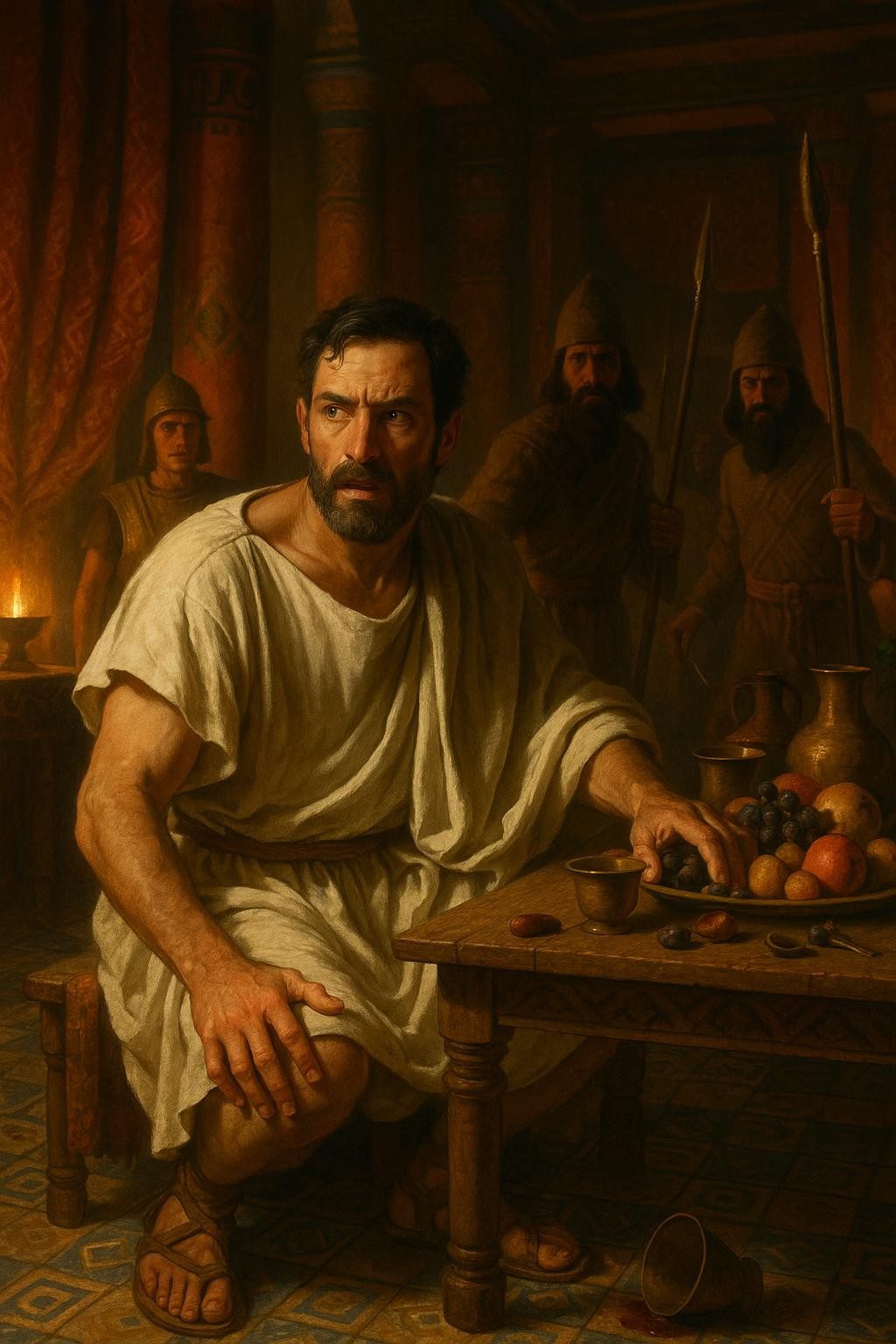
With Cyrus defeated, the Greeks’ raison d'être to stay in Persian lands dissolved like smoke on the wind. Left disoriented and precarious in enemy territory, the prospect of their return to Greek soil turned grim. Tissaphernes, the cunning Persian satrap, stepped in with a serpent’s charm, offering an olive branch disguised as a banquet. The Greek generals, weary and opportunistic, accepted the invite, swayed by the seemingly genuine gesture of diplomacy.
It would have begun with a measure of suspicion, a subtle disquiet mirroring the uncertainty of their predicament. Yet, trust, or perhaps desperation, led them to a sumptuous feast amidst the eastern opulence of a grand Persian hall. Wine flowed, and toasts were exchanged — a deceptive tapestry of camaraderie was woven. The air was rich with the aroma of spices, the laughter concealing underlying tension.
The night masked the treachery that dawn would soon unveil. One by one, as the Greeks reveled, Tissaphernes captured them under the guise of serene hospitality.
Leaderless at Dawn
The morning sun, heralding a new dawn, revealed a grim tableau to the encamped Greeks. The realization struck with chilling clarity: their leaders, the revered architects of their campaign, had vanished. It was as though the heart had been plucked from their ranks, leaving an army bereft of guidance, stranded a thousand perilous miles from the safety of the Mediterranean.
Amidst the initial shock, silence descended upon them — a force amplified by a sense of betrayal and vulnerability. Within mere hours, the disciplined cohesion of the phalanx frayed as doubt crept into the minds of individual soldiers. The expanse of the Persian Empire now felt vast and insurmountable without the steadfast direction of their generals.
Yet, where hopelessness could have prevailed, resilience thrived. The determined Greeks, resilient as the stone underfoot, rapidly organized under new leadership. Through tumultuous uncertainty, a remarkable resolve surfaced. The Ten Thousand, in a defiant act of self-preservation, chose to march towards the sea and the hope of returning to their homeland.
The Anabasis: A Journey of Survival
Plunged into the realms of myth, the Greeks' retreat became an epic of survival against staggering odds, later chronicled in stark detail by the soldier-historian Xenophon in his work, Anabasis. It was a narrative of endurance through inhospitable lands, painted with both the grandeur and cruelty of nature. The Greeks charted their path amidst looming mountains and impenetrable forests, battling not only Persian forces but also nature itself.
The journey became a testament to their collective tenacity, as they marched with disciplined optimism towards distant shores. On this treacherous odyssey, they confronted the mountains of Armenia, the snow-swaddled plains, and the demandingly steep passes. At times, the line between survival and annihilation blurred dangerously thin.
Yet, the cry "Thalatta! Thalatta!" — "The sea! The sea!" — would resound with victorious joy when their trials led them to the welcoming sight of the water's edge. It marked not merely the end of their journey but a narrative laden with profound lessons in courage, leadership, and the profound intricacies of human will. Their return, a survival against all odds, would not soon be forgotten, shaping the annals of military history for generations to come.
Ultimately, the tale of the Ten Thousand under Tissaphernes’ treacherous pretense reminds us of the dual-edged nature of diplomacy and trust amidst conflict. Their journey encapsulates the enduring spirit of inquiry, the precarious balance of war and peace, and the resilience needed to navigate the political landscapes of nations. As much a cautionary tale as it is an inspiring saga, their odyssey continues to echo across history, silently inviting every listener to question the fragile line between freedom and betrayal.