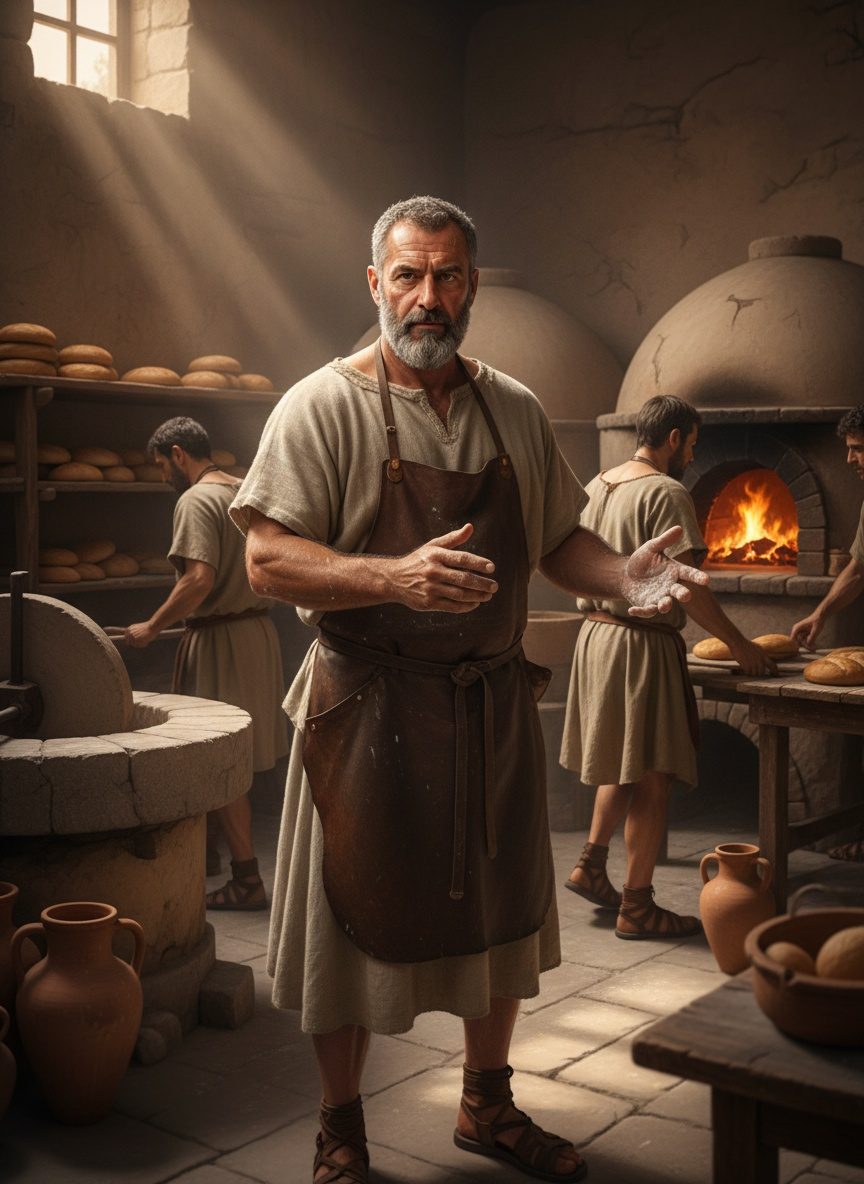
The smell of freshly baked bread filled the bustling streets of ancient Rome, as Marcus Vergilius Eurysaces stood proudly in his bakery, inspecting the day's first batch of loaves. His bustling shop, enveloped in a cloud of flour and bustling with activity, was renowned across the city for its craftsmanship and the warmth it offered to those in need. Eurysaces was not just a baker; he was a cornerstone of the community, a man who rose from enslavement to become a magnate whose bread fed armies and provided solace to Rome's most vulnerable.
The Humble Beginnings of a Master Baker
In the heart of ancient Rome, where grandeur met the struggle of everyday life, Marcus Vergilius Eurysaces crafted his legacy. As a former slave, his journey to freedom was a testament to resilience and determination. After earning his freedom, Eurysaces channeled his ambition and skill into establishing what became one of the city’s most significant bakeries, not merely because of its output, but due to its vast social impact.
Every day, Eurysaces would oversee the meticulous preparation of dough, a process deeply rooted in tradition yet innovative in its execution. Unlike many contemporaries who only catered to the elite, Eurysaces had a vision: to ensure the poorest citizens of Rome could break bread, quite literally. His bakery supplied bread for the free grain dole, an essential lifeline for Rome’s vast, impoverished population, effectively making him an indispensable figure within the city's intricate societal web.
Baking for the Legion and the People
The Roman army, a machine of discipline and power, required sustenance to match its might, and Eurysaces was up to the task. His bakery became the official supplier for the legionaries stationed around Rome. Each loaf, baked to perfection, provided nourishment as soldiers prepared for missions that extended Rome's reach across the known world. For Eurysaces, bread was more than food; it was a symbol of strength, unity, and resilience.
Simultaneously, Eurysaces’ bakery served a crucial role during the grain dole distributions—a policy that aimed to curb social unrest by providing free grain to the poor. His attention to quality and consistency ensured that even the most downtrodden of Rome received nutritious bread, drawing even those without a single sesterce to their name to his bustling shop. Eurysaces’ contributions to the grain dole amplified his reputation, showcasing his commitment to a broader civic duty that transcended mere commercial success.
The Monumental Tomb: A Baker’s Pride
As his influence expanded, so did his desire to celebrate the very craft that had liberated him and fed much of Rome. In a bold statement, Eurysaces commissioned a tomb for himself unlike any other—a towering monument shaped like a bakery oven. Built near modern-day Porta Maggiore, this extravagant tomb was designed with cylindrical niches, reminiscent of grain measuring containers, paying tribute to his life’s work.
The tomb's reliefs artfully depicted scenes from the bread-making process, from kneading dough to baking loaves, spotlighting the importance of bread in Roman society and Eurysaces’ pivotal role within it. It served as a timeless testament to his identity, immortalizing not just the man, but the practice of baking as a craft of dignity and honor. His choice to have the tomb constructed in such a way was a bold statement—a declaration that true wealth came from not just accumulation, but in the sharing of resources and the upliftment of the community.
The Legacy of Generosity and Craft
Marcus Vergilius Eurysaces’ story is a rich tapestry of ambition, dedication, and altruism. Despite the societal constraints of a former life in slavery, he carved out a legacy that reshaped the dynamics of ancient Rome’s food supply. By nourishing both soldiers and the impoverished masses, he not only bolstered the backbone of Roman might but also demonstrated the profound social impact of generosity.
In an era where social disparity often dictated one's fate, Eurysaces defied the odds, using his craftsmanship to bridge societal gaps. His life prompts reflection on how much modern societies can learn from such tales of transformation and social advocacy. Eurysaces didn’t just bake bread; he baked hope and unity into each loaf, leaving behind a legacy that remains relevant to this day, reminding us of the power of kindness and innovation in shaping history.