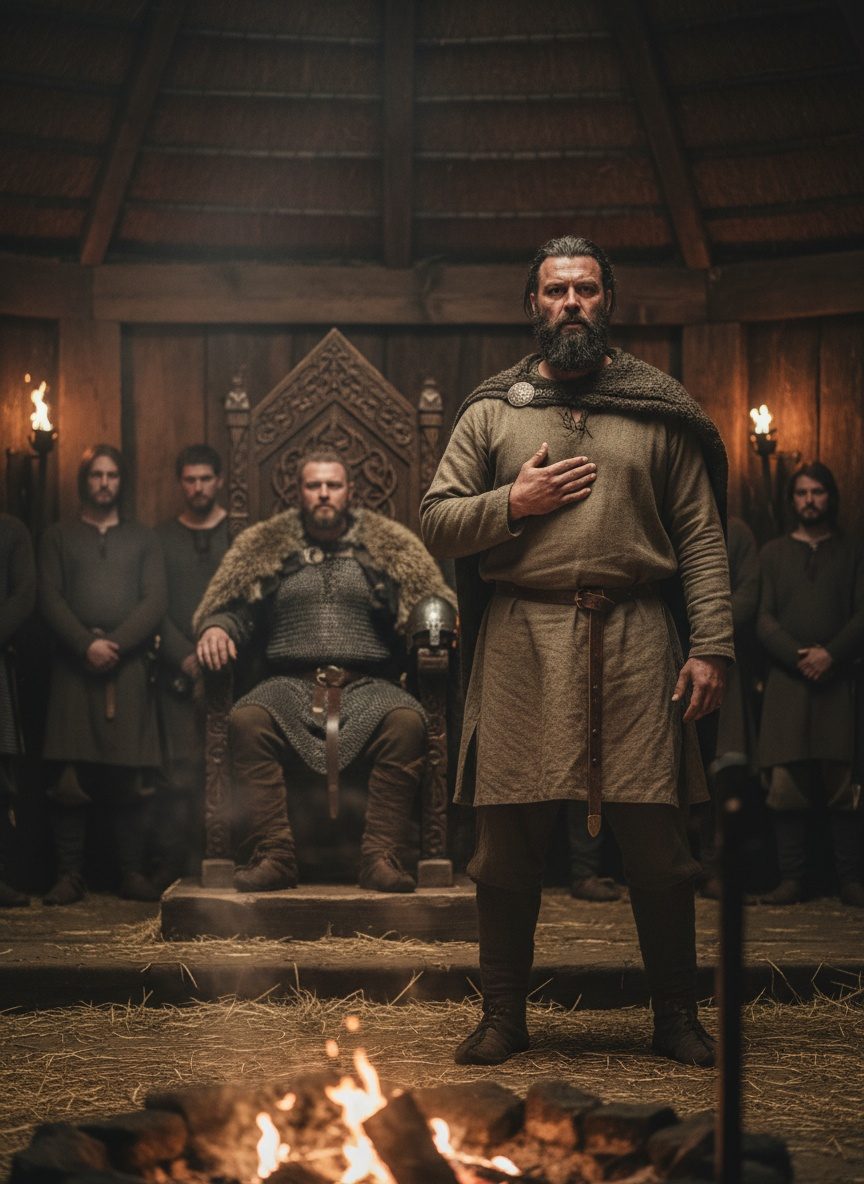
The air in York was thick and chilling in 948 AD, as early morning fog hung low over the cobblestone streets, ghosting through the alleys with an eerie silence. The looming presence of the Norse Great Hall stood stark against the morning sky, its wooden beams dark and glistening with dew. Inside, the flickering light of torches cast wavering shadows against the walls, a deceptive calm contrasting the wintery sharpness outside. Only a short while earlier, the hall had resounded with heated discussions—as well as whispers of death. The man awaiting judgment was not an ordinary prisoner, and the stakes were higher than life itself. Here, Egil Skallagrímsson faced his enemy, King Eirik Bloodaxe, with whom he had crossed swords, blood, and honor.
The Fall of Favor
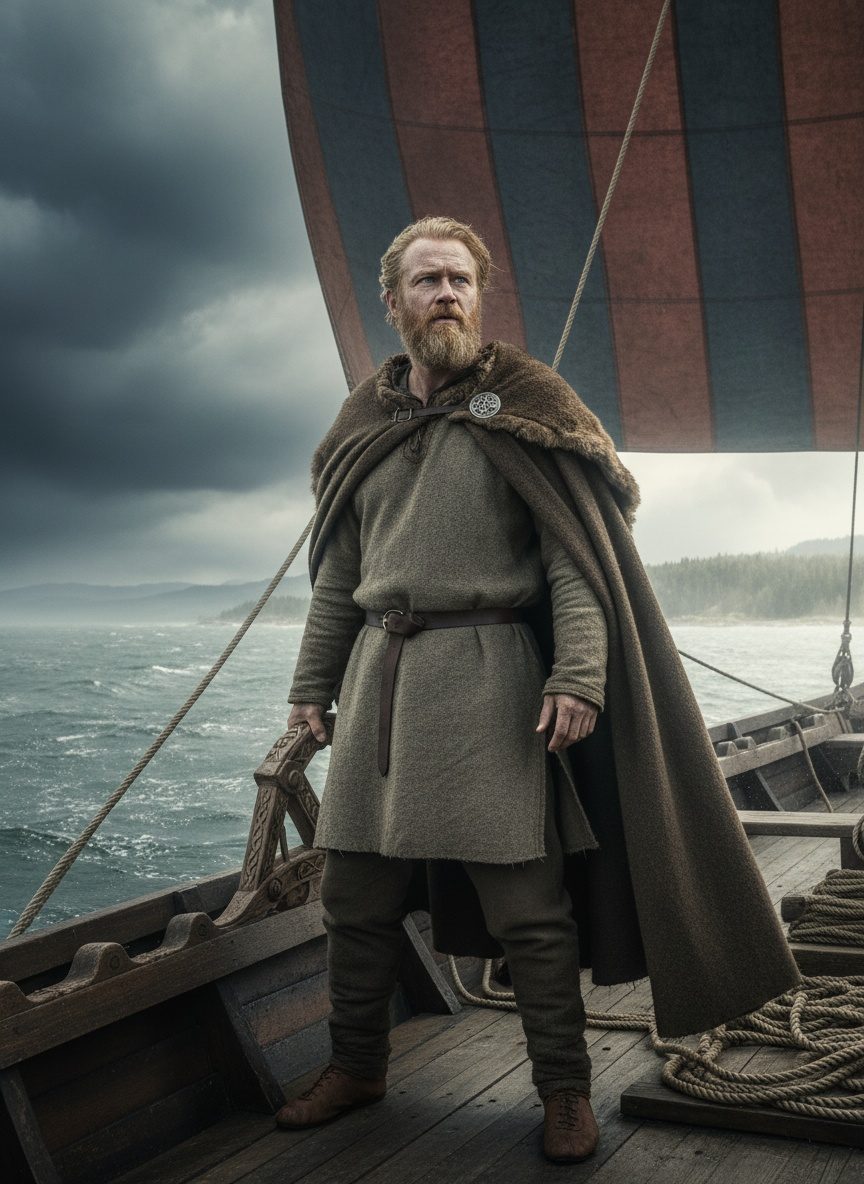
Egil Skallagrímsson, a warrior-poet born of Icelandic lineage, was no stranger to the adrenaline of battle or the artistry of words. His name was both respected and feared across Norse lands due to his formidable prowess with axe and quill. However, his history with King Eirik Bloodaxe was fraught with enmity, compounded by former alliances that had gone awry. Eirik, once a potentate who seized York, harbored ambitions as vast as the seas, yet his rule here was as turbulent as his moniker suggested. Skirmishes and betrayals were common currency in Norse politics, and Egil had found himself at the sharp end of many. As a sworn enemy of Eirik, Egil had been captured within what was now hostile territory. Standing before Eirik, the verdict of execution loomed large, as inevitable as the morning light creeping into the hall.
It was this tension, the very fabric of Norse saga, that lent its urgency to Egil's night. In the absence of mercy or negotiation, Egil was granted a single evening to make peace with his fate. While others might have turned to prayer, Egil Skallagrímsson turned to the ancient, powerful craft of skaldic poetry. This was not merely an attempt at pleading his case; it was a display of valor and intellect, a gamble upon the artistry that was deeply revered in Viking culture. Egil had to embrace the Norse ethos that honored those who faced death poetically, creating instead of succumbing to silence.
The Night of Creation
Long after the whispers in the hall had settled into an expectant hush, Egil sat, a solitary figure in the flickering shadows. The juxtaposition of the warrior-mind in a battle with impending doom fueled his imagination. By firelight's glow, the runes amalgamated within his mind—a tapestry of heroic deeds, self-reflection, and plea for understanding. Skaldic verse required rigorous discipline to align intricacies of meter, rhyme, and metaphor with the potency of emotion. As Egil composed, each line became a testament to the indomitable spirit as well as the ephemeral nature of Vikings' mortal passage.
Egil's saga tells us that his poem, known as a *drápur*, was an evocative recount of his life's achievements, the depth of Northern valor, and a subtle nod to the common thread binding even adversaries—a love for courage, honor, and eloquence. During its creation, the vigor of his words was an extension of battle, as intense and fierce as any he had ever fought upon the fields. Through dedicated lines, he hoped to reach a part of Eirik's heart that only the spirit of brotherhood and respect for heritage could touch.
Morning and the Gift of Language
When dawn finally parted the skies, softening the rigid landscape of York, the hall filled once more with faces eager for justice or vengeance. Against this backdrop, Egil stood before the king, and as the collective breath held, began to recite his poem. With each verse, Egil spun against fate’s loom. His words were an interweaving of life and death, showcasing wit that even a sovereign might admire.
The poem, however, was not merely a soliloquy of survival but a heartfelt testament that highlighted the undeniable bond between poet and patron. By delving into themes of kinship and shared destiny, Egil revealed the complexity of their enmity—a tribute to intellect over animosity. The mood in the Great Hall shifted as the performance continued, the Viking oral tradition seamlessly capturing the warrior’s soul and laying it bare between friend and foe alike.
Invoking the power of the spoken word—a revered tradition among their people—transformed what could have been a bloodied farewell into a narrative equilibrium. It was this deep devotion to cultural identity and legacy that resonated with those present. Egil Skallagrímsson had cleverly navigated the fine line between enemy and grand craftsman of the skald, compelling Eirik to reconsider the imminent act.
The Echo of Immortal Words
It was at this intersection that history took a remarkable turn. Eirik Bloodaxe, moved by the poem's artistry and the shared values of their Norse heritage, allowed Egil to leave unharmed. The essence of Egil's survival lay not in physical arms but in poetic prowess. Here was a salient reminder of the Vikings' appreciation for intellectual courage alongside martial prowess, an aspect oft overshadowed by their depiction as mere marauders.
This account of Egil Skallagrímsson is not merely a vignette from the past, but a fascinating dialogue on the power dynamics of language and the cultural heritage weaved into Norse life. History often narrative-left the walls of York as mere conquerors' tales, but Egil's words stood beyond time and opposition, illustrating how even in an age of steel, the spoken syllable could sway fate. In this light, it wasn't just Eirik who sparred with Egil that day—rather, it was every listener who heard, and continues to hear, the resounding truth of the skald's eternal legacy.