The sack of Damascus in 1401 was catastrophic. Yet, from the ruins of conquest, a chronicler emerged with a quill as mighty as any sword.
The Conqueror and the Captive
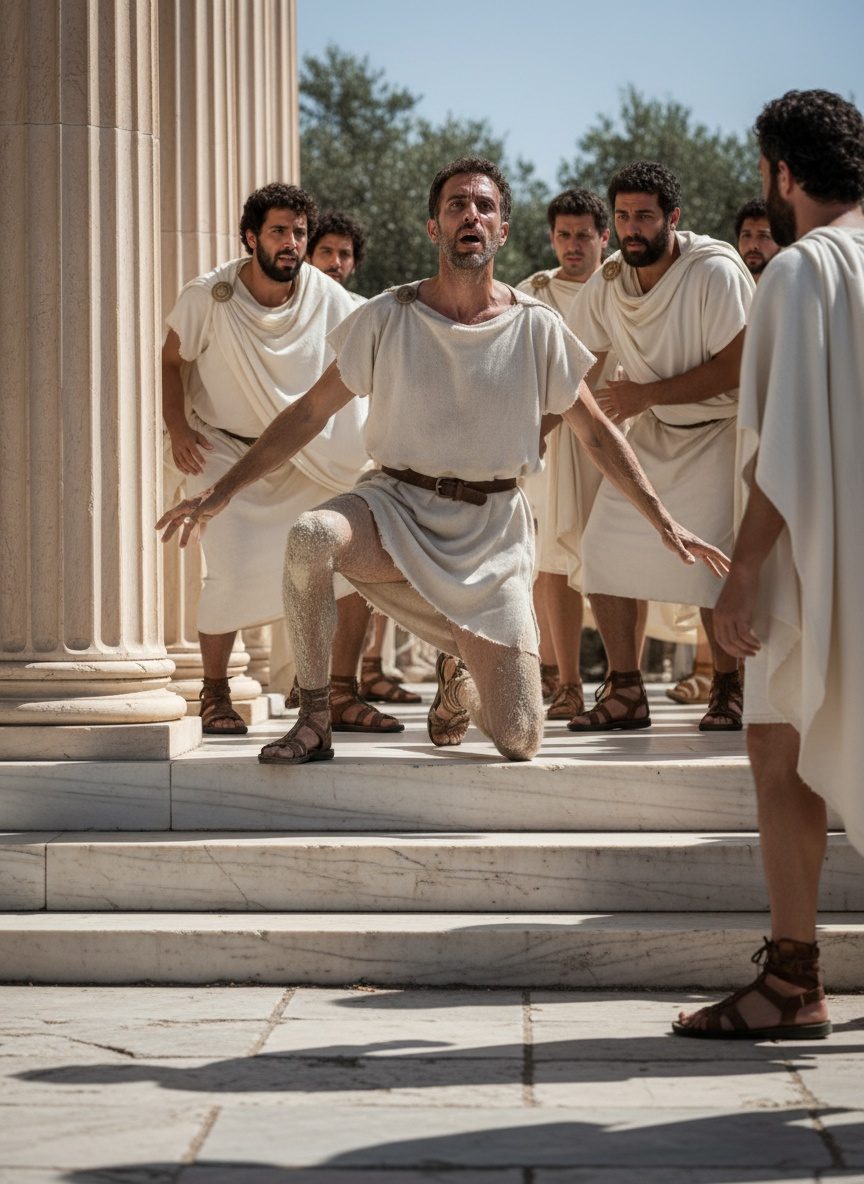
In the blistering chaos of Timur's campaign across Central Asia, cities fell like dominoes. Damascus was no exception when Timur's forces ripped through it, leaving the ancient city in ruins. Among the throngs captured and relocated as spoils was a young boy, just twelve years old, named Ahmad ibn Arabshah. Plucked from the cradle of Islamic civilization, he was thrust into the glittering — and deadly — heart of Timur's empire: Samarkand.
Timur, known in the West as Tamerlane, was a formidable figure. Bursting with hubris and bloodlust, the unstoppable conqueror dreamed of an empire that stretched beyond the known world. His military campaigns left millions dead and cities devastated. Yet, even a ruler as mighty as Timur could not foresee how a seemingly insignificant captive could bear witness to his empire's inner workings.
The Unintentional Scholar
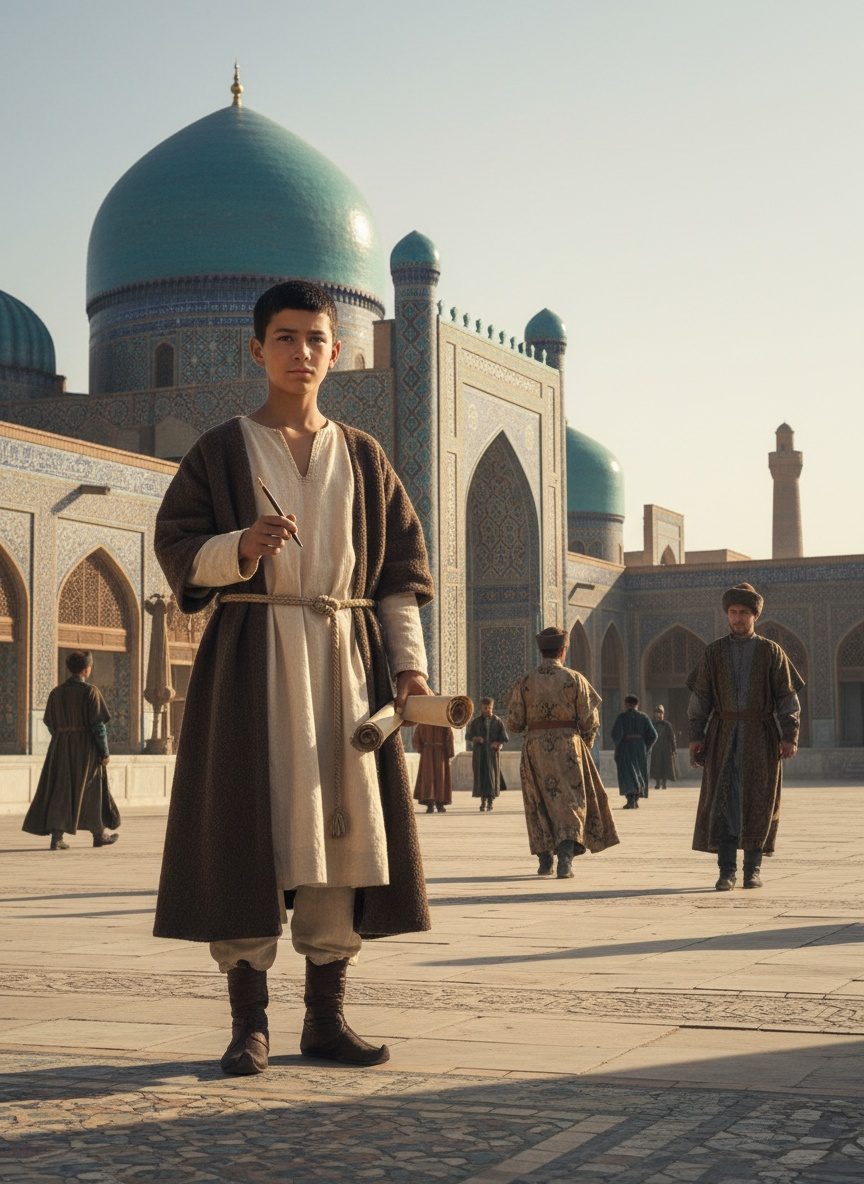
In Samarkand, Ahmad ibn Arabshah found himself amid the architectural marvels and intellectual hub of Timur's empire. His keen eyes took in the city, renowned for its turquoise domed mosques, bustling trade, and a plethora of languages mingling in its streets. Every brick lain by Timur's subjects was a survival of past civilizations, and it laid thickly on young Ahmad's mind. While many captives found themselves crushed under the weight of servitude, Arabshah absorbed the splendor and darkness around him.
Timur's strategy of relocating scholars and artisans from conquered lands to build his capital backfired in this singular case. As Ahmad grew, so did his knowledge. The irony that Timur's fostered education would forge a chronicler of his tyrannies was one Timur could not — or would not — contemplate.
From the Gilded Cage
Ahmad ibn Arabshah was different. Unlike others in bondage, his cage had no visible bars. His keen intellect allowed him unprecedented access to Timur’s world, and he wielded it to learn everything he could from within enemy lines. Over time, as Timur's attention was diverted to other conquests, Ahmad found his freedom. With freedom came the chance to leave Samarkand and travel further, gaining insight into the wider Islamic world and the Western lands beyond.
Free yet never forgetting, Arabshah transformed himself into a chronicler whose narrations pierced the formidable façade of the Timurids. His quill danced across parchment to draw an uncompromising portrait of a king feared by many but deeply misunderstood through veils of legend.
The Pen vs. the Sword
Ahmad ibn Arabshah’s magnum opus, the biography of Timur, stands unparalleled in its critical perspective. The work, impregnated with vivid detail, complete with nuances that could only have been rendered by an astute insider, was nothing short of damning. Unlike the fawning accounts one might expect for a ruler, Arabshah’s writings were unafraid to scrutinize Timur’s lust for conquest and examine the vanity and human flaws behind the commander’s grandiose legacy.
His words cut through Timur's myth with the precision of a surgeon’s scalpel. He illustrated battles and devastation, but he also filled his narratives with allegorical tales and biting wit that underscored the extravagance and brutality of Timur’s rule. Arabshah's descriptions felt like memories etched into his core, each word a watermark of the reality he witnessed firsthand, forever challenging Timur’s constructed legacy.
A Legacy Set in Ink
Ahmad ibn Arabshah's work reverberates through the pages of history not merely as a biography but as a powerful testament to the resilience of the human spirit. His writings highlight how a child torn from his world could endure such trauma and emerge with the knowledge to harness history's power. They remind us that empires built on blood and fear are not impervious to the unyielding truth of a witness bearing testimony to their acts.
At a glance, Timur’s conquests seem like episodes of a distant, oppressive past. Yet, Ahmad ibn Arabshah’s account forces us to reflect on how power thrives unchecked, and how it is vital to lend voice to the oppressed. In Arabshah’s words, those silenced by tyranny find a rallying cry against rewriting history to favor the victors. Today, the pen remains an indomitable force, capable of recalibrating power and interpreting truth long after swords have rusted into oblivion.