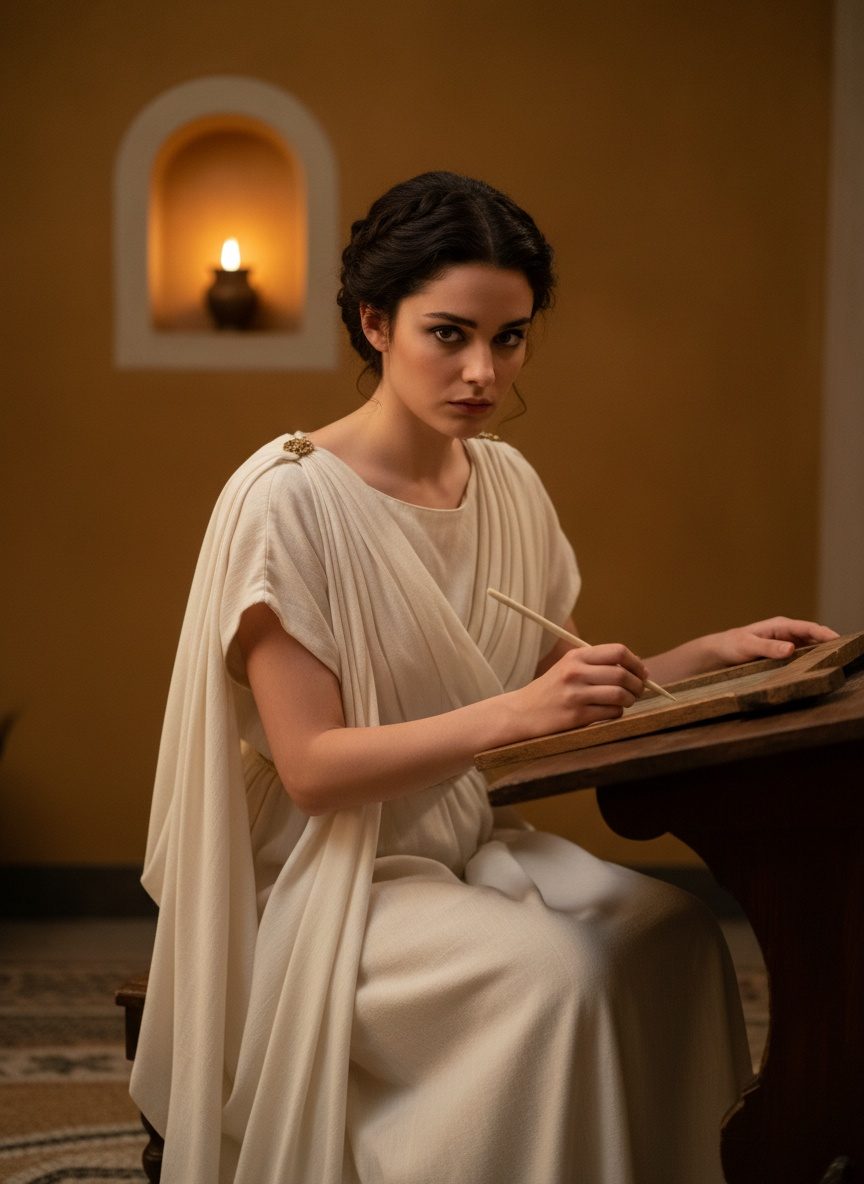
The scratch of pen on parchment intertwined with her heartbeat, a rhythmic duet of creation echoing through the dimly lit room. Sulpicia sat, a young woman in the beating heart of Rome, surrounded by the tranquility of her own thoughts amidst the city's chaos. With each deliberate stroke of her stylus, she wove emotions into words, raw and unrestrained. Her hand rested for a moment, contemplating the line that defied every convention—an admission of yearning that no Roman woman had dared to whisper, let alone immortalize in ink.
The Unseen Voice of the Republic
To walk among the marbled ruins of ancient Rome, amid the echoes of statesmen and warriors, is to wander through a world dominated by masculine tales of conquest and governance. Yet, there existed a quieter rebellion within the walls of Rome, a revolution inked in the silent act of writing. It was the pen of Sulpicia, a name whispered perhaps only in hushed tones, but whose courageous act of self-expression defied the silence expected of women of her time.
In the late Republic, circa 25 BCE, Roman women were expected to navigate lifescripted by those around them. They managed households and bore children, heirlooms of a patriarchal society that seldom acknowledged their individuality beyond their familial ties. However, Sulpicia penned her soul in the form of six surviving elegies that defy the constraints imposed upon her.
These poems, drenched in a richness of emotion and frankness, stand unique not just for their survival over millennia but for signing a woman's name beneath verses that speak with a clarity unheard of in a man's world. Unlike her male counterparts, Sulpicia did not veil her verses in myth. Her words addressed desire directly, her voice an anomaly resonating through time, illuminating the visceral core of human experience.
The Poet's Secret Rebellion
Sulpicia's verses reveal an intimacy and vulnerability that was revolutionary. They capture moments of love and longing, displaying a personal autonomy that was a radical act of defiance against societal norms. Historically, her poetry is speculated to possibly form part of a collection written by the poets of her household, particularly the Corpus Tibullianum, attributed to Albius Tibullus or others close to her circle.
Her poetry, unlike the grandeur of public oratory or epic tales of war, crafted its own epic of personal experience. Each elegy, bound in the brevity of its lines, holds the emotional exigency of life—unapologetic and vivid. Where Roman societal expectations dictated silence, her pen spoke without restraint. Sulpicia did something many would not dare; she sent her truths into the public sphere, words unburdened by male interpretation.
Her six surviving poems, a rarity in a predominantly male literary canon, capture the sensation of immediacy. Her words offer an insight into the undercurrents of a society where women were more often seen but not heard. Her use of first-person narrative breaks barriers, asserting an identity not defined by her family name or the men around her, but by her own desires and sentiments.
Eternal Echoes in Every Word
As the final syllable of her last poem settled into the crisp Roman air, did Sulpicia realize the permanence of her words? Perhaps not, yet those words have transcended time, kept alive by scribes who recognized their profound relevance. They are not just poetry; they are a testament to an individual's courage to defy gendered limitations and speak truth to one’s experience in a society forged by silence and suppression of female voices.
The enduring legacy of Sulpicia lies in her testament to the power of self-expression. Her survival through the ages reflects not just the personal history she captured, but the universal resonance of seeking one's place in the world. Her poetry asserts a voice that claims its rightful space in history, challenging the patriarchal narratives by giving posterity a glimpse into the soul of a Roman woman.
Why does this story matter today, you might ask? It echoes through the annals of time, a reminder of the battles won and those yet to be fought. The dialogues Sulpicia started with herself reverberate through centuries, encouraging new generations to write, to speak, and to exist as fully heard beings. In a world that still grapples with incomplete narratives, Sulpicia’s voice sings of progress—a potent reminder that silence is not the only option. In the end, Rome did read every word. And so do we.