The dust clung to his sandals as his feet pounded against the hard, unforgiving earth. Each step sent small clouds of ochre swirling into the air, mingling with the heat that shimmered off the Greek landscape. Pheidippides ran, his breath coming in ragged gasps, his eyes fixed on the horizon where the city of Athens awaited the news he bore.
The Messenger of Victory
The Persian threat had loomed over the Greek world like a darkening storm, its menace felt even in the sacred precincts of Athens. When the mighty Persian fleet landed at Marathon, the future of the city hung by a thread. Decisions had to be made swiftly, for the enemy was at the gate. Amidst this turmoil, Athens turned to their fastest herald, Pheidippides—a man whose feats would become the stuff of legend.
Pheidippides was no stranger to trials of endurance. Just days before, he had run the 150-mile distance to Sparta, beseeching assistance from the Spartans in their hour of need. Now, after the miraculous triumph over Persian forces at Marathon, he was tasked with an equally daunting mission: to bring the word of victory to Athens. Clad in his full armor, he ran unfalteringly, each mile a testament to human will conquering bodily limits.
As he traversed the rugged terrain, the clamor of the battlefield must have echoed in his memory: the clash of bronze, the shouts of his fellow Athenians surging against the tide of a numerically superior foe. This victory was not merely a tactical win; it was a salvation of all things sacred to Athens—its democratic ideals, its fervent belief in freedom, and its future.
A Hero’s Last Breath
The journey required more than just strength; it demanded heart, courage, and the endurance only true devotion could yield. Pheidippides ran through the heat of the day, his thoughts perhaps straying to those he cared for in the city, to the citizens who waited with bated breath for news from the fields of Marathon. Those rocky paths and sun-bleached hills bore the weight of history as they tested his every fiber.
The finish line, the city gates of Athens, drew near as his strength reached its waning moments. Villagers watching from the fields might have wondered at the lone figure, his armor glinting dully with dust and sweat, striding with purpose. In those last steps, Pheidippides became more than a messenger; he was a vessel of triumph, a conduit between heroics and homeland.
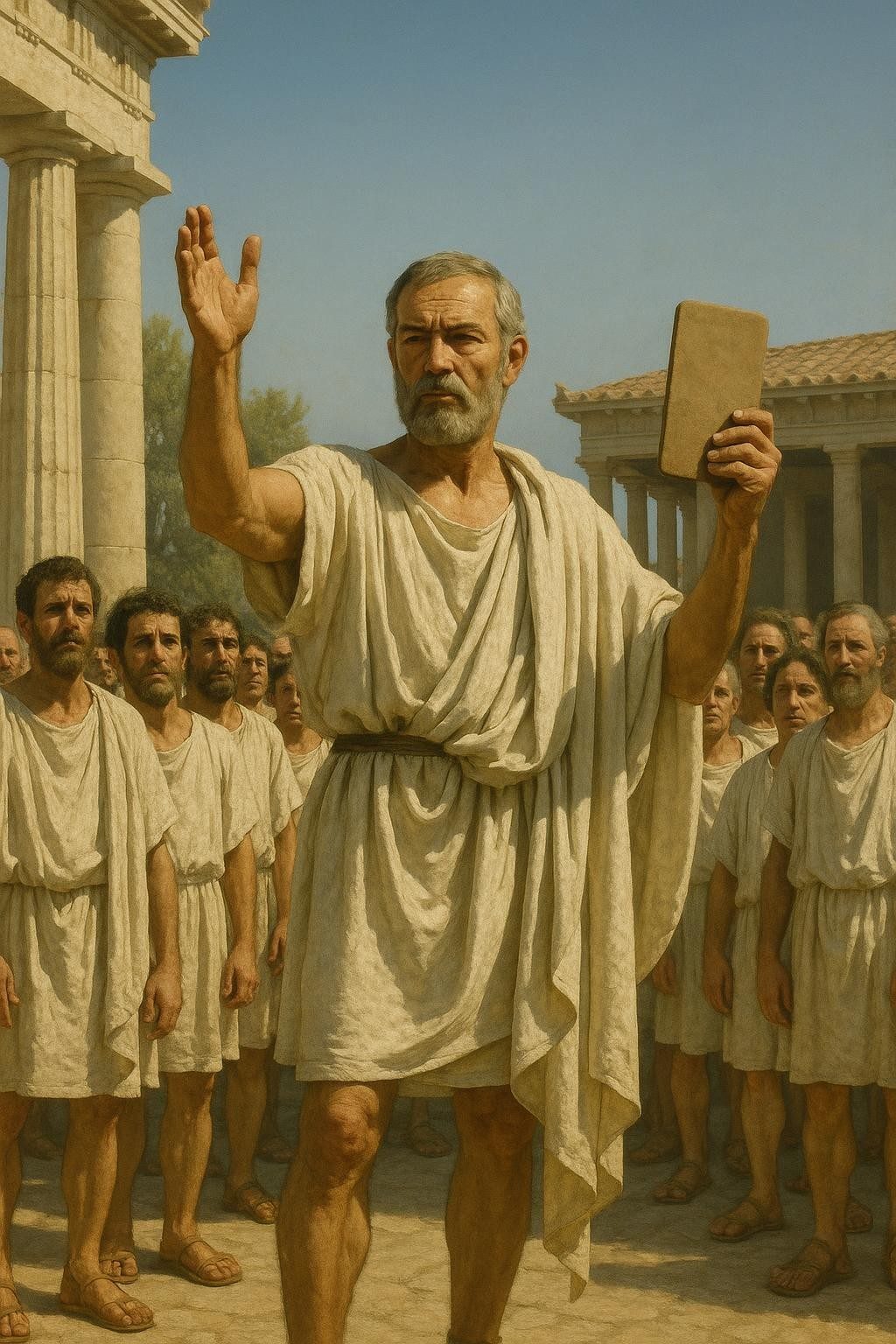
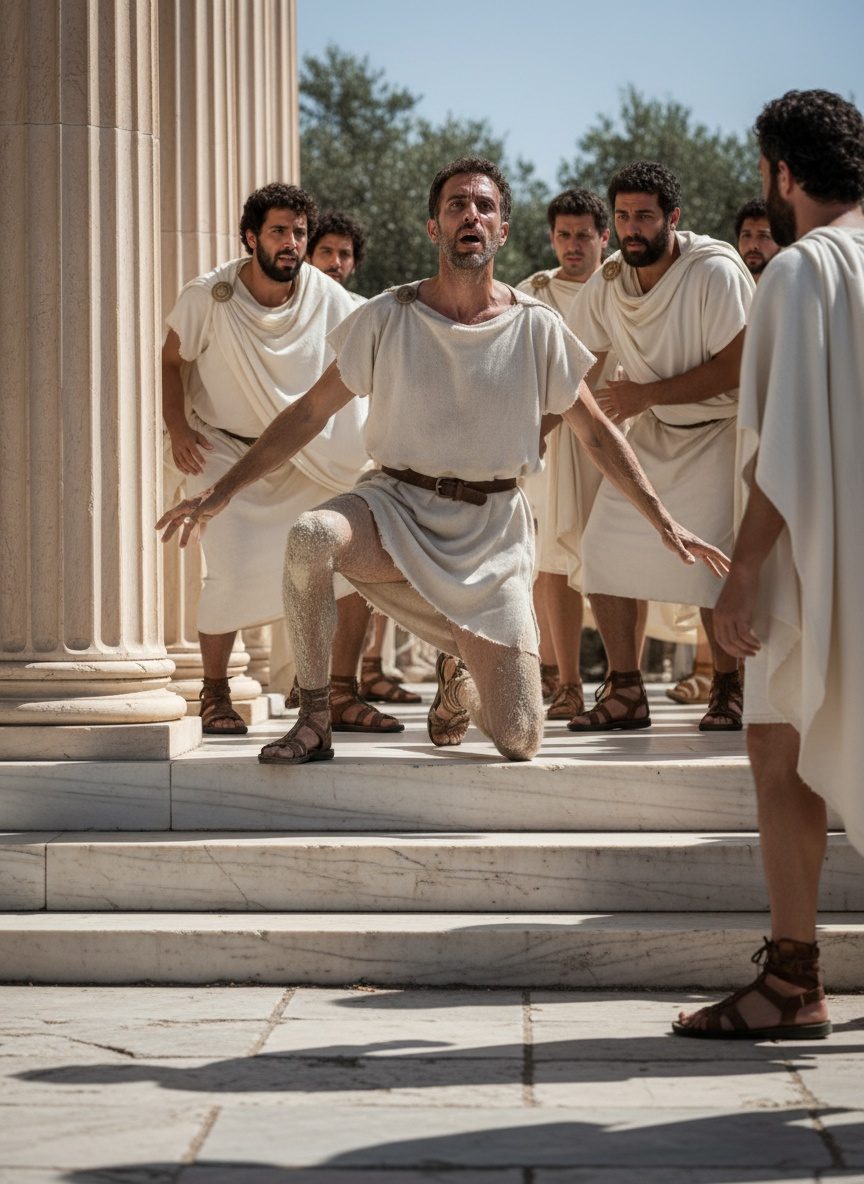
At last, the city unfolded before him, and exhaustion was eclipsed by urgency. He gathered every ounce of waning energy to push through the final stride, stumbling into the heart of Athens. There, in the Agora, a crowd formed, each face mirrored with the anxiety of knowing. He stood among them, a barrier breached, an impossible task completed. One word trembled on his lips, a glorious exhalation of victory seizing his last breath: “Νενικήκαμεν!”—“We have won!” With that, his part fulfilled, Pheidippides collapsed, becoming immortal in memory even as mortal life slipped away.
The Legacy of Pheidippides
The legendary run of Pheidippides has transcended millennia, capturing the essence of what it means to be human: resilient, indomitable, and devoted to causes greater than oneself. In the centuries that followed, his feat would inspire one of the most grueling athletic tests known to modern sport—the marathon. However, the tale of Pheidippides is much more than an origin story for a race.
His journey underlines a pivotal moment in history, where courage and determination defined the fate of an entire civilization. There is a timeless lesson woven into his exertion: the power of unity, the strength of belief in one's values, and the sacrifices made in the name of freedom. That moment in 490 BC, though singular and specific, resonates in countless struggles for autonomy throughout time.
Yet, Pheidippides’ story also lays bare the dual edge of human endurance. It glorifies the victory, but equally reminds us of the cost. With one fleeting word, he imparted hope, security, and a future to his city at the expense of his own. The message endures, carried forward by every runner stroking across that enduring marathon course as both a tribute and a remembrance of one man’s heroism.
In a world constantly evolving, where victories continue to be hard-won and disseminated across continents, Pheidippides’ run echoes a defining truth: communication stands at the heart of civilization's foundation, and monumental efforts, often unseen and unsung, preserve the fabric on which societies thrive.