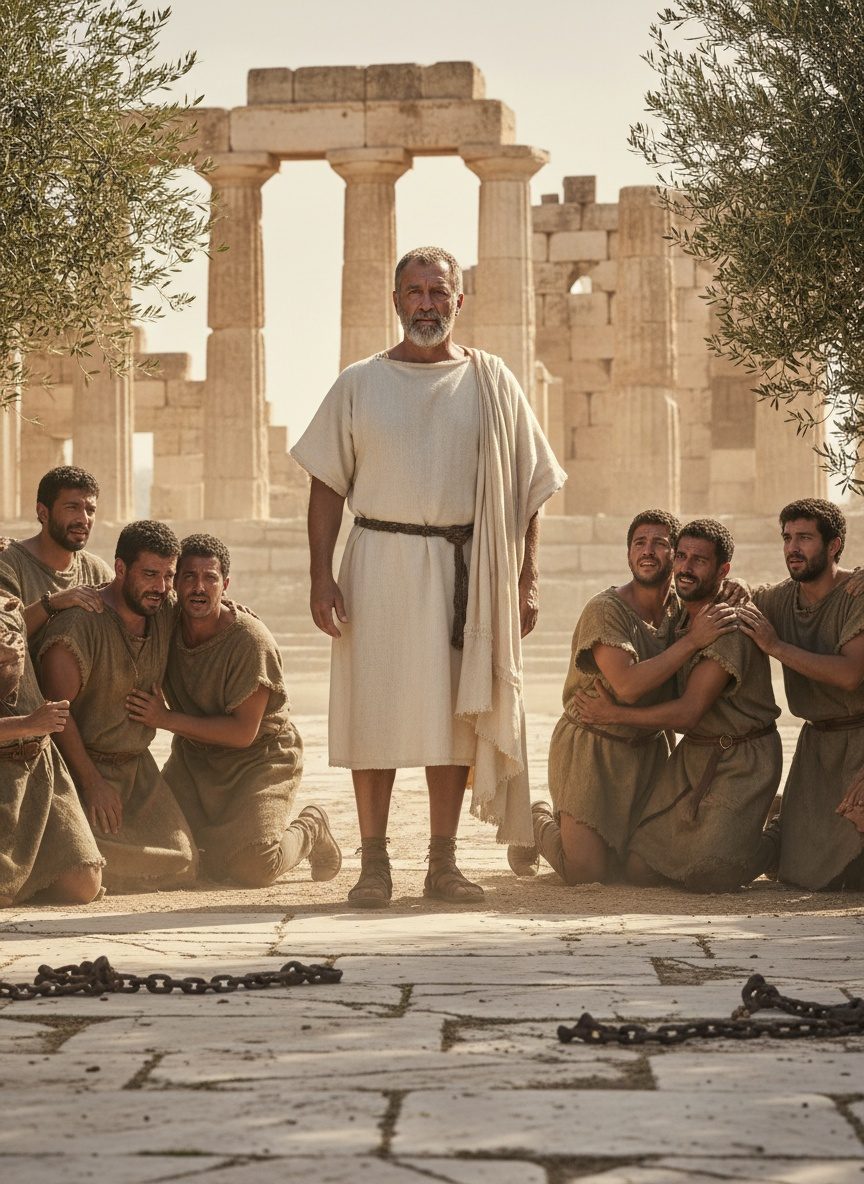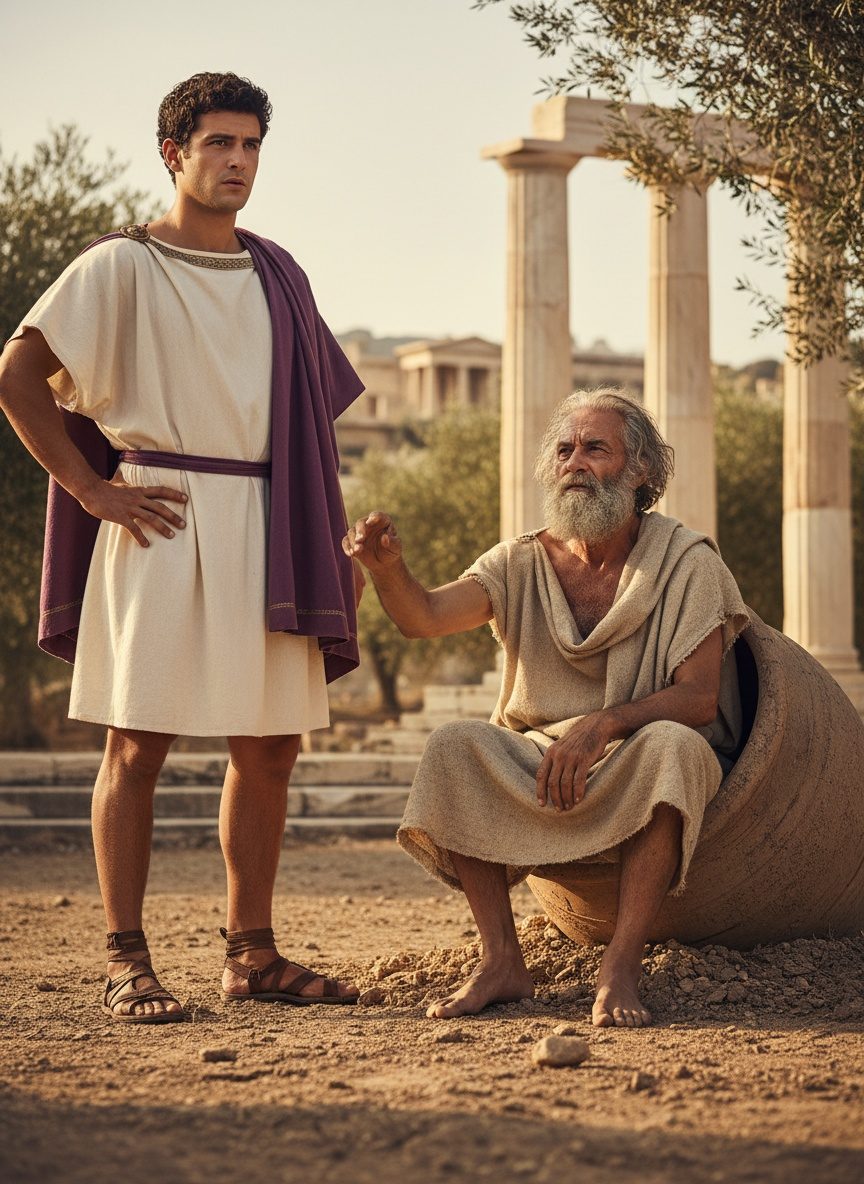
Timur was ruthless, slaughtering thousands without mercy. Yet, he welcomed a captured enemy like a brother.
The Fearsome Conqueror
In 1402, the world trembled under the shadow of Timur, a conqueror with aspirations of creating a new Mongol empire. His birth name, Timur ibn Taraghai Barlas, seemed almost humble compared to the legend he became. Known in the West as Tamerlane, Timur carved a realm extending from the edge of Russia to the heart of India. With a penchant for brutality, his campaigns left cities smoldering and empires broken, evoking the apocalyptic march of Genghis Khan himself. In the cultural tapestry of Central Asia, he was both a restorer of the Mongol army glory and a bringer of devastating havoc.
Timur's great venture reached a dramatic climax on the fields of Ankara in the heart of the Ottoman Empire. Here, he faced Sultan Bayezid I, known as "The Thunderbolt" for his fiery nature and swift conquests. Bayezid had previously humbled European forces at the Battle of Nicopolis in 1396, making him a formidable adversary in the eyes of Christian Europe. By the time their paths crossed, Timur's forces stretched across the vast expanse of Asia and into the Middle East. The ensuing clash would not only dictate their respective fates but also reshape the lines of power across the continent.
The Unlikely Meeting of Giants
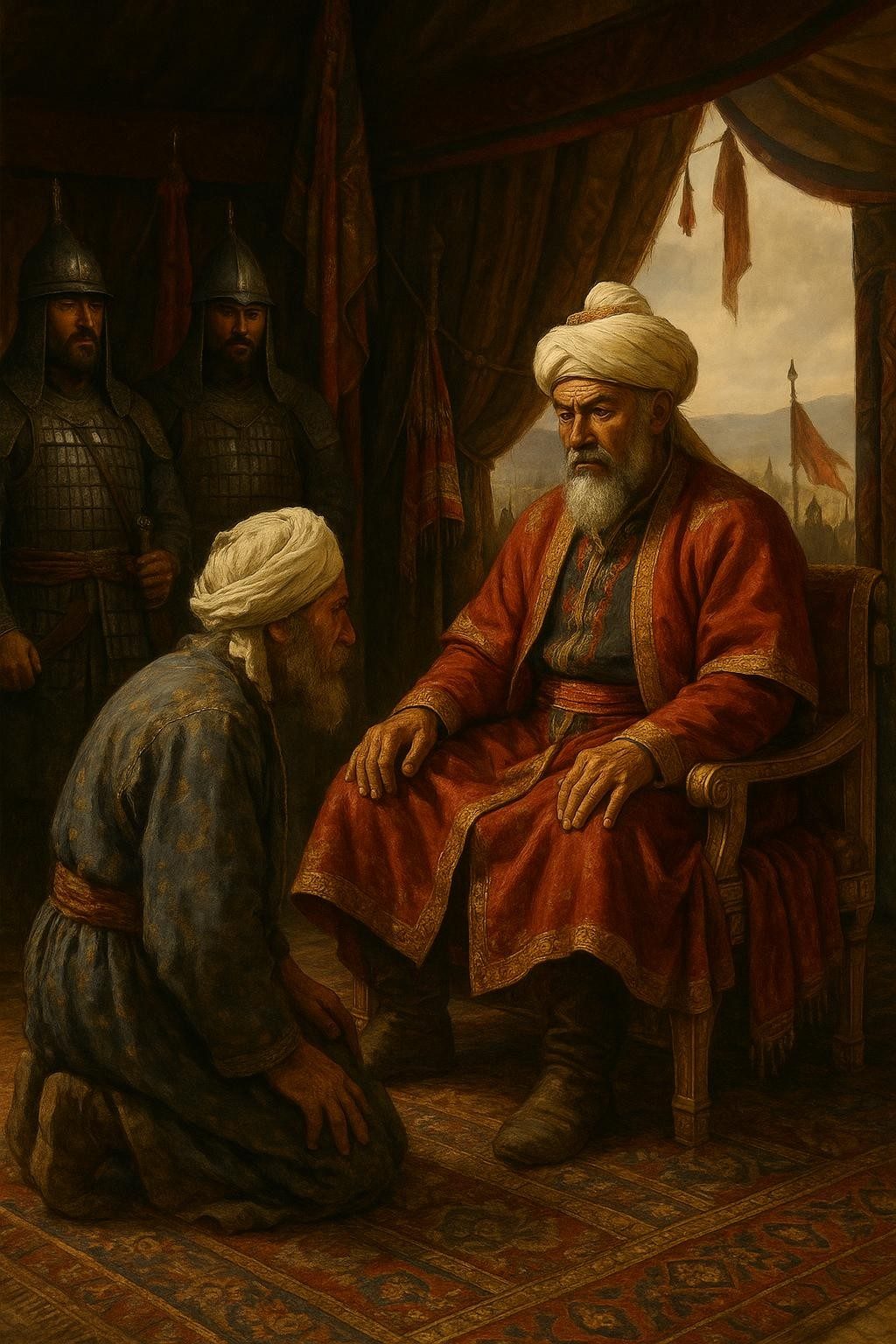
As the dust settled on the battlefield of Ankara, Timur emerged the victor, and Bayezid found himself vanquished and shackled. The Sultan's fall was swift; his empire, only a hair's breadth away from continental domination, was dismantled by Timur’s strategic genius and overwhelming force. Given Timur’s history, observers expected him to deliver swift retribution on the fallen monarch. However, events took an unexpected turn.
Instead of sentencing Bayezid to death, Timur extended an unusual courtesy. He invited the defeated Sultan to join him, offering the hospitality befitting a guest rather than imprisonment. Accounts suggest that Timur even offered comfort while they dined together, like two old friends rehashing stories, rather than sworn enemies. This move bewildered and intrigued both Timur's men and the broader world, who watched for the inevitable execution.
Timur's Mystifying Mercy
Why would a conqueror known for unparalleled cruelty spare a rival so publicly? Several conjectures arise. Timur may have perceived Bayezid as a kindred spirit. Both were fierce warriors leading multi-ethnic empires, driven by imperial visions. They shared a deep understanding of the burdens of leadership, perhaps fostering a twisted sense of camaraderie. Furthermore, Timur might have wished to showcase his magnanimity, demonstrating that he could afford mercy even in victory. After all, the Sultan's captivity presented an opportunity to display the grandeur of Temurid prestige across realms.
Timur's decision also conveyed a stark message to the world: his power was indisputable and unchallenged. Through sparing Bayezid, Timur showcased control over fate and reputation, both his own and that of his vanquished foe. It was a public demonstration of Timur's absolute authority, employing mercy as a weapon just as effectively as the sword.
The Ripple Through History
Bayezid's capture and his subsequent treatment under Timur’s watchful eye rippled through history, causing shifts in the mosaic of Eurasia. Bayezid's empire crumbled, giving rise to political upheavals that would redefine the Ottoman territories. Simultaneously, Timur’s image transformed within historical memory. While some chroniclers painted him as a relentless butcher, others began to depict him as a charismatic figure shrouded with a shimmer of unexpected benevolence.
The fascinating interaction between Timur and Bayezid serves as a vivid reminder that history, like human nature, often defies simple labels. Within this moment of extreme confrontation, Timur’s sparing of Bayezid adds a peculiar footnote of grace amidst chaos. Such mercy illustrates that leadership and conquest cannot always be understood through acts of dominance alone. In choosing to raise his greatest enemy from his knees, Timur teaches us that the strength of an empire might also lie in the willingness to temper power with humanity. In this complexity, perhaps Timur found his fleeting peace and immortality.