1457 BC. The dust swirled thick underfoot in the harsh light of the Egyptian sun.
The Narrow Pass of Megiddo
Before the legendary Battle of Megiddo, a moment of friction halted the mighty Egyptian army. King Thutmose III stood at the helm of his troops, poised on the cusp of greatness. His chariot, seemingly out of place in the sprawling desert, awaited his command. The narrow pass ahead led to the ancient city of Megiddo, a strategic location that could guarantee Egyptian dominance over Canaan. Yet, the situation was tense; his generals, respected leaders of men, sounded their alarms. The impending route was perilously tight, leaving the army ripe for ambush.
To these seasoned military minds, the pass through Megiddo was a fool's errand—a potential graveyard for Thutmose and his dream of an expanded empire. Safer routes were suggested, paths less likely to court disaster. The advice was prudent and logical, yet it was not the decision of the Pharaoh himself. Thutmose III listened, absorbing their concerns, but in his gaze was a determination unmistakable.
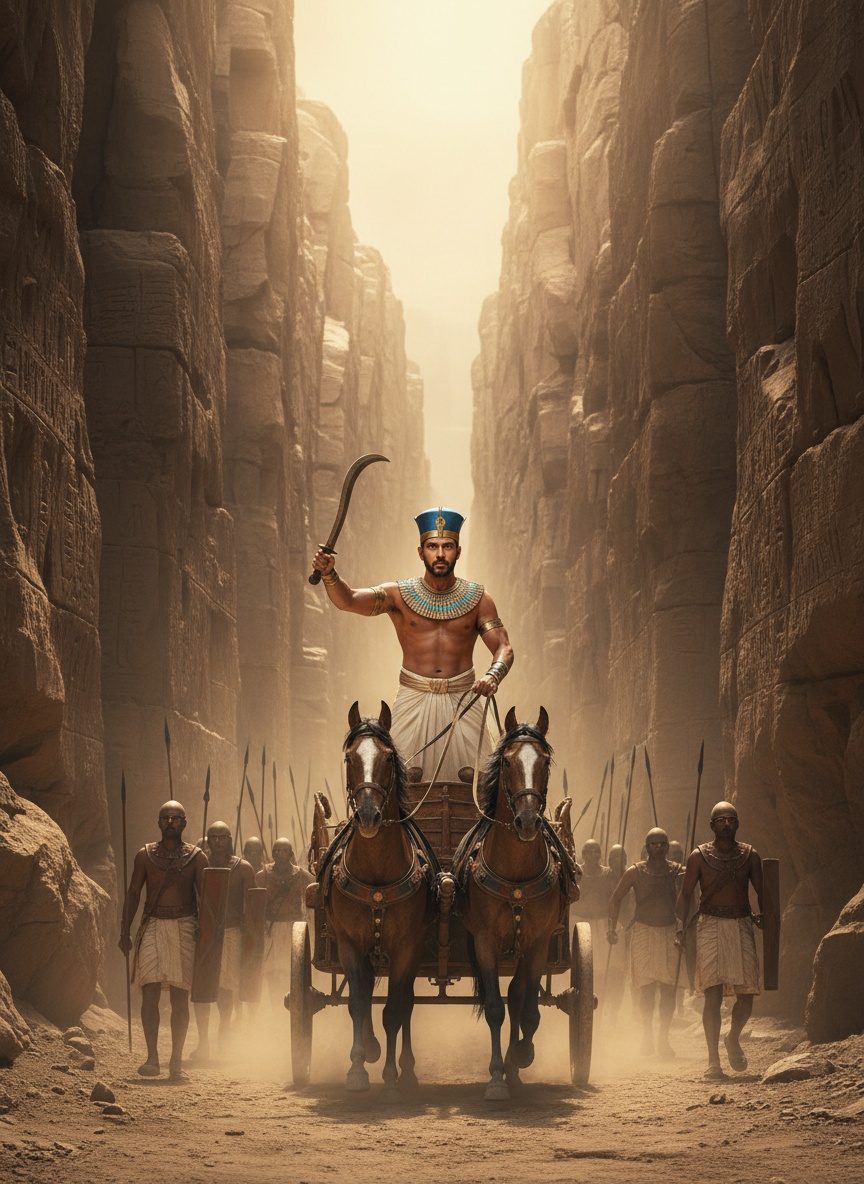
Then, amidst the sands and whispers of dissent, Thutmose acted. With a resolve that could only be born of divine right or reckless bravery, he mounted his chariot alone. His grip tightened on the reins as he signaled, to the astonishment of his men, his intention to tackle the dangerous pass. A murmur spread through the ranks—not of fear, but of awe and reluctant admiration. The King of Egypt had chosen to lead not from a distant safety but the very frontline.
The Bold March
As the sun crept higher, casting elongated shadows across the desert, Thutmose drove forward, the solitary figure against the vast golden landscape. His army, inspired by his audacity or perhaps buoyed by the ancestral spirit of conquest that ran in their veins, followed. The gamble had been cast. This was no longer just a campaign; it was a test of resolve.
The pass at Megiddo was indeed narrow, a path winding through the hills that pressed close like conspiratorial giants. The potential for ambush was terrifyingly real. With every turn, every twist, the risk clung to the soldiers like the dust coating their skin. But the sight of their Pharaoh at the helm quelled the tendrils of doubt. Courage begets courage, and this audacious maneuver proved contagious. With Thutmose leading, no man among them could shirk the challenge.
As the Egyptians threaded through the pass, the anticipation was a tangible pulse, a taut drumbeat in time with the tramp of sandals and the creak of leather. The edge of Megiddo loomed, not with the specter of hidden foes but as a beacon of their collective tenacity. Their unyielding march through the pass transformed from calculated risk to triumphant journey.
The Siege of Megiddo
The sun set on the first day of their arrival, casting dusk's shadows over the fields surrounding the city. The fortress of Megiddo stood formidable and defiant against the horizon. Its walls were more than just a physical barrier; they were riddled with history, legends, and a pride as rooted as the stones themselves. But now, under the banner of an inspired Egyptian host, its downfall was a prelude to Egyptian supremacy over vast stretches of terrain.
The siege of Megiddo stretched into months of strategic maneuvering and unyielding resolve. The Egyptians, driven by the momentum of their leader’s initial defiance, suffocated the city’s defenses with a relentless siege. Their meticulous encirclement ensured that no aid could breach the stalwart exterior. It became a seven-month testament not just to military might but the potency of ambition.
Inside the city, supplies dwindled as anxiety rose, a tide that could not be stemmed by mere stone and mortar. For Thutmose’s army, victory tasted imminent. With each passing day, as resistance within the city faltered, a fissure in resolve widened that no army could bridge. The siege drained the spirit of Megiddo, bending the knees of its stubborn defenders, who were finally left with no choice but to concede to the inevitability of Egyptian ascendancy.
A Legacy Cast in Stone
Megiddo’s eventual fall marked more than the capture of a single city. The repercussions of Thutmose’s gambit rippled far across the known world. The Pharaoh’s daring assault transformed Egypt from a territorial power confined to the Nile into an empire that stretched its influence to the Euphrates. His was not just a military victory but a signal of Egypt’s new role on the world stage.
Thutmose III, through sheer force of will and visionary daring, had expanded Egypt’s horizon beyond the imaginable. His decision to march through the seemingly impassable at Megiddo showcased the potential of leadership characterized not by hesitation but determination. He taught through action that the mark of a true leader lay in more than devising strategy—it was in harnessing the spirit to embody that strategy.
This story, nestled within the sands of time, echoing the footsteps of a brave ruler, is a testament to the power of leading from the front lines. It reminds us how history often favors those who dare to tread paths yet untraveled. Thutmose III’s march through the pass wasn't merely the path to a city; it was the beginning of an empire and a legacy carved in stone and legend for millennia to come.