He had never worn a beard much before. Yet, that decision would endear him to a nation.
In the early morning light of October 1860, a young girl named Grace Bedell sat by a window in her family home in Westfield, New York. The hue of the autumn leaves matched her playground, where she often imagined grand adventures. It was here she stumbled upon a new kind of adventure — a photograph of the Republican presidential candidate Abraham Lincoln. He looked stern and imposing, yet in his eyes was a glint of kindly wisdom. But something else caught Grace's attention: the absence of a beard, giving his face an austere, hollow look. Eleven years old and already perceptive, Grace saw an opportunity. With the ink barely dry on her thoughts, she penned a letter crafting a mix of innocent bravery and earnest advice. Within that fold of paper, she respectfully suggested Mr. Lincoln grow whiskers, proposing they might soften his image and earn him votes, particularly from the ladies she believed would pester their husbands to vote for a man who better fits the mature and wise visage of a leader.
Grace's letter, though charmingly naive, carried a grain of shrewd political insight that reached Lincoln's desk amidst a mountain of correspondences preparing for the heated 1860 election. Perhaps it caught his eye because it reminded him of his own children, or maybe it was the sheer novelty of receiving fashion advice from a child. Nevertheless, Lincoln did more than merely read the letter; he responded. In his reply, he thanked her for the suggestion but gently pondered the practicality of such a change. Yet, in her words must have struck a chord, a simple yet profound suggestion that resonated with a deeper transformation in how he was to present himself not just to potential voters, but to the weight of the office he would soon bear.
As history witnessed, perhaps inspired by Grace's earnest counsel or stirred by an inclination for change as the political landscape was shifting, Lincoln did indeed begin to grow his iconic beard. A transformation as subtle as the falling autumn leaves but as significant as the election it influenced. By the time he delivered his first address upon election as President in November 1860, the stubble of his self-investment had begun to manifest into the distinguished facial hair that would define his image for generations. Lincoln's visage was evolving, becoming that of a leader with the gravity and gentleness Grace had artfully envisioned.
The railways then, those iron arteries of a growing nation, echoed with tales and bustling passengers. As President-elect, Lincoln undertook a whistle-stop tour from Springfield to Washington, engaging with citizens across the land and securing their hearts before seizing the helm of a weary and fractured nation. It was in February 1861, as snow lined the tracks with the promise of new beginnings, that his train was due to stop in Westfield, home to his unlikely young muse. The encounter that followed remains one of historical tenderness, deeply human in its simplicity and profoundly emblematic of a leadership style that valued personal connection.
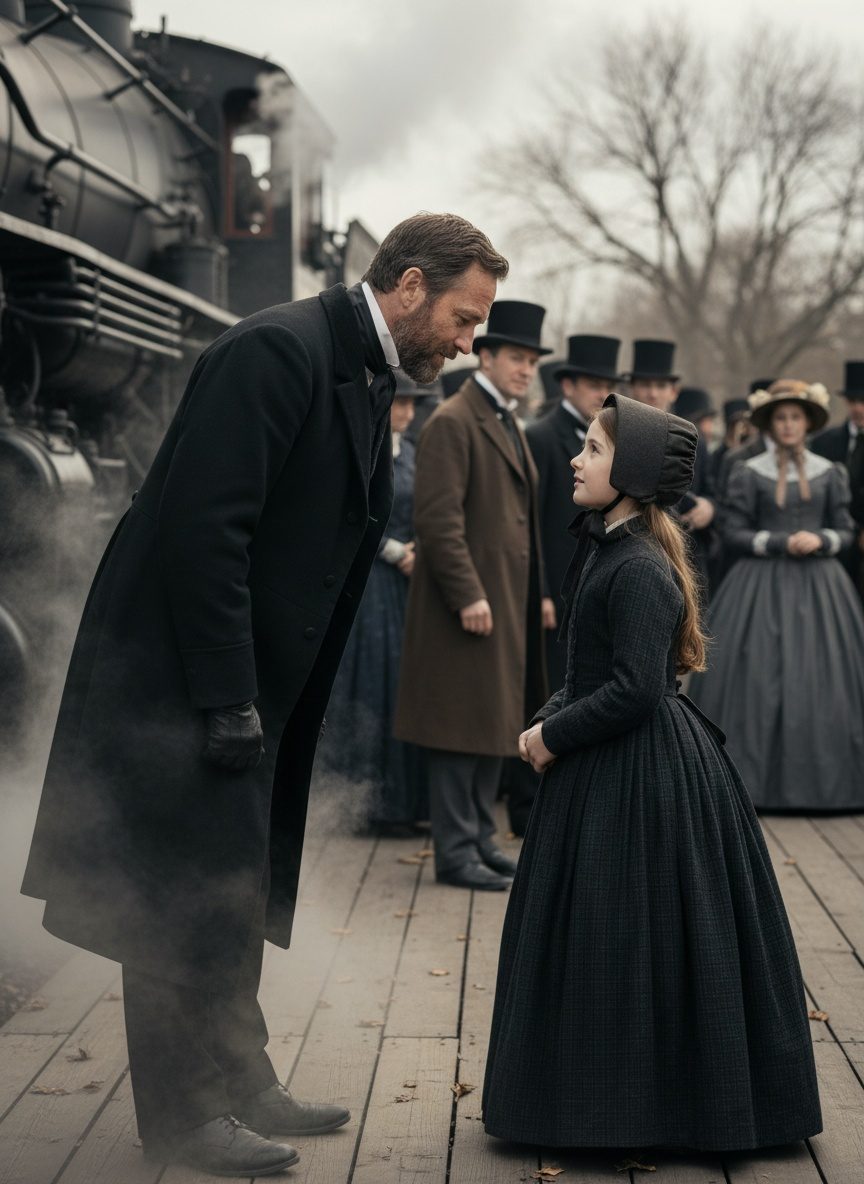
Amidst coal smoke and waving flags, Lincoln stepped from the train that day, a hulking figure whose new beard framed the kindness and resolve the world would soon come to rely upon. He scanned the crowd, populated not just by townsfolk curious to see the President-elect, but by a particular young girl who had captured his imagination. As she stood among the throng, her face likely flushed with excitement and cold, Lincoln sought her out and found her. The moment lingered as whispers swept through those assembled. The two met at the platform; the towering figure of Lincoln bending low to greet the girl whose small words had influenced a great man. He gratefully acknowledged her contribution to his now-symbolic beard, their exchange blurring the lines between citizen advice and presidential action.
This meeting was not recorded in grand orations or gilded archives but in the hearts of those present and the spirit between them. They embodied a moment intrinsically human, woven into the fabric of American history. It echoed the potential impact of each voice, no matter how small, in directing the course of events and leaders' decisions. Here at the intersection of innocence and history, Lincoln and Grace shared a brief but profound intersection of lives and ideas.
The famous beard did more than characterize Lincoln's visage; it represented his openness to counsel that transcended the norms of political strategy and public image crafting. In an era teetering on the brink of division and war, that small gesture of change, informed by the whim of a child, spoke volumes about a leader mindful of his appearance and open to the wisdom of the young. It fed into the evolving narrative of Lincoln as the people's President — approachable, sincere, and ultimately tragic in his commitment to unity and humanity.
The entwined legacies of Grace Bedell and Abraham Lincoln offer more than the quaint anecdote of a young girl's influence on a great leader. It underscores a timeless truth, that the voices calling from the periphery sometimes hold the quiet wisdom that reshapes powerful narratives. Lincoln’s beard became more than decorative; it was a testament to the accessibility of his presidency and a poignant reminder of the power ordinary people hold in shaping the fabric of history. In every whisper of courage like Grace's lies the potential to redefine the tallest of structures — even those resting on the shoulders of an American President, where a young girl’s letter once confidently landed.