The cobblestone streets of Nottingham lay still under an ashen sky. A chill wind weaves through the narrow alleyways, stirring the echoes of clattering looms from workshops nearby. It is 1811, and a storm brews, not among the elements, but in the hearts of men. For generations, skilled weavers have plied their craft with artistry and pride, but now the thunder of machines drowns out the music of their hand-held shuttles.
The Humble Weaver's Cry
Nottingham and the surrounding areas of Yorkshire and Lancashire have been the cradle of craftsmanship for generations. Here, the art of turning raw wool into fine cloth was passed down through the ages, a livelihood woven with tradition and skill. As the industrial revolution begins to unspool across England, however, the once-cherished practices and meticulous handiwork face unprecedented threats. Machines, with their relentless efficiency, encroach upon the ancient rhythm of the loom, sweeping aside the painstaking labor that weavers had so faithfully mastered.
In a season, the craft left the hands of the artisans and entered the maw of factories. The skilled weavers, once esteemed masters of their trade, became expendable. Without warning, entire families found their lives unraveled. The plight of the weavers was not merely economic, but existential. How could machines replace not just their labor, but their identity?
The Rise of General Ludd
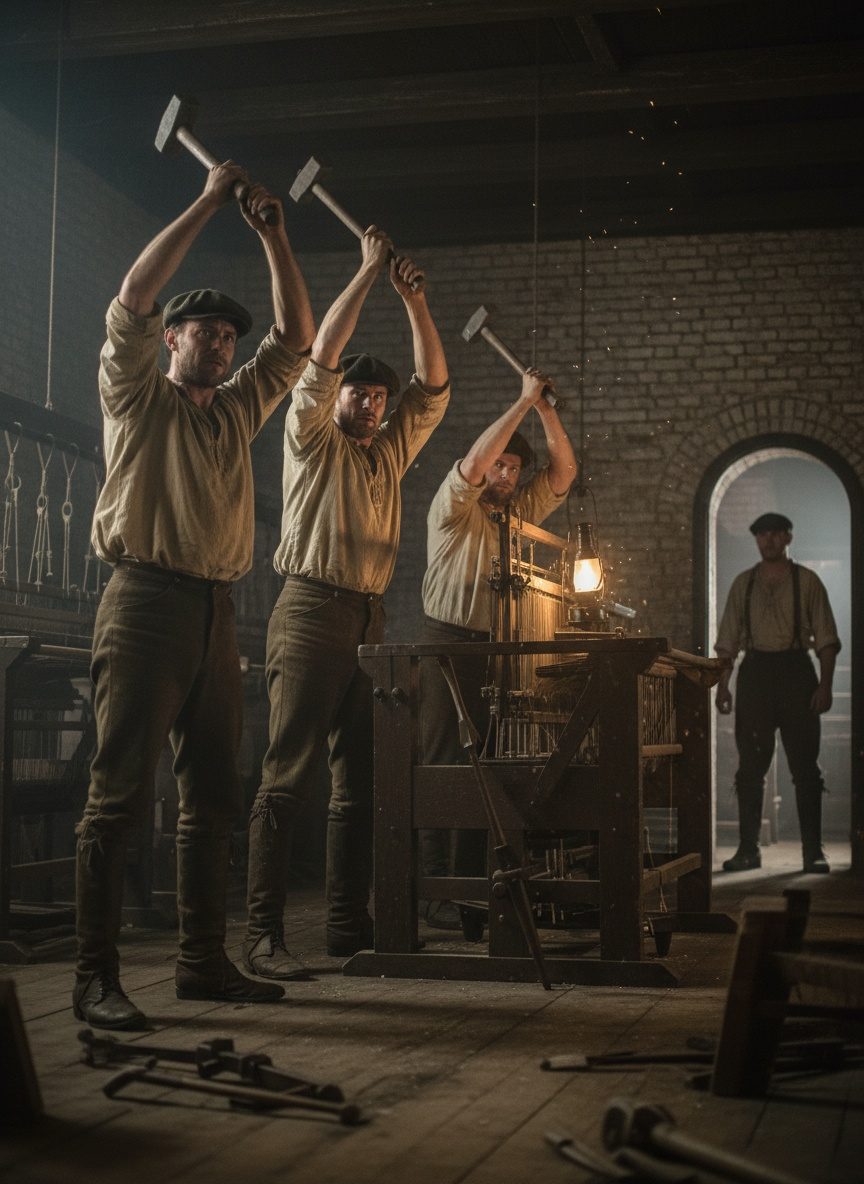
The villagers speak in hushed tones of "Luddites," a term coined in shadowy gatherings late at night. Allegedly led by the mythical General Ludd—a figure more symbolic than real—they took on an air of rebellion. Under cover of darkness, weavers armed themselves with sledgehammers, seeking not cruelty nor chaos, but justice. Their targets were the mechanical looms themselves, seen as monsters stealing their craft and bread.
Their tactics, though destructive, were born of desperation—not malice. As they moved silently through the towns, they left behind broken frames as warnings, like rugged sentinels of a lost world. The Luddites did not see their actions as a choice but as a last resort in a battle for survival. They were not simply smashing machines, but fighting for recognition, respect, and survival.
England's Response: Iron Fists and Red Coats
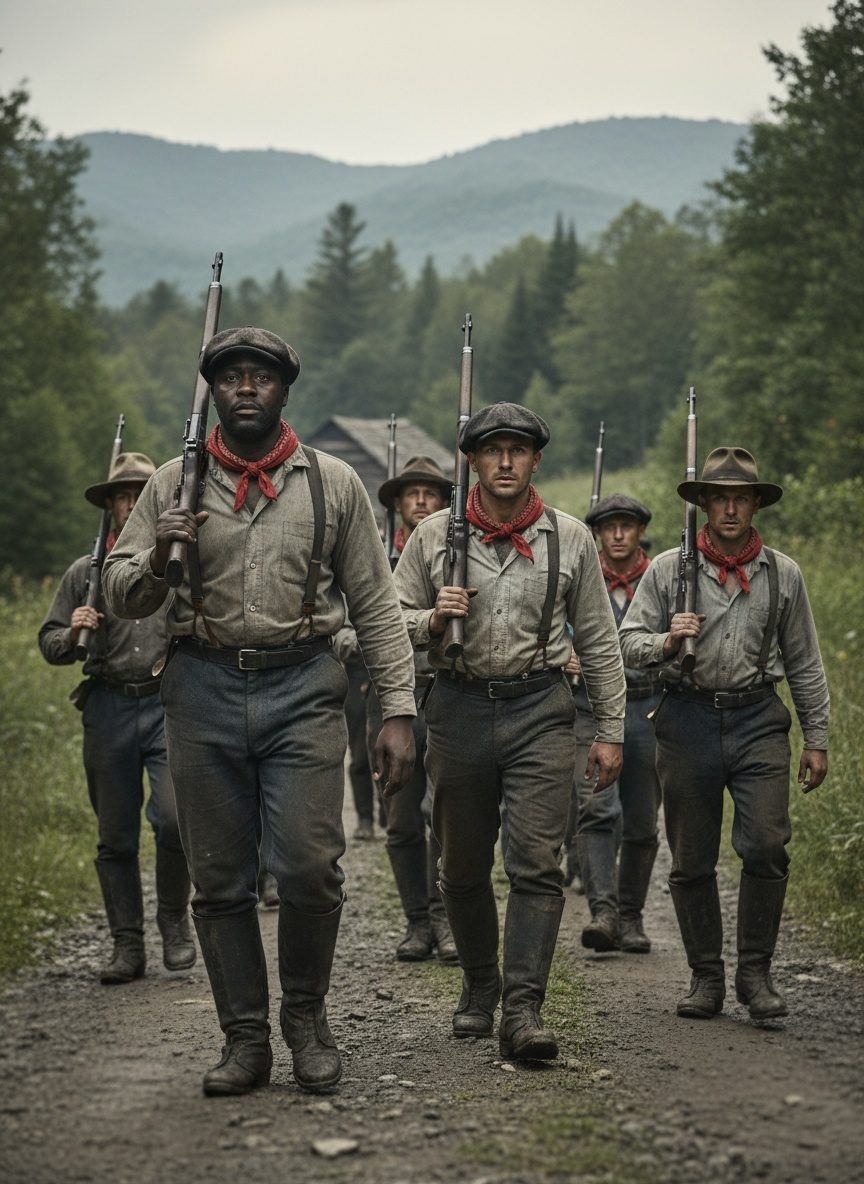
In the eyes of the Crown, however, this was insurrection. The government perceived the Luddites as a threat equal to, if not greater than, foreign adversaries. More soldiers came to suppress the weavers than to aid Wellington in his campaigns in Spain. The redcoats arrived not to negotiate but to crush rebellion swiftly and decisively. Military postings increased throughout the region, and ominous drums echoed as troops marched into villages harshly lit by the torches of anticipation.
The government was resolute. The Luddites were arrested by the dozens, tried, and sentenced with unwavering harshness. Public hangings were ordered as both punishment and display—thirteen hangings in 1812 standing as bleak markers of failed opposition.
The Machines Roll On
With the weavers subdued, the machines continued their tireless work within the mills. The looms turned day and night, ceaselessly producing textiles with clinical precision. While some former weavers found menial factory work, many remained adrift, lost within an economy that no longer valued their skills.
The industrial revolution marched forth, propelled by the gears and frames once contested by the Luddites. Yet, despite their losses, the legend of General Ludd endured—a whispering reminder of a community's desperate struggle against the relentless march of progress.
A Lesson from the Shadows of History
Today, the tale of the Luddites serves as a poignant reflection on the tension between progress and preservation. It forces us to ponder the costs of technological advancement and the lives caught in its upheaval. Though the machines triumphed, their victory raises deeper questions about the human cost of progress and the courage of those who resist sweeping change.
The Luddites, though defeated, have etched their story into history as defenders of dignity in the face of an overwhelming and unyielding tide. The warning they cast, visible in the wreckage of broken frames, still echoes today—a reminder of voices that may be drowned out in the machinery of progress but are never truly silenced.