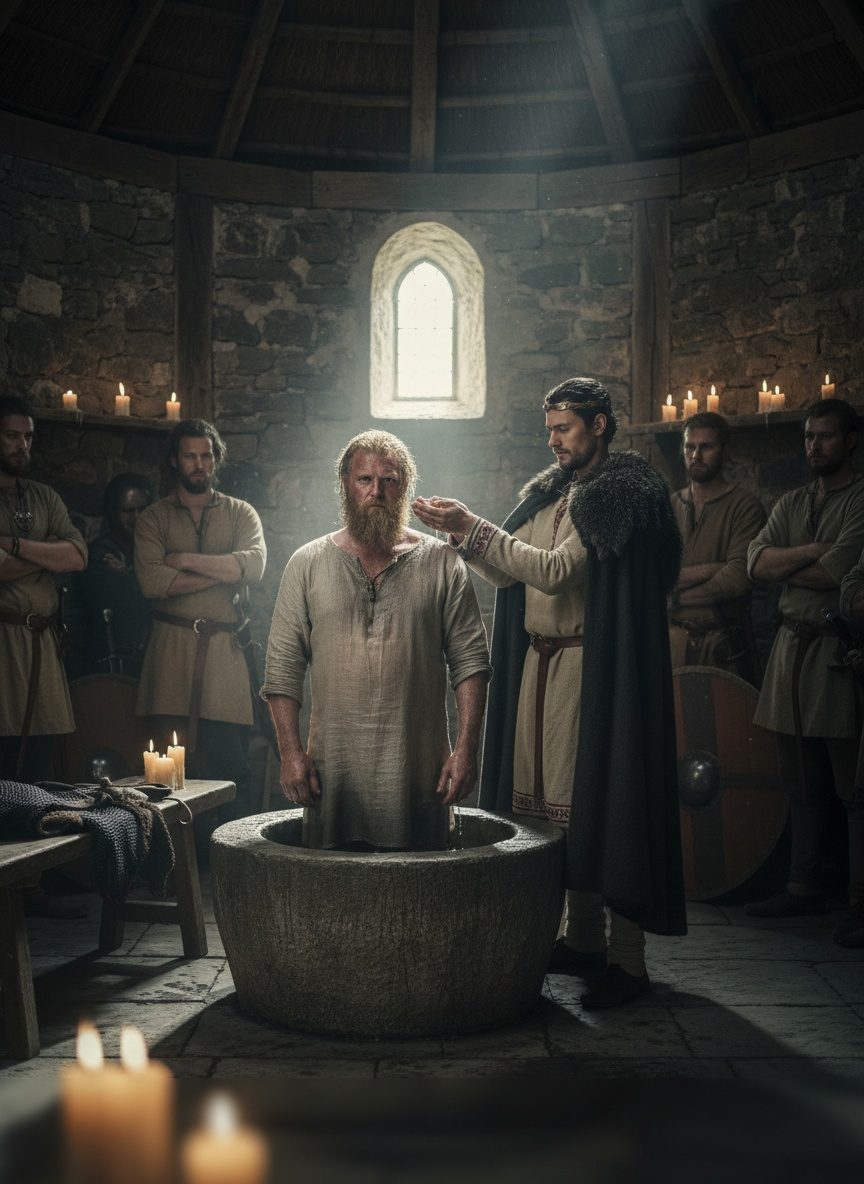
He was a fierce Viking chieftain. Yet he willingly accepted a Christian king's hand to pour water over his head in baptism. In 878 AD, Guthrum's unexpected conversion changed the fate of England forever, as he transformed from a formidable foe into an ally who played a crucial role in crafting the history of a torn land.
The Viking Threatened to Consume England
The year 878 marked a dire turning point for Alfred of Wessex and his kingdom. Chased from his seat of power by Danish invaders, Alfred found himself languishing in the bleak marshes of Somerset. England, it seemed, teetered on the precipice of Viking dominion. The leader of this unrelenting onslaught was Guthrum, a fearsome warlord whose ambitions stretched the length and breadth of the island.
The Vikings had been a relentless force in Britain for nearly a century, their longships carving through waters and their warriors striking terror into the hearts of coastal communities. Guthrum, however, had escalated threats by embedding himself deeply into the fabric of the land. Wielding an imposing presence, he steered his forces with an iron will, determined to seize control of Wessex, the last bastion of English resistance.
It was against this ominous backdrop of nearly insurmountable odds that a glimmer of hope emerged. Alfred, though driven into hiding, was far from defeated. Gathering a rag-tag force of resilient loyalists, he prepared for a final stand that would test the courage and resolve of his people like never before.
The Battle That Changed Everything
In a spring clash at Edington, Alfred met Guthrum on the battlefield. The stakes could not have been higher, with the fate of England hanging perilously in the balance. The encounter was a brutal testament to the ferocity of the age, as warriors cladded in chain mail and bearing weapons of war met in the deadly dance of combat.
Against all expectations, and with strategic cunning, Alfred's forces emerged victorious. It was a turning point that sought not just to repulse the Viking threat but to reshape it. With his back against the wall, Alfred offered Guthrum terms, a proposal not of annihilation but of transformation.
This truce demanded something remarkable. Beyond the mere cessation of hostilities, it asked for a profound change of allegiance—from Odinism to Christianity. In a sense, it was not just a plea for peace but a call to reforge identity. Guthrum, surprisingly, accepted, illustrating a rare moment where bloodshed made way for penance and union.
Baptism and Unity
The ritual of baptism for Guthrum was filled with symbolism. Alfred poured the water over his head, signifying rebirth and a new path. Guthrum took the Christian name Athelstan, an act that merged Saxon and Norse worlds. It was a poignant gesture that transcended the battlefield, uniting former enemies under the auspices of faith and shared rule.
This baptism wasn't just a personal transformation for the Viking warlord; it heralded a broader realignment. The conversion didn't happen in a void—it occurred in a small church, a place that would stand as a witness to an epoch-defining shift. The maneuvers inside those hallowed walls reflected the larger reconciliation occurring between the marauding Norsemen and the beleaguered Saxons.
The peace wrought by Guthrum's conversion endured. Alfred, now with an ally where once there had been adversary, fortified his kingdom against future incursions. The deal forged in the crossroads of belief set a precedent for cross-cultural interactions that would echo through the ensuing saga of England.
A New Path for Britain
The truce and subsequent baptism that brought Guthrum into the Christian fold had effects that rippled beyond the immediate cessation of hostilities. This period saw the beginning of the Danelaw, territories in England under Norse control but underpinned by Anglo-Saxon structures and influence. It was a testament to the transformative power of personal change fostered through a momentous accord.
Guthrum's shift marked a rare instance where adaptability in the name of peace triumphed over sheer conquest. This cooperation laid early stones in the foundation of what would become a more unified England. Through dialogue and shared governance, former foes began to navigate the complexities of cohabitation in a divided land.
Ultimately, Guthrum's baptism symbolized a strategic and spiritual union between two warring cultures. It reminded the political players of its time, and us, today, of the potency latent in reconciliation over conflict. Beyond swords and shields, it was a demonstration that even the most fearsome of raiders could embrace change, offering a profound reflection on the nature of leadership and legacy.
In a world fraught with strife, this story speaks volumes about the possibilities within human choices to bridge divides. As water poured over Guthrum's head that day, it washed away boundaries, leaving behind a canvas for a new Britain—a nation no longer solely Saxon or Viking, but boldly evolving into a singular identity.