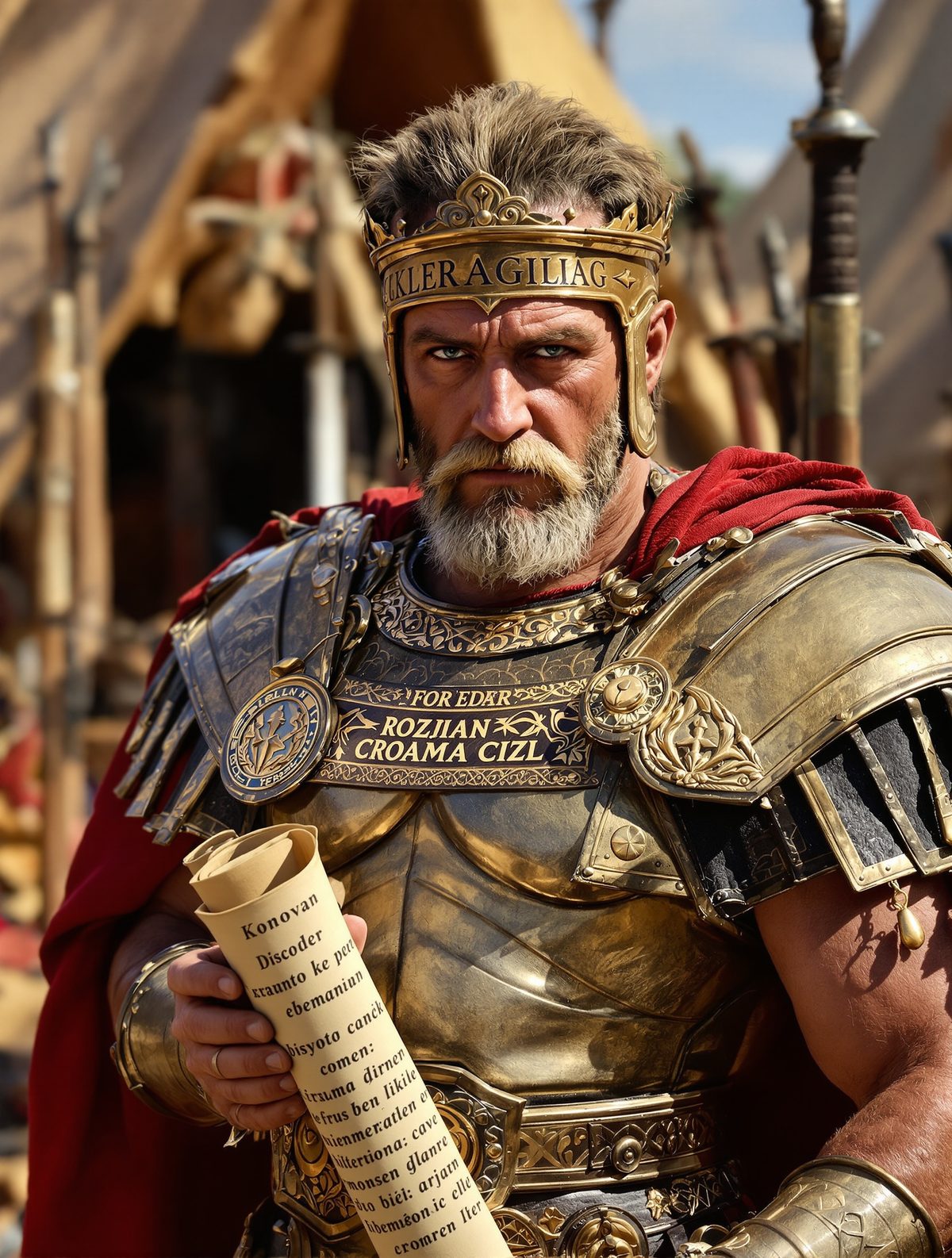
The acrid smoke stung their eyes as orange flames licked hungrily at the dragon-carved prows. One by one, the magnificent longships that had carried them across treacherous seas began to sink beneath the dark waters of the Norwegian fjord. The warriors stood in stunned silence, watching their lifeline home disappear into ash and ember. Behind them lay enemy territory. Ahead waited a battle they might not survive. And there would be no retreat.
This was no accident, no surprise attack by enemies. The woman who had ordered this destruction stood among them—tall, fierce, and utterly resolute. Queen Gunnhild of Norway had just made one of the most audacious tactical decisions in Viking history. On that fateful morning in 982 AD, she had deliberately burned her own fleet, trapping herself and her warriors in a gamble that would echo through the sagas for centuries to come.
The Queen Who Refused to Bow
To understand the magnitude of Gunnhild's decision, you must first understand the woman herself. This wasn't some pampered royal playing at war—Queen Gunnhild was forged in the brutal crucible of 10th-century Scandinavian politics. Born around 910 AD, she had already survived palace coups, foreign invasions, and the deaths of multiple husbands by the time she torched her fleet at age seventy-two.
Gunnhild had first seized power as the widow of Erik Bloodaxe, the aptly named Norwegian king who had earned his crown by systematically murdering his own brothers. When Erik died in 954 AD, most expected his widow to fade into obscurity. Instead, she became one of the most formidable political players in Scandinavia, manipulating alliances, commanding armies, and earning the grudging respect of Viking chieftains who typically viewed women as valuable only for marriage alliances.
The medieval chroniclers called her "Mother of Kings" and "the most cunning of women"—though they used that last phrase with equal parts admiration and fear. Heimskringla, the great saga collection, describes her as possessing an almost supernatural ability to inspire loyalty in her followers and terror in her enemies. She had to be exceptional—in the ruthless world of Viking politics, there was no room for weakness, regardless of gender.
The Trap That Became a Prison
By 982 AD, Gunnhild found herself in an impossible position. Her longtime rival, Harald Bluetooth of Denmark, had finally outmaneuvered her politically, forcing her into exile. But Gunnhild was far from finished. She had gathered a fleet of loyal warriors and sailed north to Orkney, hoping to forge an alliance with the jarls there and stage a comeback.
The plan had seemed sound. The Orkney Islands were a strategic launching point for raids and had long maintained an uneasy independence from both Norwegian and Danish influence. If she could convince the Orkney jarls to support her claim, she might yet reclaim her throne. But politics in the Viking Age were as changeable as North Sea weather.
Upon arriving in Orkney waters with her fleet of thirty longships and roughly 900 warriors, Gunnhild discovered that Harald Bluetooth's gold had preceded her. The local jarls, swayed by Danish bribes and threats, had already chosen sides. Worse still, a Danish fleet was reportedly sailing north to trap her against the rocky Orkney coast.
As dawn broke on what would become known as "Gunnhild's Gamble," the queen faced a stark reality: retreat meant certain pursuit and likely death in the open sea. Staying meant facing overwhelming odds with warriors who might be tempted to surrender or flee when the battle turned grim. She needed something that would unite her forces in absolute commitment to victory.
Victory or Valhalla
What happened next defied every conventional military wisdom of the age. Vikings were seafaring people—their ships weren't just transportation, they were lifelines, symbols of freedom and mobility. A Viking without a ship was like a knight without a horse, stripped of the very thing that defined their power. Yet as her warriors prepared their weapons and armor in the pre-dawn darkness, Gunnhild quietly moved among her most trusted captains with an order that left them speechless.
Burn the ships. All of them.
The execution was swift and systematic. Teams of warriors moved through the beached fleet, dousing the carved dragon heads and painted shields with whale oil and pitch. The great ships that had carried them across hundreds of miles of open ocean—vessels whose names were known in every harbor from Iceland to Ireland—became kindling for the most dramatic funeral pyre in Viking history.
As the flames roared to life, Gunnhild addressed her warriors with words that would be remembered long after the smoke cleared: "Today we fight not for gold or glory, but for our very souls. Behind us burn our ships—there is no retreat, no surrender, no mercy. Before us lies our enemy. We go to victory or we go to Valhalla, but we do not go as cowards."
The Psychology of No Return
Modern military historians recognize what Gunnhild understood instinctively—the devastating psychological impact of eliminating retreat as an option. This wasn't just motivational theater; it was a calculated transformation of her army's mindset. With their ships burning behind them, her warriors faced what psychologists now call "point of no return" decision-making.
The burning ships served multiple purposes. First, it eliminated the possibility of individual warriors sneaking away during the battle—a not uncommon occurrence when Viking raids went poorly. Second, it sent an unmistakable message to both her own forces and any potential enemies: this woman was prepared to risk everything. Third, it unified her diverse force of Norwegian exiles, Icelandic adventurers, and Danish mercenaries under a single, stark reality—they would win together or die together.
Viking sagas tell us that the sight of their burning fleet initially stunned Gunnhild's warriors into silence. But as the reality sank in, something remarkable happened. The grumbling and doubt that had plagued the expedition evaporated. Men who had been questioning the wisdom of following an aging queen into what seemed like certain defeat suddenly found themselves inspired by her absolute commitment.
Archaeological evidence from the period suggests that "ship burning" was not entirely unknown among Vikings, but it was typically done as a funeral rite for deceased chieftains, not as a military tactic. Gunnhild's decision was so unprecedented that it required her saga chroniclers to invent new language to describe it.
The Battle That Never Came
Here's where the story takes an unexpected turn that most history books omit: the climactic battle that everyone expected never actually happened. When word reached the Orkney jarls and their Danish allies that Gunnhild had burned her own fleet, the psychological impact was so profound that it completely shifted the strategic equation.
Suddenly, the aging queen who had seemed trapped and desperate became something far more dangerous—an enemy with nothing left to lose. The local jarls, who had been prepared to face a conventional Viking raid, found themselves confronting something unprecedented. Military leaders throughout history have learned to fear desperate enemies, but an enemy who has deliberately made themselves desperate represents a level of commitment that rational opponents rarely wish to test.
Rather than risk a catastrophic battle against warriors who could only escape through victory, the Orkney leadership chose negotiation. Within three days of the ship burning, Gunnhild found herself sitting across a negotiating table from the very jarls who had planned to capture or kill her. The terms she secured were far better than anything she could have achieved through diplomatic channels—safe passage, supplies for her warriors, and most surprisingly, ships to replace the ones she had destroyed.
Legacy of Ashes and Inspiration
Gunnhild's gamble became legend, but its impact extended far beyond Viking sagas. The story spread throughout medieval Europe, inspiring everything from military treatises to romantic ballads. Military commanders from William the Conqueror to Hernán Cortés would later employ similar tactics, burning bridges or destroying supplies to ensure their forces fought with absolute commitment.
But perhaps the most remarkable aspect of this story isn't the military tactics or the political maneuvering—it's what it reveals about leadership under extreme pressure. In that moment when conventional wisdom screamed for retreat or negotiation, Gunnhild chose a third option that nobody saw coming. She transformed weakness into strength, desperation into advantage, and certain defeat into unexpected victory through sheer force of will and unprecedented commitment.
Today, in boardrooms and military academies around the world, strategists still study "burning the boats" as a powerful metaphor for total commitment. But they're studying the lessons of a 72-year-old Viking queen who understood something profound about human nature: sometimes the only way forward is to make going backward impossible.
Gunnhild's burning ships remind us that the most powerful weapon in any leader's arsenal isn't gold, technology, or numbers—it's the ability to inspire absolute commitment in the face of impossible odds. In our modern world of calculated risks and exit strategies, there's something both terrifying and inspiring about someone willing to bet everything on their own determination to succeed.