The Korean mountains in December 1598 were a frozen hellscape where men's breath turned to ice crystals before hitting the ground. In a valley surrounded by snow-covered peaks, 15,000 Chinese soldiers huddled around dying campfires, their ammunition nearly spent, their supplies exhausted. Across the frozen landscape, 50,000 Japanese samurai closed in like wolves sensing wounded prey. That's when General Qi Jiguang gave the most insane military order in history: "Strip naked, men. We're going swimming."
What happened next would be whispered about in Japanese military circles for centuries—a tale so bizarre that many dismissed it as myth. But the records don't lie. On that bitter winter morning, a Chinese general turned his own soldiers into what the enemy believed were supernatural beings, achieving victory through an act of apparent madness that saved not just his army, but potentially changed the course of East Asian history.
The Impossible General
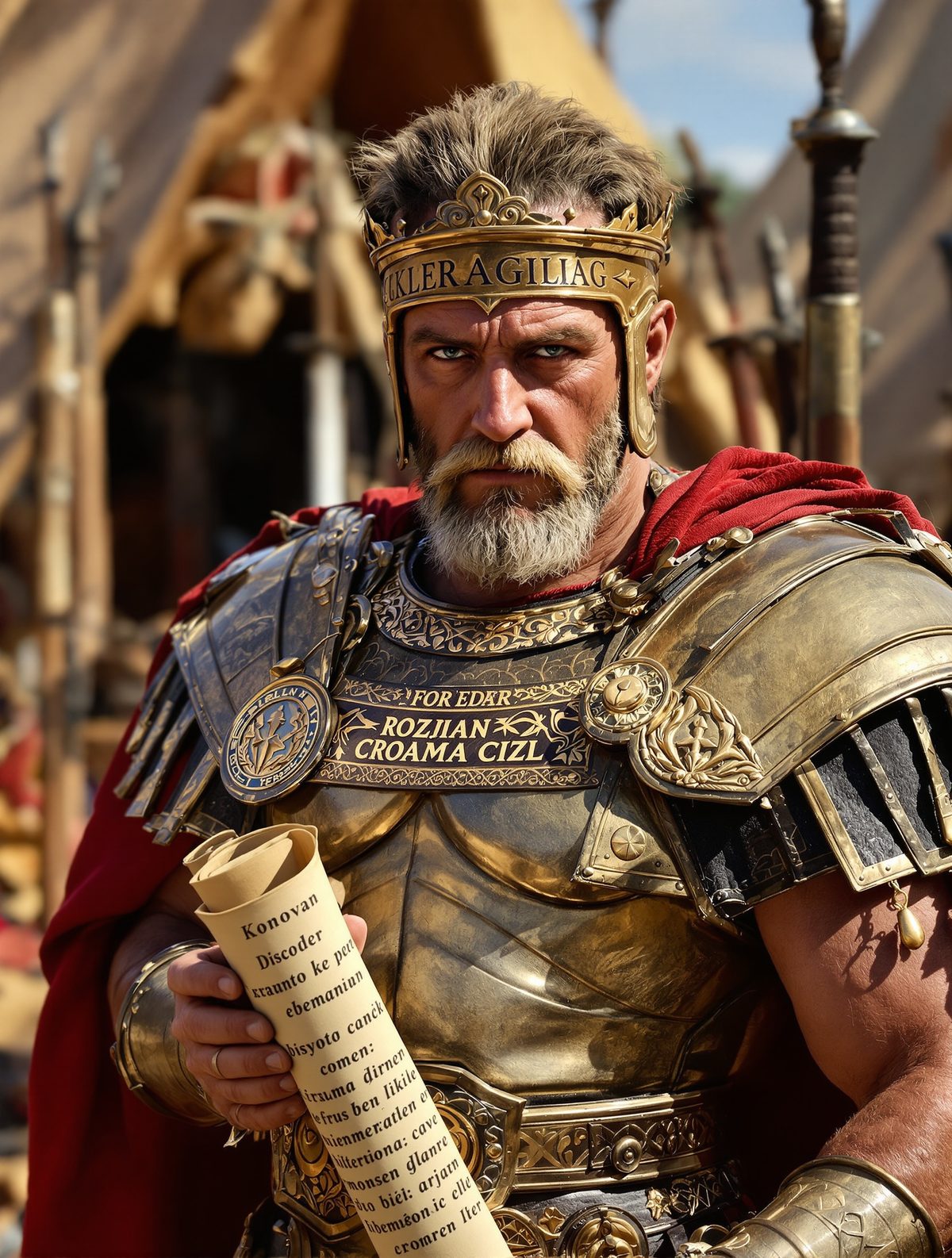
Qi Jiguang wasn't just any military commander. By 1598, he had already earned legendary status as the man who revolutionized Chinese warfare. Born in 1528 in Shandong Province, Qi had spent decades fighting Japanese pirates (called wokou) along China's coast, developing revolutionary tactics that combined traditional Chinese military strategy with innovative formations inspired by his study of European firearms.
Standing nearly six feet tall—unusually imposing for his era—Qi possessed an almost supernatural ability to inspire absolute loyalty in his troops. His soldiers, known as the "Qi Family Army," followed him with religious devotion. They had to. Qi's tactics often required his men to do things that seemed to defy logic, survival instinct, and sometimes physics itself.
When the Korean crisis erupted in 1592, with Japanese forces under Toyotomi Hideyoshi invading the peninsula, the Ming Dynasty naturally turned to their most unconventional general. What they got was six years of the most brutal mountain warfare Asia had ever seen.
Trapped in the Frozen Peaks
The winter of 1598 was particularly savage, even by Korean standards. Temperatures plummeted to minus-20 degrees Fahrenheit, and the Japanese forces had successfully cut off Chinese supply lines through the mountain passes. General Qi's army found themselves in what military historians call a "killing box"—surrounded on three sides by enemy forces, with their backs to a half-frozen river system that seemed to offer only another form of death.
The Japanese commander, Kobayakawa Hideaki, had every reason to be confident. His forces outnumbered the Chinese more than three to one. His samurai were well-fed, well-armed, and held the high ground. The Chinese, by contrast, had been reduced to eating tree bark and leather straps from their armor. Many suffered from severe frostbite. In any conventional military analysis, this was a siege that would end in massacre or surrender within days.
But Qi Jiguang had built his career on making the impossible seem inevitable. As he surveyed the frozen landscape through the pre-dawn darkness of December 18th, 1598, he wasn't seeing a death trap. He was seeing an opportunity that would require sacrificing everything logical about warfare—and possibly sacrificing his men's lives in the process.
The Order That Defied Sanity
What Qi commanded his soldiers to do violated every principle of winter survival known to military science. As the sun rose on that December morning, he ordered his men to remove their armor, their clothes—everything except small cloth wrappings around their loins. Then, in groups of a thousand, he sent them into the partially frozen rivers that bordered their camp.
The water temperature hovered just above freezing—warm enough to prevent complete icing, cold enough to kill an exposed human being within minutes. But Qi had calculated something that the Japanese scouts observing from the ridgelines couldn't possibly understand. Human beings can survive in near-freezing water for approximately 10-15 minutes before losing consciousness, assuming they keep moving. Just long enough.
His soldiers, their skin turning blue-white, their bodies steaming in the frigid air, emerged from the water and began their advance up the mountainside toward Japanese positions. To the samurai watching from above, it appeared that an army of ice demons was rising from the rivers—supernatural beings whose flesh was the color of death itself, whose bodies generated clouds of otherworldly mist, who seemed unaffected by cold that would kill mortal men instantly.
Terror Among the Samurai
The psychological impact was immediate and devastating. Samurai culture, for all its emphasis on courage and honor, was deeply intertwined with spiritual beliefs about supernatural entities. The sight of thousands of pale, steaming figures advancing through snow drifts, apparently immune to cold that was literally freezing the breath in Japanese throats, triggered something deeper than fear.
Kobayakawa Hideaki's carefully planned siege began to unravel within hours. Reports from his frontline commanders described Chinese soldiers who seemed to feel no pain, who advanced steadily despite being struck by arrows, whose battle cries echoed strangely in the thin mountain air. Several samurai units simply abandoned their positions and fled toward the rear, spreading panic about oni—demons—among troops who had never shown fear of mortal enemies.
What the Japanese couldn't see was the desperate race against time happening within Chinese ranks. Qi's soldiers had perhaps thirty minutes of fighting capability before hypothermia would render them useless. They had to close distance, engage the enemy, and break Japanese morale before their own bodies betrayed them. It was warfare by stopwatch, victory measured in minutes rather than hours.
The gamble worked. As Japanese forces began pulling back from forward positions, Qi's "ice demons" pressed their advantage, their apparent invulnerability to cold convincing enemy commanders that they faced something beyond natural explanation. By noon, what had begun as a certain Japanese victory had transformed into a full retreat.
The Aftermath of Madness
The immediate aftermath was almost as brutal as the battle itself. Of Qi's 15,000 soldiers, nearly 3,000 suffered severe frostbite, and approximately 800 never fully recovered the use of their extremities. But they had achieved something unprecedented: breaking a siege that should have been militarily impossible to break, routing an enemy force more than three times their size, and opening an escape route that allowed the entire Chinese force to withdraw to defensible positions.
Japanese military records from the period, preserved in various clan archives, refer to this engagement as "the battle of the ice devils" and describe it as one of the most demoralizing defeats in the entire Korean campaign. Some accounts suggest that the psychological impact contributed to the eventual Japanese decision to abandon their invasion plans following Toyotomi Hideyoshi's death later that year.
Qi Jiguang himself would survive the Korean campaigns but died just three years later in 1601, his body reportedly worn out by years of impossible battles and impossible victories. His final writings include detailed instructions for winter warfare that were classified by Chinese military authorities for nearly two centuries.
When Madness Becomes Strategy
The story of General Qi's frozen army raises uncomfortable questions about the nature of military leadership and the price of victory. Was this brilliant psychological warfare or criminal endangerment of his own troops? The answer may depend entirely on whether you're measuring success by immediate tactical victory or long-term human cost.
What's undeniable is that Qi Jiguang understood something about warfare that purely rational military thinking often misses: sometimes the most effective weapon isn't superior firepower or tactical positioning, but the enemy's own imagination. By making his soldiers appear superhuman, he weaponized fear itself.
In our modern era of psychological operations and information warfare, Qi's tactics seem less like ancient madness and more like a preview of battles fought as much in the mind as on any physical battlefield. The Chinese general who froze his own army to win a battle understood that victory sometimes requires making the impossible seem inevitable—even when the cost is almost unbearable.
The frozen rivers of Korea in 1598 witnessed more than just another military engagement. They hosted a demonstration of how far human beings will go, and how much they'll sacrifice, when survival depends on convincing the enemy that the normal rules of reality no longer apply.